

The Explanations Nigerians Need from Tinubu When He Starts Campaigning
The Independent National Electoral Commission, INEC, on August 19, 2026, opened the window for presidential, senatorial and House of Representatives candidates to commence campaigns ahead of the 2027 general elections.
Campaigns are a critical part of the electoral process. They provide candidates with an opportunity to present their manifestos, explain their policies and convince voters why they deserve their support.
Since the campaign window opened, presidential candidates, including the African Democratic Congress, ADC, candidate Atiku Abubakar and his counterpart in the National Democratic Congress, NDC, Peter Obi, have been moving around the country, appearing at town-hall meetings, conferences and other public engagements to explain their visions for Nigeria.
Peter Obi, during his engagements, has challenged anyone with evidence of corruption against him to make such evidence public, while also unveiling initiatives he says could help fix the country.
Atiku, on his part, has promised, among other things, to restore fuel subsidy, arguing that such a policy would help reduce the burden of high energy costs on Nigerians.
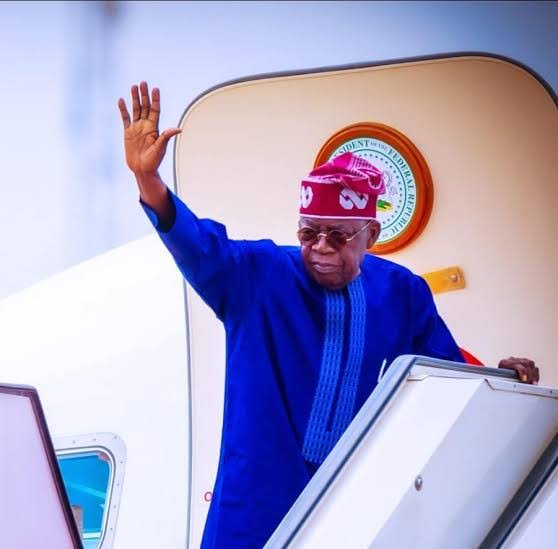
President Bola Tinubu, who is seeking re-election, has so far been less visible on the campaign trail. He reportedly embarked on a three-week working vacation in Europe.
According to a statement by his media aide, Bayo Onanuga, the President departed Abuja on August 31 and is expected to return after three weeks to join the campaign.
The statement described the trip as a working vacation, indicating that the President would continue to attend to state matters while abroad.
But when President Tinubu eventually returns to the campaign trail, many Nigerians will expect more than political speeches. They will want explanations.
The President will be campaigning for another term after more than three years in office. That means the electorate will naturally want to examine his record, ask difficult questions and assess whether his administration has delivered on its promises.
One major issue is the cost of living.
Many Nigerians want to understand how the price of essential commodities, particularly rice, has risen so sharply over the years.
The price of a bag of rice, which was considerably lower during the Goodluck Jonathan administration and rose further under Muhammadu Buhari, has climbed to around N55,000 or more under the Tinubu administration, depending on the variety and location.
The same questions apply to the foreign exchange market. Nigerians who once exchanged the naira at significantly lower rates to the dollar have watched the currency depreciate dramatically.
The question they will expect President Tinubu to answer is simple: What went wrong, what caused the sharp depreciation, and when should Nigerians expect meaningful relief?
Then comes the issue of fuel.
President Tinubu’s declaration of an end to the petrol subsidy in May 2023 immediately changed the country’s fuel-pricing structure. Petrol prices, which had historically been heavily subsidised, have since risen dramatically, placing enormous pressure on transportation, food prices and household incomes.
Nigerians therefore have a legitimate question for the President: If the government is no longer spending trillions of naira on petrol subsidy, where are the savings going, and why has the financial burden on ordinary Nigerians continued to increase?
Public debt is another issue that will require a clear explanation.
Nigeria’s public debt has continued to rise, even as the Federal Government maintains that the petrol subsidy regime has ended. Nigerians will want to understand why the country continues to borrow heavily and what the borrowed funds are being used to finance.
The argument should not simply be about whether borrowing is good or bad. Governments borrow for legitimate reasons. The bigger question is whether the borrowing is producing enough economic and social value to justify the growing debt burden.
There is also the painful question of insecurity.
Across different parts of the country, Nigerians continue to express concerns about killings, kidnappings, banditry, terrorism and other forms of violent crime. There have also been allegations and claims about individuals and groups allegedly sponsoring violence.
These are serious allegations that should not be treated casually.
Nigerians will expect the President to explain what his administration knows about the financing and sponsorship of terrorism and other violent crimes, and what concrete measures are being taken to bring perpetrators and sponsors to justice.
Another issue that has generated controversy is the allegations surrounding President Tinubu’s past legal battles in the United States, including claims relating to a drug case and allegations that money has been used to suppress or block information about the matter.
These claims have circulated widely in public discourse. They should not automatically be treated as established facts. However, because they continue to generate questions, the President should be prepared to address legitimate concerns about his past and allow Nigerians to distinguish between verified facts, court records, political claims and misinformation.
The 2027 campaign therefore presents President Tinubu with an opportunity to do more than defend his administration.
It gives him a platform to explain it.
If the President believes his economic reforms are beginning to produce results, he should present the evidence.
If he believes the hardships Nigerians are experiencing are temporary sacrifices necessary for long-term prosperity, he should explain why and provide a credible timeline for improvement.
If he believes his administration has performed better than previous governments, he should place the figures before Nigerians and allow the people to make the comparison.
There have also been reports suggesting that some of the current economic reforms could take many years before their benefits are fully felt by ordinary Nigerians. Such projections have understandably caused anxiety among people already struggling with high food prices, transportation costs, electricity bills, rent and other basic expenses.
Nigerians cannot be expected to endure hardship indefinitely without seeing a clear path to recovery.
This is why the President’s campaign will be an important moment.
He should campaign like every other candidate. He should present his achievements, defend his policies, answer questions and, where possible, participate in presidential debates and public town-hall engagements.
Power belongs to the people. Anyone seeking to retain political power must therefore be prepared to submit himself and his record to public scrutiny.
Elections should not be treated as matters of life and death. Neither should the use of state institutions or public resources to secure political victory by all means become an acceptable feature of Nigeria’s democracy.
Four years in office is enough time for an incumbent to build a record. If President Tinubu believes that record qualifies him for another term, the best approach is to take that record to Nigerians and ask for their judgement.
A free, fair and transparent election would be one of the greatest services any sitting President could render to Nigeria’s democracy.
The Nigerian people deserve to hear what the government has achieved, what has gone wrong, why some promises have not been fulfilled and what the next four years would look like.
They deserve facts rather than propaganda, explanations rather than excuses, and evidence rather than slogans.
When President Tinubu begins his campaign, these are among the questions many Nigerians will want him to answer.
And perhaps, more importantly, they will want him to listen.
Because at the end of every campaign, the power to decide who governs Nig
eria does not belong to the politicians.
It belongs to the people.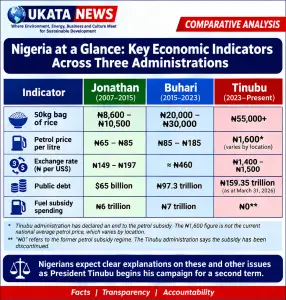
Sponsored
