

For millions of Nigerians, the state of the country’s transport system is felt every day — in the price of food at the market, the cost of moving goods, the safety of road journeys and the ability of businesses to create jobs.
The Chartered Institute of Logistics and Transport (CILT) Nigeria says it wants to see an industry where efficient transport reduces the cost of food, makes Nigerian businesses more competitive, improves road safety, facilitates regional trade and ultimately boosts national productivity.
To drive this agenda, the institute is bringing ministers, policymakers at all levels, state governments, regulators, transport and logistics operators, investors, development partners and other stakeholders together in Abuja for its 2026 National Conference.
CILT Nigeria says the time for repeatedly discussing the country’s transport and logistics challenges is over, and that stakeholders must now move towards practical action.
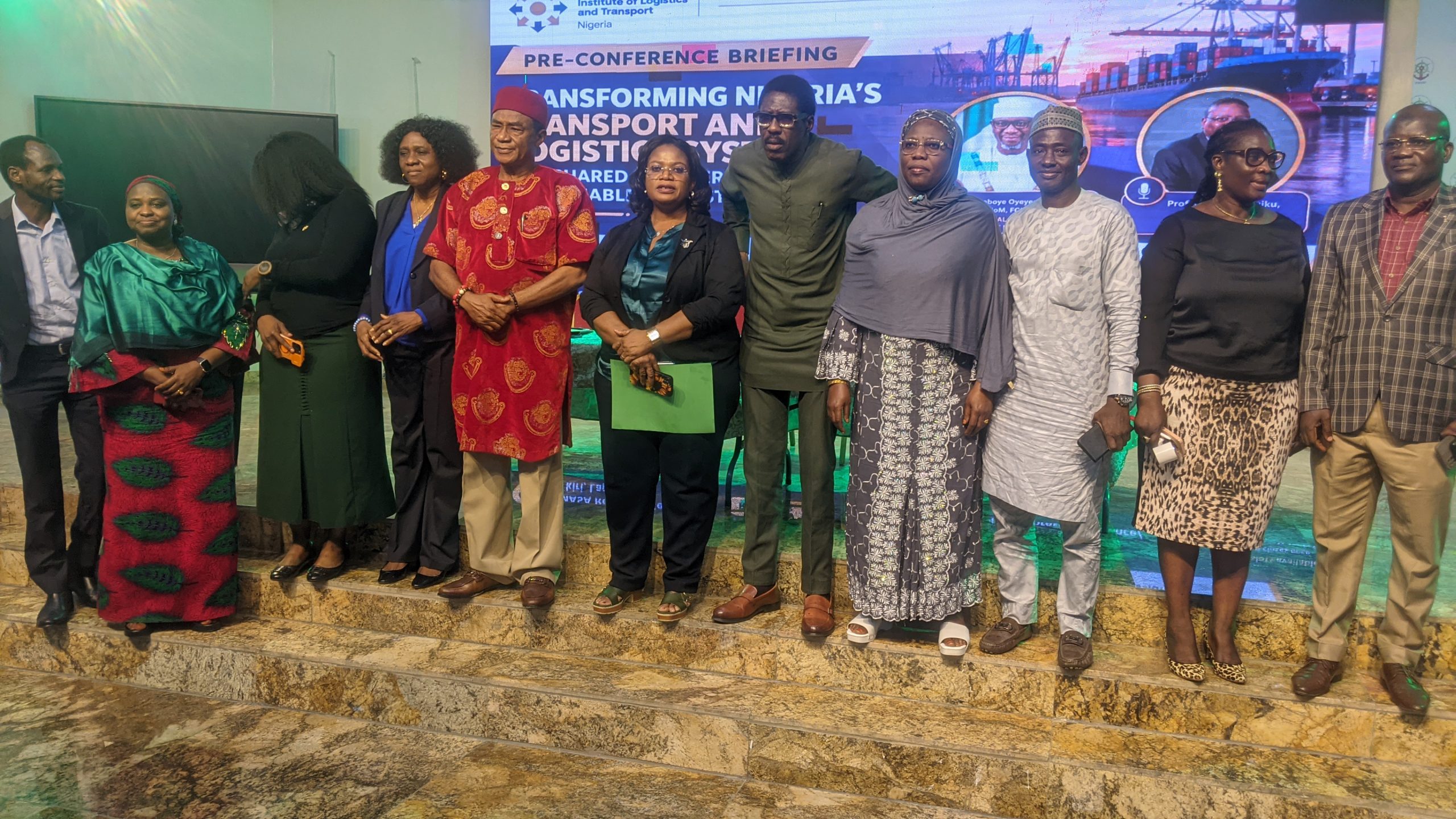
CILT Nigeria officials at the Pre-conference briefing
The Chairman of the Conference Planning Committee, Professor Kayode Oyesiku, made the call at a pre-conference briefing at the NIMASA Resource Centre, Kirikiri, Lagos.
Oyesiku, who was represented by the Dean of the School of Transport and Logistics at Lagos State University (LASU), Professor Ogochukwu Ugboma, said the conference would serve as a national platform for turning transport, logistics and supply-chain challenges into practical pathways for growth, inclusion and resilience.
The conference is scheduled to hold from Wednesday, October 21, to Friday, October 23, 2026, at NICON Luxury Hotel, Abuja, with the theme, “Transforming Nigeria’s Transport and Logistics System for Shared Prosperity and Sustainable Infrastructure.”
According to the organisers, the theme reflects the direct connection between transport and the everyday lives of Nigerians.
Ugboma said transport determines whether workers reach their workplaces safely and on time, whether farmers can get their produce to markets before it spoils, and whether manufacturers can obtain raw materials and distribute finished products at competitive costs.
It also affects the ability of ports and borders to facilitate trade, while influencing the capacity of businesses to expand and create jobs.
He described transport and logistics as the “circulation system” of the national economy, warning that when the system is fragmented, unsafe, expensive or unreliable, households and businesses bear the consequences.
“When it works efficiently, the benefits spread through lower cost, stronger productivity, wider market access, safer journeys and better opportunities,” he said.
Ugboma also appealed to the media to look beyond the conference itself and connect transport performance to issues that directly affect Nigerians.
“Your role extends beyond reporting an event. You shape the national conversation,” he said, urging journalists to help the public understand the link between transport performance and food prices, business competitiveness, road safety, employment, education, regional trade, investment and national productivity.
While unveiling Imo State Governor, Senator Hope Uzodimma, as Special Guest of Honour, and the Director-General of the National Institute for Policy and Strategic Studies (NIPSS), Professor Ayo Omotayo, as lead of the keynote discourse, the institute said the conference would provide a high-level platform for major stakeholders to work towards practical solutions.
Delegates are expected to gain insights into emerging trends reshaping mobility, freight and supply chains, engage with policymakers and industry leaders, build professional and business relationships, explore new technologies and contribute to recommendations that could shape Nigeria’s transport and logistics agenda.
The expected participants include ministers and other policymakers, state governments, regulatory and infrastructure agencies, transport and logistics operators, captains of industry, academics, development partners, professional bodies, investors, students and young professionals.
CILT Nigeria said the conference is relevant to everyone involved in moving people and goods, financing infrastructure, regulating services, developing technology or depending on transportation for their livelihood.
The organisers also stressed the need for early registration, warning that on-the-spot registration at the venue may not be available because the institute wants to avoid overcrowding.
Transport and logistics companies, professional associations, unions, regulators, researchers, investors, technology firms, development partners and interested members of the public have therefore been encouraged to register ahead of the October 21–23 conference.
Registration information and updates are expected to be made available through CILT Nigeria’s official communication channels, including its website, email, LinkedIn and Facebook platforms.
The institute said the conference has been designed to move beyond identifying problems to establishing practical priorities, clarifying responsibilities and building collaborations around solutions, including infrastructure capable of withstanding climate-related risks.
A major feature of the conference will be the “Deal Room,” which Chairman of the CILT Nigeria Editorial Board, Chief Festus Okorie, described as a “live transaction marketplace.”
According to him, selected start-ups and other stakeholders will have the opportunity to pitch potentially bankable transport and logistics projects to investors and financial partners.
The aim, he said, is to create a pathway for viable ideas to move from conference discussions to access to finance and implementation.
The briefing was attended by key officials of CILT Nigeria, fellows of the institute, NIMASA employees and other stakeholders.
For CILT Nigeria, the message going into the Abuja conference is straightforward: when transport and logistics work efficiently, the benefits are felt far beyond the sector — from the food on a family’s table to the competitiveness of businesses and the safety of people on the road.
By Innocent Onoh
