
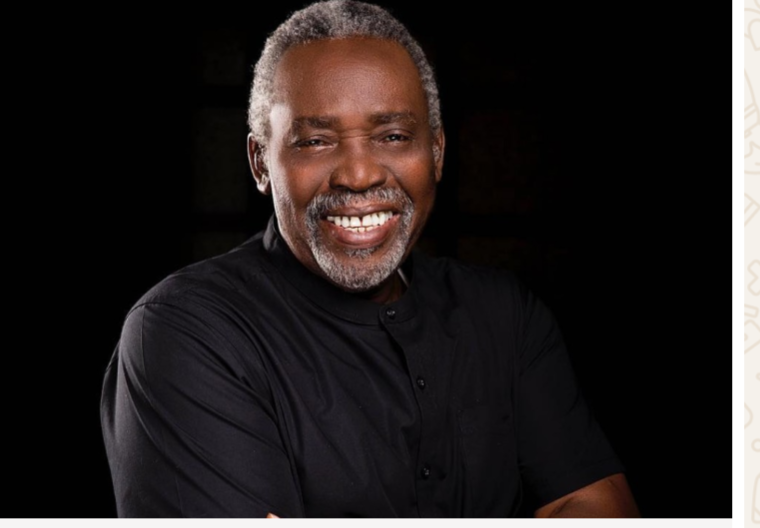

Olu Jacobs Dies at 84: Nollywood Mourns One of Its Greatest Icons
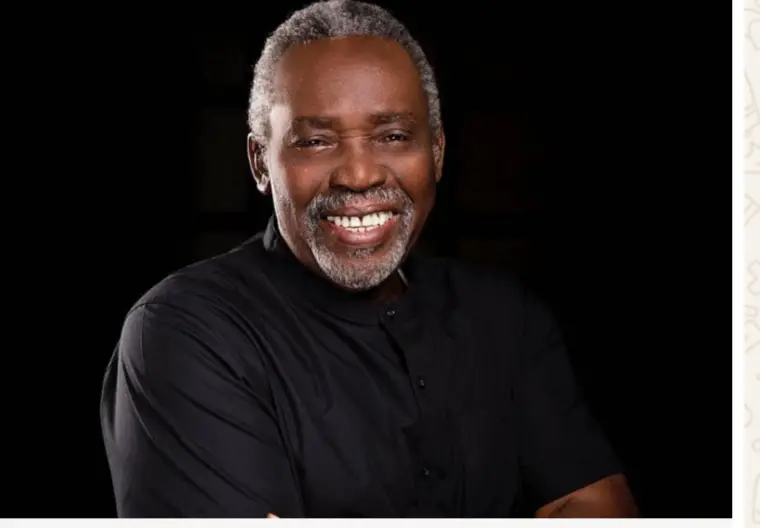
Nigeria’s entertainment industry has been plunged into mourning following the death of veteran actor and film executive, Oludotun Baiyewu Jacobs, popularly known as Olu Jacobs, at the age of 84.
The family announced his passing on Wednesday, September 16, 2026, describing him as a beloved husband, father, grandfather and uncle, and as “The Lion of Lufodo.”
His death marks the end of a remarkable career that stretched across more than five decades and connected British television, international cinema and the evolution of modern Nollywood.
The family, while announcing his death, appealed to members of the public, particularly bloggers and social media influencers, to respect their privacy as they mourn their loss.
Born on July 11, 1942, in Abeokuta, Ogun State, Jacobs spent part of his childhood in Kano, where his early exposure to drama and performance helped shape a career that would eventually take him from Nigeria to some of the most recognised stages and screens in Britain and beyond.
He trained at the prestigious Royal Academy of Dramatic Art (RADA) in London, beginning a professional journey that saw him work extensively in British theatre and television.
Long before Nollywood became a global brand, Jacobs was already appearing in British productions, including The Goodies, Till Death Us Do Part, Barlow at Large, The Tomorrow People and The Professionals.
His international film credits included The Dogs of War (1980), alongside Christopher Walken, Disney’s Baby: Secret of the Lost Legend (1985) and Roman Polanski’s Pirates (1986).
Jacobs eventually returned to Nigeria at a time when the country’s film industry was still developing into what would become globally known as Nollywood.
His presence brought years of professional training, stage experience and international exposure into an industry that was rapidly finding its identity.
He became known for his commanding screen presence, deep and distinctive voice, versatility and ability to portray authority figures with unusual conviction.
Kings, chiefs, fathers, politicians, traditional rulers and other powerful characters became part of the repertoire that made him instantly recognisable to generations of Nigerian viewers.
His performances in Nigerian productions, including Oloibiri, Dry, The Antique, The Royal Hibiscus Hotel, Potomanto and Adesuwa, further cemented his place in the Nigerian film industry.
But his importance to Nollywood went beyond the number of films in which he appeared.
For many younger actors and filmmakers, Jacobs represented a bridge between the traditional theatre era and a new Nigerian film industry that was rapidly becoming an international cultural force.
Together with his wife, celebrated actress Joke Silva, Jacobs also contributed to the professional and educational development of Nigeria’s entertainment industry through the Lufodo Group and Lufodo Academy of Performing Arts.
The couple, who married in 1989, became one of the enduring partnerships in Nigeria’s entertainment industry, respected both for their individual careers and their contribution to developing younger talents.
Jacobs’ contribution to African cinema earned him several major honours.
He won the Africa Movie Academy Award for Best Actor in a Leading Role in 2007, received the AMVCA Industry Merit Award in 2013, and was honoured with a Lifetime Achievement Award at the Africa Movie Academy Awards in 2016.
The Nigerian government also honoured him in 2011 with the national award of Member of the Order of the Federal Republic (MFR) for his contribution to the country.
In his later years, Jacobs largely withdrew from acting as his health declined.
His wife, Joke Silva, had previously spoken publicly about his battle with Lewy body dementia, a condition that affected his health and contributed to his withdrawal from public life.
His absence from the screen was deeply felt by fans who had grown accustomed to seeing him dominate scenes with the authority, composure and unmistakable voice that became his trademark.
Yet even away from the cameras, his name remained firmly embedded in Nigerian popular culture.
For many Nigerians, Olu Jacobs was more than an actor they watched on television or at the cinema. He was part of the cultural memory of several generations — a familiar face whose performances accompanied Nigerians through different stages of their lives.
His career crossed generations, continents and entertainment eras, from British television and international cinema to the rise of Nollywood as one of the world’s most recognisable film industries.
He belonged to a generation of performers who helped establish acting as a serious profession in Nigeria and demonstrated that Nigerian talent could compete on international stages.
As tributes pour in from Nigeria and beyond, the entertainment industry is once again confronted with the loss of one of its most influential elder statesmen.
Olu Jacobs may have taken his final bow, but the stage he helped build remains, and generations of Nigerian actors and filmmakers will continue to tell their stories on it.
For a man who spent more than half a century bringing characters to life, his greatest role may ultimately be the legacy he leaves behind.
Olu Jacobs is survived by his wife, Joke Silva, and their family.
May his memory be a blessing to his family, colleagues, admirers and the countless people who found joy in his work.
