

As Nigeria’s cities expand at a rapid pace, experts in engineering geology and environmental science are warning that poorly planned infrastructure could leave millions of residents more exposed to flooding, erosion, collapsing foundations and contaminated water.
The warning came at the 11th Annual International Conference and Exhibition of the Nigerian Association for Engineering Geology and the Environment, NAEGE, where experts called for geology and environmental science to play a central role in how Nigeria plans and builds its cities.
With the theme, “Geo-Innovation for Sustainable Infrastructure and Environment in a Rapidly Urbanizing Nation,” the conference brought together professionals, legislators and international experts to examine how scientific knowledge can help Nigeria build safer and more resilient communities.
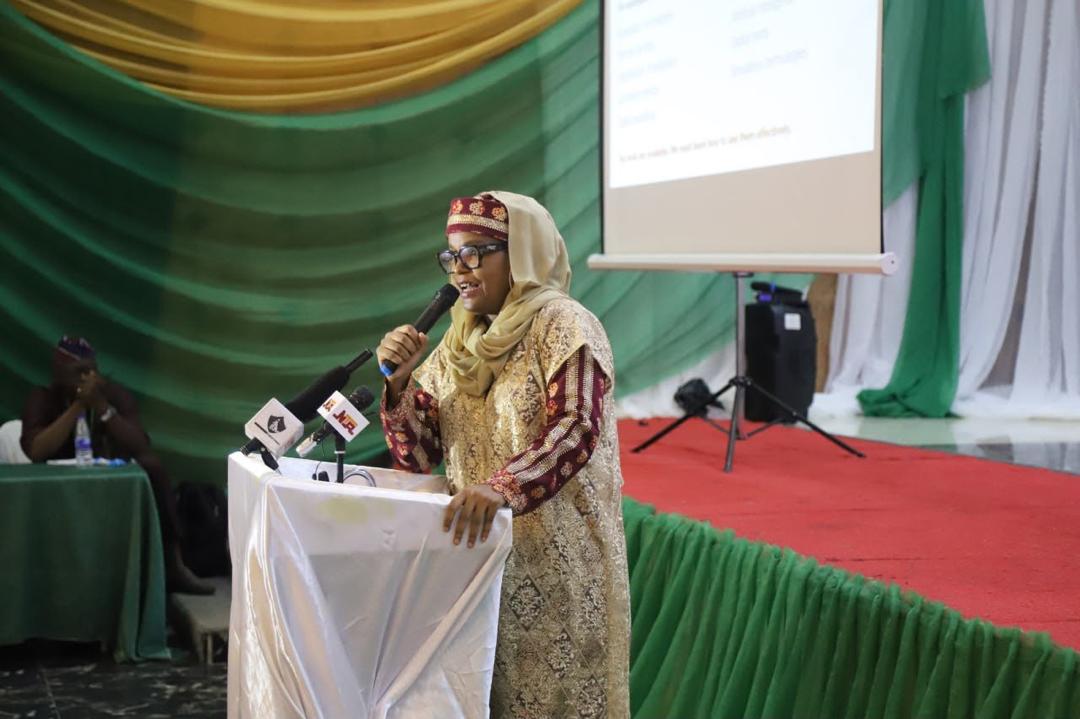
President of NAEGE, Prof. Salome Waziri, said the first step to building infrastructure that can withstand the test of time is understanding the ground on which it stands.
She identified flooding, erosion, foundation failures and groundwater contamination as some of the recurring challenges that can be worsened by inadequate geological information and poor planning.
According to her, geology should no longer be treated as a supporting discipline in infrastructure development but as a critical part of planning, design, construction, monitoring and management.
“These realities reinforce a fundamental principle: sustainable infrastructure must begin with a sound understanding of the ground and the environment,” Waziri said.
She urged policymakers and professionals to anticipate potential failures rather than wait for disasters to occur, stressing that decisions being made today would determine the safety, quality and suitability of the cities inherited by future generations.
The Chairman of the House Committee on Solid Minerals Development, Jonathan Gaza Gbefwi, also called for greater involvement of engineering geologists in major infrastructure projects, particularly as governments embark on the construction of flyovers, roads and other urban infrastructure.
Gbefwi said governors should seek professional geological input to ensure that major structures are properly founded and capable of withstanding the conditions of the locations where they are built.
“I just pray that the governors seek the professional input of the engineering geologist to make sure that those flyovers are actually stable, especially with recent calls by President Bola Ahmed Tinubu for a more measured approach to infrastructure,” he said.
He added that understanding the geological conditions of a location would help reduce risks, improve the durability of infrastructure, protect lives and property, and ensure better value for public and private investments.
Gbefwi also urged Nigerians to look beyond the traditional perception of geology as being primarily about mineral extraction.
“For too long, our conversations around geology have been dominated by what we can extract from the ground. But I’m so happy that this conference brings to light that geology goes far beyond just extraction,” he said.
The Registrar of the Council of Nigerian Mining Engineers and Geoscientists, COMEG, Prof. Zachaeis Opafunso, and the President of the Nigerian Mining and Geosciences Society also stressed the importance of scientific innovation, environmentally responsible approaches and international collaboration in addressing Nigeria’s infrastructure and urbanisation challenges.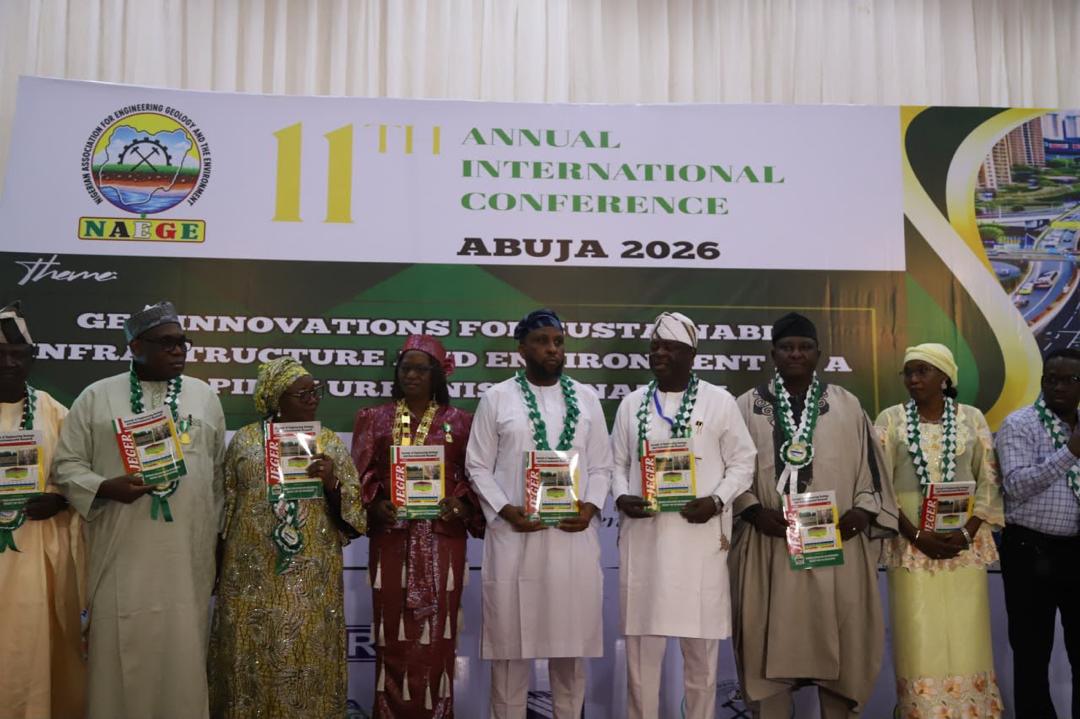
They noted that stronger cooperation among government agencies, professionals and other stakeholders would improve knowledge sharing and help tackle the complex geological and environmental problems associated with rapid urban growth.
The conference featured discussions on emerging technologies, sustainable construction materials, waste management and alternative energy resources.
It also witnessed the decoration of 11 new fellows and the unveiling of the association’s journal.
For a country where heavy rainfall can turn poorly planned neighbourhoods into flood zones and weak foundations can threaten expensive infrastructure, the central message of the conference was clear: building Nigeria’s cities sustainably starts with understanding what lies beneath them.
