

Umunede Market: 2,000 Traders, Residents Warned About Human Trafficking Tricks
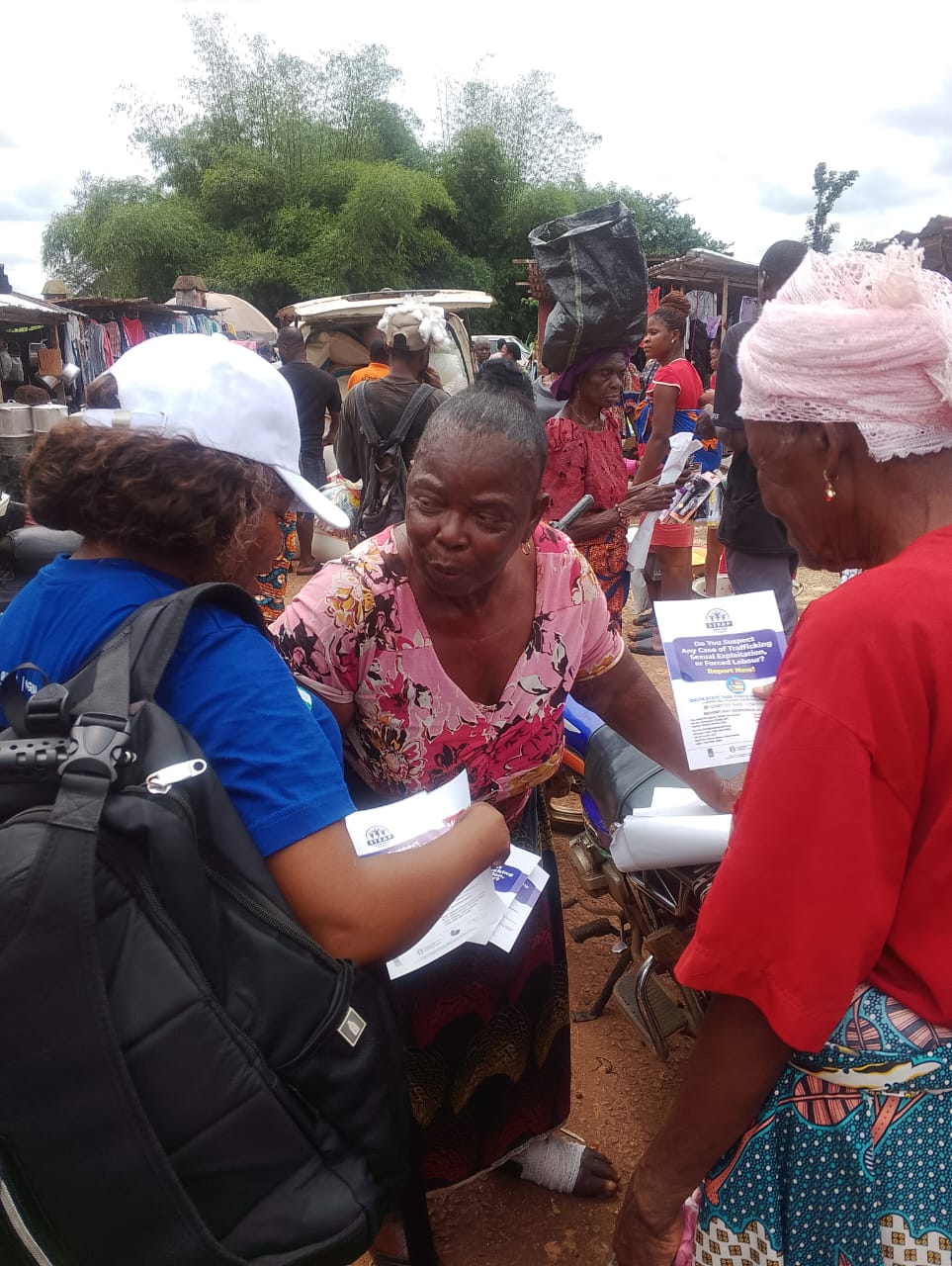
A routine day at Umunede market in Delta State took a different turn as traders, commercial transport workers and residents gathered to hear a warning about a crime that often begins with what appears to be an innocent offer of a job, travel opportunity or a better life.
About 2,000 traders, residents and members of the public in Umunede, Ika North East Local Government Area, have been sensitised on the dangers of human trafficking and the need to report suspected cases before victims are trapped or moved away from their communities.
The sensitisation campaign was organised by the International Centre for Migration Policy Development (ICMPD), in collaboration with the National Agency for the Prohibition of Trafficking in Persons (NAPTIP), Delta State Taskforce Against Human Trafficking and Irregular Migration, the State Ministry of Education and Hope Health Organisation.
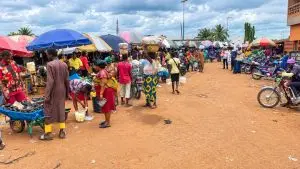
The exercise took place at Umunede market and extended to neighbouring communities including Akomazi, Ekuoma and Otolokpo.
Organisers said the campaign was part of the Schools Anti-Trafficking Education and Advocacy Project (STEAP), funded by the Government of the Netherlands, and was designed to take anti-trafficking awareness directly to communities where vulnerable people can be targeted.
Rather than limiting the campaign to formal meetings, members of civil society organisations working with ICMPD moved through the market, engaging traders, buyers, passersby, motorcycle riders and commercial bus drivers.
The sensitisation was conducted in English, Pidgin English and the local dialect, while flyers and posters carrying anti-trafficking messages were distributed across the market and surrounding communities.
Leading the CSO sensitisation team, Hope Health Organisation Project Coordinator, Oluwakemi Omotoso, urged residents to reject the culture of silence that allows traffickers to operate.
She called on the people to report suspected traffickers and victims to NAPTIP, law enforcement agencies and credible civil society organisations.
Omotoso described human trafficking as a heinous crime that requires communities to work together to prevent and expose it.
She reaffirmed ICMPD’s commitment to combating human trafficking in Edo, Delta, Ogun, Enugu and Benue states, where the organisation says trafficking remains a serious concern.
For residents to recognise trafficking before it is too late, the Monitoring and Evaluation Officer of Hope Health Organisation under the STEAP project, Stanley Osiaje, explained some of the tactics allegedly used by traffickers.
He identified fake job offers, web hunting, extortion, sextortion and baby factories among the methods used to lure or exploit unsuspecting people.
Osiaje also highlighted various forms of trafficking, including sex trafficking, forced labour, recruitment of child soldiers, organ harvesting, domestic servitude and trafficking for ritual purposes.
He urged residents to be alert to suspicious activities and provide timely information to law enforcement agencies.
The grassroots approach was further strengthened when CSO Project Officer, Nwaefulu Matthew, addressed members of the market community in the local dialect, encouraging them to take ownership of the campaign and protect young people and other vulnerable members of society.
Another CSO officer, Ajawobu Philip, distributed anti-trafficking flyers and posters while urging traders and other members of the public to provide information that could help authorities identify and apprehend suspected traffickers.
The message appeared to resonate with the traders, many of whom gathered around the sensitisation team, collected awareness materials and shared experiences of suspected attempts by traffickers.
Some traders, including Mrs Amaka Okonkwo, Mama Blessing and Ikeogwu Chukwuka, commended the organisers for taking the campaign directly to the marketplace.
They called for sustained sensitisation in Umunede and neighbouring communities, saying regular awareness could help residents recognise trafficking schemes and protect vulnerable people before they become victims.
For the organisers, the campaign is ultimately about putting knowledge in the hands of ordinary people — because in the fight against human trafficking, a trader, driver, neighbour or passerby who recognises the warning signs could be the person who helps save a life.
