
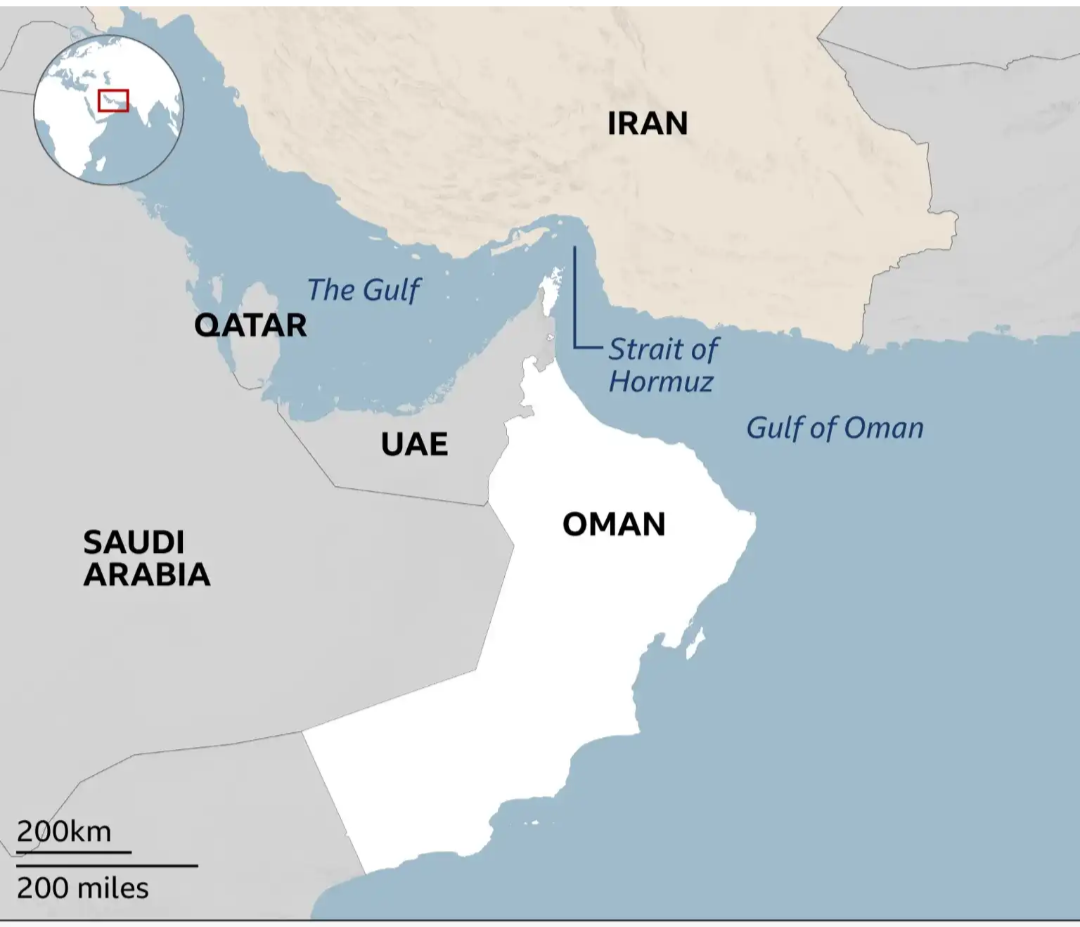



Fighting between the United States and Iran has intensified, with the strategically important Strait of Hormuz emerging as one of the major flashpoints in the conflict and raising fresh questions about when the hostilities will finally end.
The escalation followed reports from Tehran that the United States had successfully taken control of the Strait of Hormuz, although Iran insisted it would reclaim control of the crucial waterway.
According to an elaborate report by the BBC, the United States and Iran exchanged retaliatory attacks on vessels on Saturday, marking the latest round of strikes since fighting resumed a week ago after a month of relative calm.
The US military said it had “permanently disabled” two Iran-linked oil tankers, including one near Kharg Island, and “completely destroyed” a third vessel in the Gulf of Oman.
Iranian state media confirmed the American strikes and said Tehran had responded by attacking three US-affiliated vessels, as well as three oil tankers travelling through the Strait of Hormuz along what it described as an “unauthorised” route.
The BBC said it had contacted US Central Command (CENTCOM) for a response to Iran’s latest claims that American-linked vessels had been targeted.
The latest exchange came a day after US President Donald Trump described the conflict as “small potatoes”, despite little apparent progress towards ending the six-month-old war. Trump had not publicly commented on Saturday’s attacks at the time of the BBC report.
Earlier, US Defence Secretary Pete Hegseth had warned on social media that if Iran attacked US vessels, Washington would respond by destroying and sinking Iranian oil tankers.
According to CENTCOM, two US warships had earlier come under attack from Iran before the American military struck three Iran-linked oil tankers.
CENTCOM said its forces had “successfully evaded” multiple attacks by Iran’s Islamic Revolutionary Guard Corps (IRGC), which it said were directed at a US aircraft carrier and a guided-missile destroyer. No American troops were injured, according to the command.
CENTCOM, which oversees US military operations across the Middle East, also alleged that the three Iranian-linked oil tankers targeted by the US were part of a “multi-billion-dollar shadow network” used to finance the IRGC and its regional proxies.
Iranian state broadcaster IRIB reported that there were no casualties in the US strike on the tanker near Kharg Island.
Kharg Island is home to Iran’s main oil export terminal, through which a significant proportion of the country’s crude oil is shipped after being transported by pipeline from the mainland.
IRIB also reported that the crews of two tankers attacked in the Gulf of Oman were taken to shore in lifeboats. One of the vessels was reportedly empty, while the other was carrying oil.
Several hours later, IRIB reported that the IRGC had retaliated against six vessels in the region—three oil tankers in the Strait of Hormuz and three vessels it described as being “affiliated” with the United States in other areas.
According to IRIB, the IRGC said the three oil tankers had used “unauthorised” routes through the strait and warned other vessels against using the same routes.
The Strait of Hormuz, one of the world’s most important maritime routes for oil and gas shipments, has become a major source of leverage for Iran since the conflict began in February.
Tehran has insisted that it will retain some measure of control over the waterway and has previously targeted vessels using a southern route through Omani waters, which avoids the route preferred by Iran through its territorial waters.
Despite the Iranian attacks, President Trump has maintained that the strait is “open”, while the US military has been assisting vessels navigating the southern route.
After a period of relative calm, the United States resumed attacks last Sunday, saying it had targeted two rocket launchers to prevent them from being used to lay naval mines in the Strait of Hormuz.
On Tuesday, Trump said the US had launched another “very heavy attack”, but suggested that the renewed fighting would not continue for “too long”.
The renewed US strikes prompted Iran to retaliate against American targets in the region, including locations in the United Arab Emirates, Bahrain, Kuwait and Jordan.
On Thursday, US Vice-President JD Vance also addressed reports that American strikes had killed at least four people, including two children, at a wedding ceremony in southern Iran.
Vance said he was “extremely sceptical” about the reports but added that the United States would investigate the allegation.
The Iranian Red Crescent Society, however, said shrapnel from a missile struck the ceremony at a home in Sirik on Tuesday. Iranian authorities subsequently described the incident as a “war crime”.
As the exchanges of fire continue, the Strait of Hormuz remains at the centre of growing international concern. Any prolonged disruption of the waterway could have consequences far beyond the battlefield, given its importance to global energy supplies and international shipping.
For communities caught in the middle of the conflict, however, the most immediate concern remains the human cost of a war with no clear end in sight.
