



Nigeria Could Unlock $15bn Annual Climate Economy Through Circular Economy —FG
Nigeria could generate more than 15 billion US dollars annually from climate action and the circular economy if the opportunities are properly harnessed by government, businesses, investors, innovators and other stakeholders.
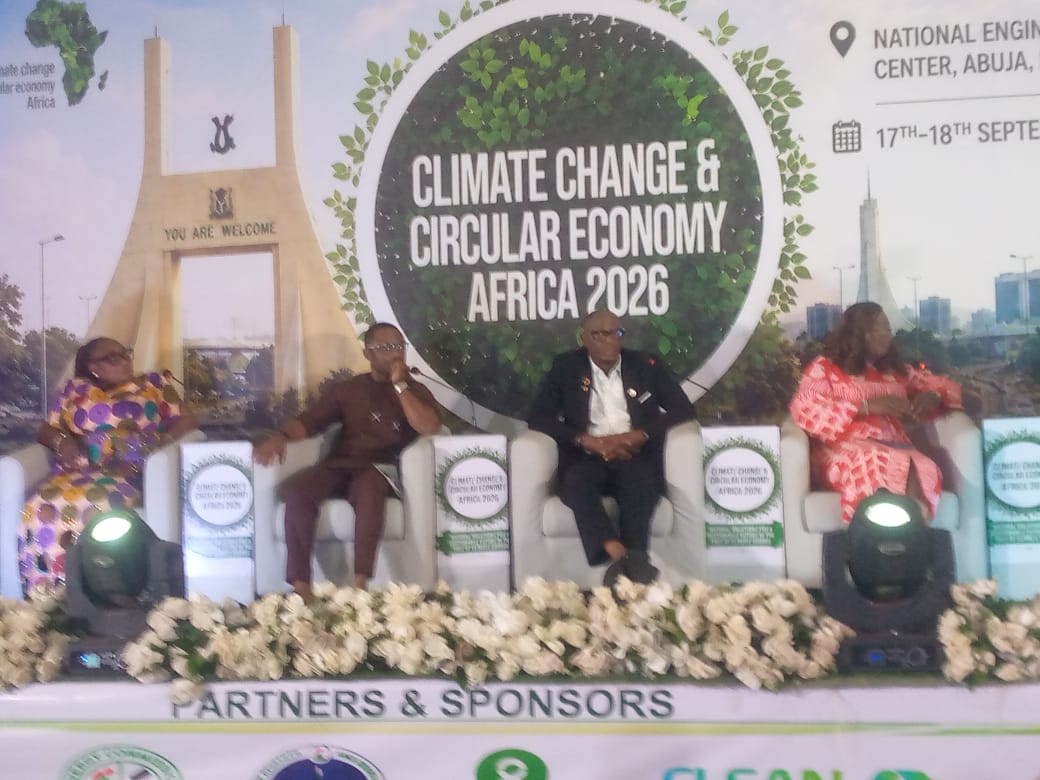
The Minister of Environment, Mallam Balarabe Lawal, stated this in Abuja at a two-day Conference on Climate Change and Circular Economy, CCCE Africa, organised to examine practical pathways towards a more sustainable African economy.
With the theme, “Natural Solutions for a Sustainable Future,” the conference brought together policymakers, entrepreneurs, investors and innovators to explore solutions capable of turning Africa’s environmental challenges into economic opportunities.
For millions of Nigerians dealing with overflowing waste bins, polluted waterways, flooding and the rising cost of living, the circular economy offers more than an environmental solution. It could create jobs, support new businesses and turn materials currently treated as waste into valuable resources.
Lawal said the Federal Government had commenced implementing policies aimed at promoting reuse, recycling and redesign, reducing dependence on virgin raw materials while tackling the twin challenges of waste generation and climate change.
The Minister, who was represented at the conference by Mr. Ohis Ambrose of the Department of Climate Change in the Ministry, stressed that Africa had contributed relatively little to global emissions but continued to suffer disproportionately from the consequences of climate change.
He called for increased investment in natural climate solutions and sustainable financing mechanisms, including the monetisation of carbon credits, while urging stakeholders to move beyond policies and frameworks to practical action that would improve people’s lives.
Lawal also reaffirmed the Federal Government’s commitment to climate-resilient and low-carbon development through circular economy principles, saying Nigeria’s approach could provide a model for other African countries.
Representing the Senator for the Federal Capital Territory, Ireti Kingibe, her aide, Mrs Becky Ephraim, said the National Assembly was prepared to strengthen legislation addressing climate change while supporting initiatives capable of creating employment opportunities for young Nigerians.
The Convener of the Climate Change and Circular Economy Conference, Miss Zigwan Fanda, urged Nigerians to take waste management seriously, stressing that proper waste disposal could protect communities while creating opportunities for young people in the emerging waste-to-wealth economy and technological transition.
Participants also called for greater access to climate finance and investment, particularly for businesses developing sustainable models around recycling, reuse, resource recovery and other circular economy activities.
Goodwill messages from representatives of relevant government ministries and agencies reaffirmed their commitment to building a more resilient economy while protecting Nigeria’s environment for present and future generations.
