
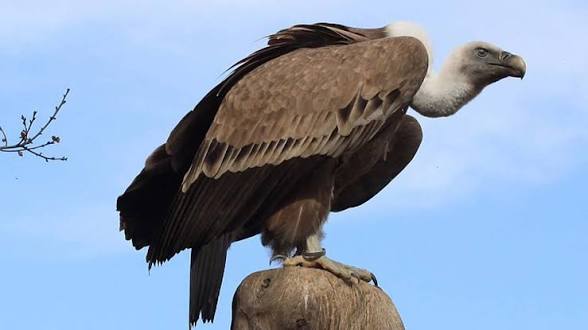



VULTURE AWARENESS
Nigerian nature lovers over the weekend joined their counterparts around the world to mark International Vulture Awareness Day, observed annually on the first Saturday of September.
The celebration drew attention to the urgent need to protect vultures from threats ranging from poisoning and illegal hunting to habitat loss and the trafficking of their body parts.
Experts also called for increased forest conservation, greater public awareness of the ecological importance of vultures, and an end to the use of vulture body parts in traditional medicine, urging practitioners to embrace safer plant-based alternatives.
As Nigeria joins the global campaign to protect the threatened birds, our Correspondent, Innocent Onoh, in this special report examines the importance of vultures, the threats to their survival and what can be done to save them from extinction.
Vultures may not be the most attractive birds, but their importance to the environment cannot be overstated.
For decades, they have served as nature’s sanitation officers, feeding mainly on dead animals and helping to remove carcasses that could otherwise become breeding grounds for disease.
But across Nigeria, these once-common birds are becoming increasingly difficult to find.
In Lagos, for instance, some residents say it has become rare to see vultures around major abattoirs, including those in Ojo Barracks, Lagos, Ketu, Mile 12 and Ikorodu, areas that were once regarded as meeting points for the birds.
Conservationists and environmental advocates say the decline is being driven by a combination of threats, including illegal hunting, poisoning, habitat destruction and the demand for vulture parts for traditional medicine.
The situation has raised concern among conservationists, who warn that losing vultures could have serious consequences for public health and the environment.
At the screening in Lagos of a documentary by the Nigerian Conservation Foundation, NCF, on the challenges threatening vulture survival, participants called for a change in public perception and stronger action to protect the birds.
Some urged Nigerians to reject the belief that vultures are evil or symbols of bad omen.
“Vultures are not there again. Vultures contribute to the ecosystem, and we should realise that animals are not harmful to us. They are our friends.”
Another participant urged Nigerians to take the message across the country that vultures are not evil, but perform an important ecological function.
“Vultures do a great service as sanitation officers,” the participant said.
The Director-General of the Nigerian Conservation Foundation, Dr Joseph Onoja, says protecting vultures is also important for preventing future disease outbreaks.
He explains that by feeding on carcasses, vultures help to clean up the environment and reduce the risk of disease transmission.
According to him, the relationship between environmental health and human health makes the conservation of vultures particularly important.
Vultures generally do not hunt live prey. Instead, they feed on dead animals, helping to dispose of carcasses and reduce the potential spread of pathogens.
Despite this important role, vultures have long suffered from a negative image in many communities.
In parts of Africa, their presence is sometimes associated with death or bad omen, leading some people to chase them away or kill them.
But increasing awareness appears to be changing this perception.
A former Vice President of the Lagos Chamber of Commerce and Industry and NCF Fellow, Chief Shobajo, says she was once among those who did not appreciate the value of vultures.
“I never thought there was any good in the vulture. Even the look of the vulture is not attractive.
“But I have now come to see that the vulture is beneficial. When you have carcasses, either in the forest or even in the cities, they help to sanitise the environment.”
In recent years, several initiatives have emerged in Nigeria to raise awareness and support vulture conservation.
One of them is a community-based conservation initiative in Gashaka Kingdom, Taraba State, which places vultures at the centre of community conservation efforts.
Another is a cycling campaign in Lagos organised to promote vulture conservation. Participants rode along the Lekki-Epe Expressway for one mile under the theme, “A Mile for Egyptian Vultures.”
Dr Onoja says the Egyptian vulture has received particular attention because of the serious threats facing the species.
“Egyptian vulture is the flagship for other vulture species that are declining in our world, especially in Nigeria, so that people will know the importance of vultures in our environment.”
The conservation campaign has also attracted the support of celebrities and public figures.
The Nigerian Conservation Foundation has unveiled a number of Vulture Ambassadors to help raise awareness, including comedian and songwriter Oduak Peters and veteran broadcaster Marian Lange.
As the international community marked Vulture Awareness Day, the NCF raised fresh concerns over the rapid decline of vultures in Nigeria, warning that illegal killing, poisoning and trafficking could push some species towards extinction.
The Foundation says four of the seven vulture species found in Nigeria are classified as critically endangered by the International Union for Conservation of Nature, IUCN.
They include the Hooded Vulture, White-backed Vulture, Rüppell’s Vulture and White-headed Vulture.
The NCF says the Hooded Vulture population has declined by an estimated 95 per cent since the early 2000s.
Research also indicates that Nigeria has become a major hub for the illegal regional trade in vulture parts, with an estimated 73 per cent of vulture carcasses traded across West Africa passing through Nigerian markets.
Dr Onoja says Nigeria must urgently address poisoning, illegal killing and trafficking if the country’s remaining vulture populations are to survive.
He stresses that vultures play a critical role in keeping the environment clean by consuming dead animals and helping to reduce the spread of diseases.
The NCF is therefore calling on the Federal Government to strengthen enforcement of wildlife protection laws, implement the West African Vulture Conservation Action Plan, WAVCAP, and establish safe zones to protect vulture feeding and breeding areas.
The Foundation is also urging Nigerians to reject the purchase and use of illegally sourced vulture parts and report suspected wildlife crimes to the appropriate authorities.
For a bird that has been misunderstood for generations, the message from conservationists is simple: vultures are not harbingers of death; they help prevent disease and keep the environment clean.
Their survival, therefore, is not only about protecting wildlife. It is also about protecting human health and maintaining the delicate balance of nature.
As Nigeria and the rest of the world confront the growing threat of emerging diseases, saving the vulture may prove to be more important than many people realise.
Innocent Onoh
