



MTN Nigeria has urged stronger government-private sector collaboration to shift tourism from seasonal celebrations to year-round economic activity, creating sustainable jobs, businesses and investments from Nigeria’s cultural attractions, festivals and growing global visibility.
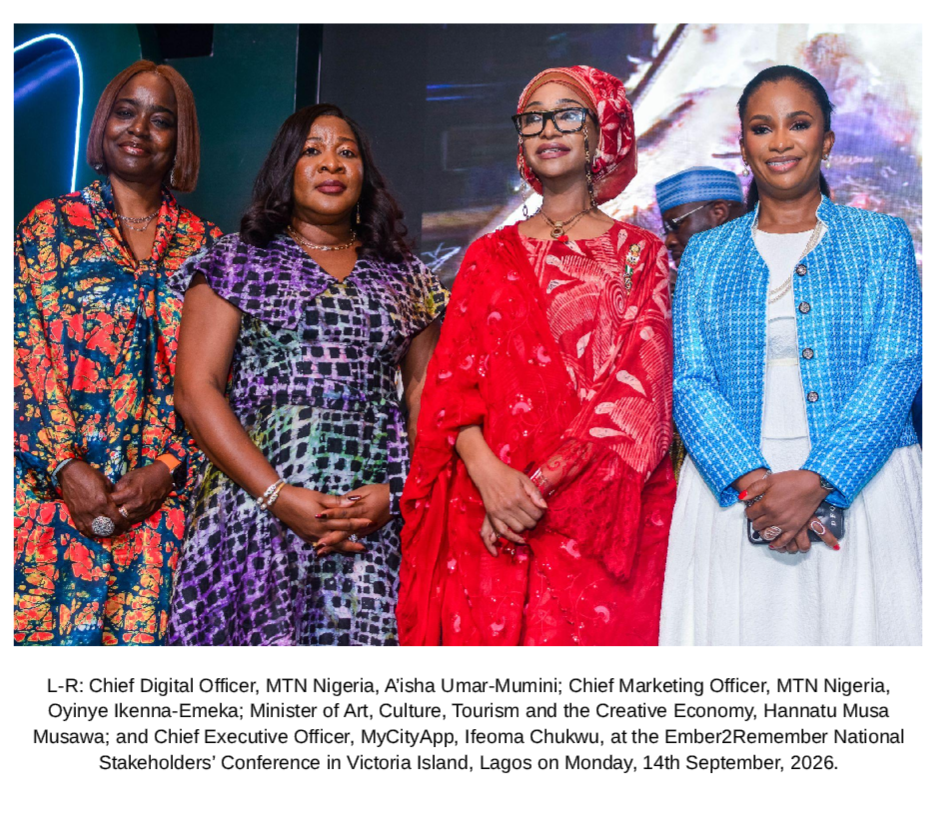
The company’s Chief Marketing Officer, Oyinye Ikenna-Emeka, made the call at the Ember2Remember National Stakeholders Conference 2026 in Lagos, where stakeholders examined ways to unlock Nigeria’s projected $100 billion tourism potential.
The conference, themed “From Celebration to Economic Growth: Unlocking Nigeria’s $100 Billion Tourism Opportunity,” was organised by the Federal Ministry of Arts, Culture, Tourism and the Creative Economy in partnership with MTN through its See Naija initiative, which promotes Nigeria’s people, places, culture and stories.
Ikenna-Emeka said the September-to-December festive season, which attracts Nigerians in the diaspora and international visitors, should serve as a foundation for a tourism economy that generates income beyond the celebrations.
“The September to December season gives us a starting point, but our vision must extend beyond it. Success will be measured by whether the activities generated during this period generate businesses, jobs, and investments that endure long after the celebrations end,” she said.
She said reliable digital connectivity, cashless payments, navigation tools and access to information were increasingly essential for modern travellers, particularly Nigerians returning home and visitors exploring the country.
Technology, she added, could ease travel challenges, help tourists discover destinations and connect them with local businesses.
“We must recognise that a modern visitor economy is ultimately a connected economy,” she said, noting that visitors and members of the Nigerian diaspora retain their digital expectations when they cross the country’s borders.
Highlighting MTN’s contribution to the digital economy, Ikenna-Emeka disclosed that the company had planned investments of more than ₦1 trillion for 2026, with approximately ₦621 billion already deployed in capital expenditure during the first half of the year to strengthen broadband infrastructure.
She said the investments would improve Nigeria’s global competitiveness, support innovation and provide visitors with a more seamless experience.
Ikenna-Emeka also highlighted MyCityApp, which evolved from the MyLagos app launched in partnership with the Lagos State Government in March 2025.
The platform combines transport information, government services, local attractions and emergency access in a digital ecosystem covering all 36 states and the Federal Capital Territory.
She identified See Naija as a tool for promoting Nigeria’s cultural heritage to wider audiences and MTN’s MoMo platform as a means of enabling cashless transactions for tourists, hospitality businesses and local traders.
Drawing lessons from South Korea, where cultural exports have stimulated tourism, food, entertainment and other sectors, she called for closer cooperation between government and businesses to create an environment where tourism, technology and creativity can thrive.
She proposed a unified digital system for approving major cultural events, processing permits, managing venue licences and improving crowd management, saying better coordination would make event planning and tourism operations more efficient.
She also called for stronger intellectual property protection so Nigerian musicians, filmmakers, artists and other creative professionals can benefit commercially from their work.
“By leveraging advanced technology to create centralised, secure digital registries for Nigerian art, music, and film, we can accurately timestamp creative assets, seamlessly track their usage globally, and automate royalty collections,” she said.
She said achieving the $100 billion ambition would depend on converting the international attention Nigeria already enjoys into sustainable opportunities for businesses, workers and creative professionals.
“Nigeria already has the attention of the world. Our task now is to convert that attention to opportunity, and that opportunity into an enduring national prosperity,” she added.
MTN Calls for Greater Focus on Local Tourism to Boost Economic Growth
MTN Nigeria has also urged stakeholders to prioritise domestic travel, saying local festivals, cultural attractions and entertainment events could generate income and create opportunities for communities across the country.
The company’s General Manager, Consumer Segment Management, Idowu Adesokan, made the call at the conference, where industry leaders examined ways to transform festive activities into a sustainable tourism economy.
Adesokan said Nigeria could generate greater value by encouraging residents and visitors to explore destinations beyond the cities they traditionally frequent. Tourism, he explained, should connect travellers to transportation, accommodation, food, entertainment, cultural events and local businesses.
“Tourism itself should be an economic value chain, which involves a lot of things. It includes cross-selling. It includes having a seamless experience from the beginning to the end,” he said. “I think one critical part of the value chain is the local tourism.”
Using Lagos’s December festivities as an example, Adesokan said the city’s large visitor numbers and entertainment events could promote destinations across Nigeria. Travellers arriving in Lagos could also be encouraged to visit other cities, attend local festivals and explore cultural attractions, spreading tourism benefits beyond major urban centres.
He cited the Osun-Osogbo Festival and cultural events in Calabar as attractions that could be better integrated into Nigeria’s wider tourism offering to draw visitors and support hotels, transport operators, restaurants, artisans, entertainers and other small businesses.
Adesokan also stressed the importance of safety and reliable information, saying visitors should be able to find details about destinations, events, transportation and security arrangements before and during their journeys.
Nigeria, he said, must move beyond promoting individual festivals and attractions to building a coordinated tourism ecosystem in which services complement one another and deliver measurable economic benefits.
“There is awareness. But we now need to be mindful of creating it into a proper ecosystem, which we can measure also and be sure that this thing comes from within, this growing economy and it’s adding value to life,” he said.
His call underscores the role of domestic tourism in building a resilient industry sustained not only by international visitors and seasonal celebrations but also by Nigerians exploring their country throughout the year.
