



Nigeria and BRICS: Balancing New Partnerships Without Losing Old Alliances
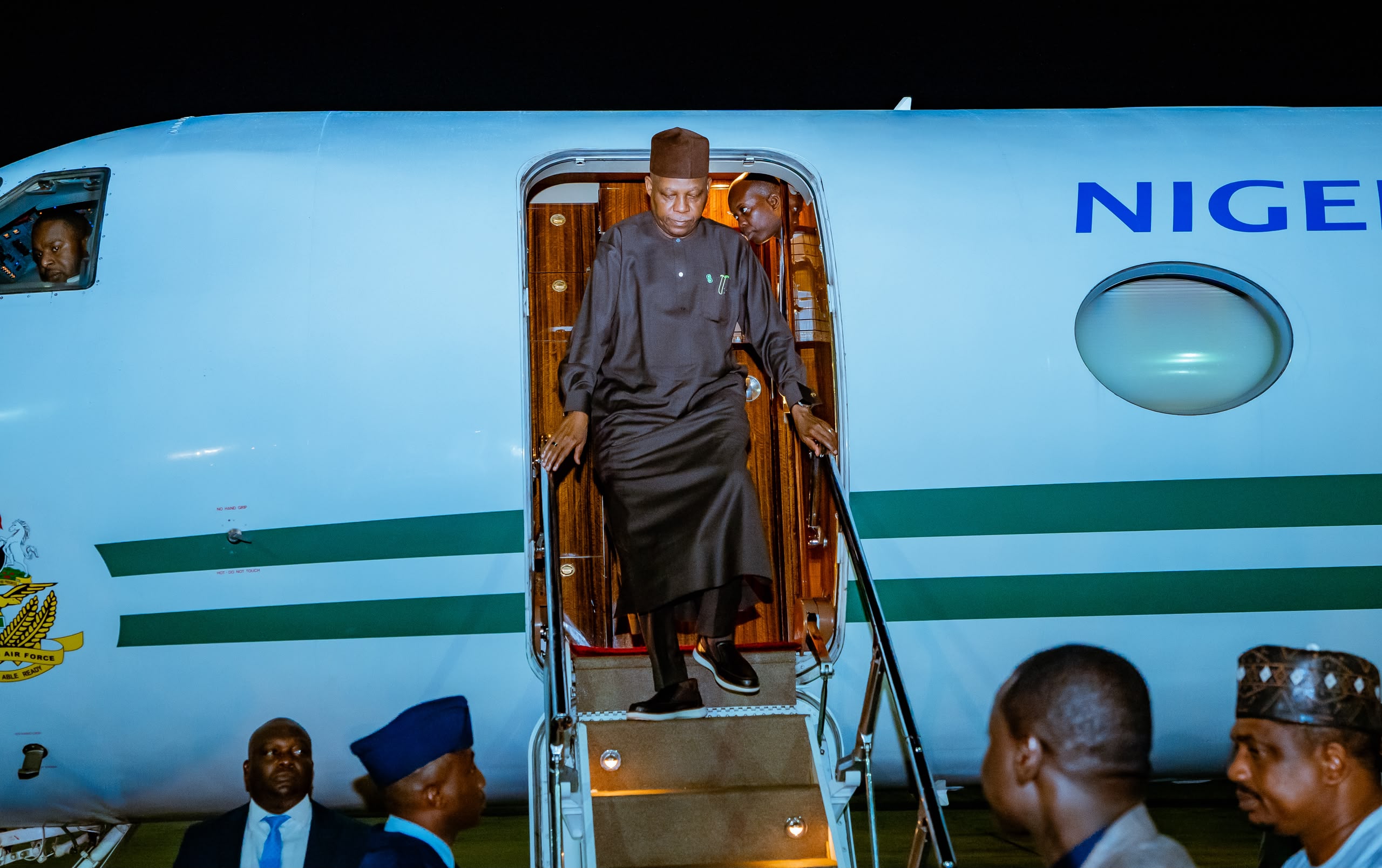
Vice President Kashim Shettima represented President Bola Ahmed Tinubu at the just-concluded 18th BRICS Leaders’ Summit in New Delhi, India, reinforcing Nigeria’s growing engagement with the economic bloc since the present administration assumed office.
According to a statement released after the summit, Nigeria’s participation was aimed at deepening relations with BRICS countries, expanding trade and investment opportunities, and attracting partnerships in agriculture, technology and the digital economy.
Shettima led a high-level Nigerian delegation that included the Minister of Foreign Affairs, Ambassador Bianca Odumegwu-Ojukwu, as well as the Ministers of Industry, Trade and Investment; Communications, Innovation and Digital Economy; and Environment.
Nigeria became a BRICS partner country in January 2025. Its partner status allows it to participate in selected BRICS activities and cooperate with member states on areas such as trade, investment and development, but does not confer full membership or the same decision-making status enjoyed by the bloc’s full members.
The New Delhi summit followed President Tinubu’s attendance at the 17th BRICS Summit in Rio de Janeiro, Brazil, in July 2025. Nigeria’s repeated participation has consequently drawn attention to the direction of the country’s foreign policy and its expanding relationship with the emerging economic bloc.
BRICS was formally established in 2009, initially bringing together Brazil, Russia, India and China before South Africa joined in 2010. The bloc has since expanded to include Egypt, Ethiopia, Iran, Saudi Arabia, the United Arab Emirates and Indonesia as full members.
The current BRICS partner-country category includes Belarus, Bolivia, Cuba, Kazakhstan, Malaysia, Nigeria, Thailand, Uganda, Uzbekistan and Vietnam.
Nigeria’s increased engagement represents a departure from previous administrations, which did not pursue BRICS membership while maintaining strong participation in institutions such as the United Nations, African Union, Group of 77 and OPEC.
That shift raises an important diplomatic question: how can Nigeria deepen its relationship with BRICS while preserving its longstanding strategic, economic and developmental ties with the United States, United Kingdom and other Western partners?
The question is particularly significant because Nigeria’s foreign relations have traditionally been broad rather than tied exclusively to one geopolitical bloc.
Over several decades, Western countries and institutions, including the United States, United Kingdom, World Bank and International Monetary Fund, have played significant roles in Nigeria’s development through financing, technical assistance, trade, education and other forms of cooperation. At the same time, Nigeria has increasingly turned to China and other Asian partners for infrastructure financing and investment.
China, for instance, has financed or participated in major Nigerian infrastructure projects, including railway and power projects, while Chinese companies have become important players in the country’s construction, telecommunications, manufacturing and other sectors.
The attraction of BRICS is therefore understandable. The bloc provides Nigeria with another platform for trade, investment, development financing and diplomatic engagement at a time when emerging economies are seeking greater influence in global economic affairs.
But new partnerships also require careful scrutiny.
Nigeria must examine the terms of every foreign loan, infrastructure agreement and investment arrangement, regardless of whether the partner is from the West, Asia, the Middle East or elsewhere. The issue should not be whether a partner belongs to BRICS or the Western alliance, but whether an agreement serves Nigeria’s long-term interests and is transparent, sustainable and economically beneficial.
Debt experiences in countries such as Sri Lanka and Zambia have also demonstrated the risks that can arise when developing countries accumulate unsustainable foreign obligations. Those experiences should encourage Nigeria to subject every major financing arrangement to rigorous economic and public scrutiny rather than assume that any particular source of capital is automatically beneficial or harmful.
Nigeria’s domestic economic challenges make such caution even more important. Weak infrastructure, insecurity, unemployment, poverty, corruption and limited industrial capacity continue to constrain the country’s ability to take full advantage of international trade and investment opportunities.
BRICS itself is not a substitute for domestic reform.
Brazil has a large diversified economy and significant agricultural, industrial and natural-resource sectors. India has developed globally competitive pharmaceutical, information technology and services industries. China is a major industrial and trading power, while Russia possesses substantial energy and military capabilities. South Africa remains a major African economy with strong mining, financial and telecommunications sectors.
Nigeria, with its large population, abundant natural resources and growing consumer market, has considerable potential of its own. But unlocking that potential requires stronger institutions, reliable infrastructure, human-capital development, industrialisation and an environment in which businesses can compete effectively.
Nigeria’s relationship with BRICS should therefore be viewed within the wider context of its international interests.
The country has substantial people-to-people and economic connections with Western countries. Nigerians living in the United States, United Kingdom, Canada and other Western countries contribute to both their host economies and Nigeria through remittances, professional networks, investment and knowledge transfer.
At the same time, Nigeria has growing commercial and diplomatic relationships with China, India, the United Arab Emirates, South Africa, Brazil and other emerging economies.
These relationships do not necessarily have to be mutually exclusive.
Nigeria does not have to choose between East and West. A pragmatic foreign policy can allow the country to work with different partners according to its economic, security and development interests.
What matters is the strength of the negotiating position.
Before deepening any international partnership, Nigeria should ask practical questions: What investment, trade and development opportunities are available? What are the financial and legal obligations? How much local value will be created? Will Nigerian businesses benefit? What are the implications for national security and strategic assets? And can the country meet its obligations without compromising future generations?
The same questions should apply to agreements with Western governments and institutions.
Foreign policy should ultimately serve the Nigerian people. Membership, partnership or participation in an international bloc should not become an end in itself. The real measure should be whether such engagement expands economic opportunities, strengthens national capacity, creates jobs, improves infrastructure and advances Nigeria’s diplomatic interests.
Rather than replacing one external relationship with another, Nigeria should build enough domestic strength to engage all major global powers from a position of confidence.
That means fighting corruption, strengthening institutions, investing in education and innovation, developing competitive industries, improving infrastructure and ensuring transparency in foreign loans and strategic partnerships.
Nigeria’s greatest diplomatic asset will not simply be its relationship with BRICS or the West. It will be the strength of its own economy, institutions and people.
True independence is not achieved by exchanging one external dependency for another. It comes from building the capacity to negotiate with everyone while remaining firmly guided by national interest.
For Nigeria, the challenge is therefore not choosing between East and West. It is choosing a foreign policy that keeps both doors open while ensuring that every partnership ultimately delivers value for Nigerians.
Innocent Onoh is a Nigerian journalist and public affairs analyst. He writes on governance, diplomacy and development issues affecting Africa’s largest democracy.
