

Iran Seizes U.S. Underwater Drone as Hormuz Tensions Escalate
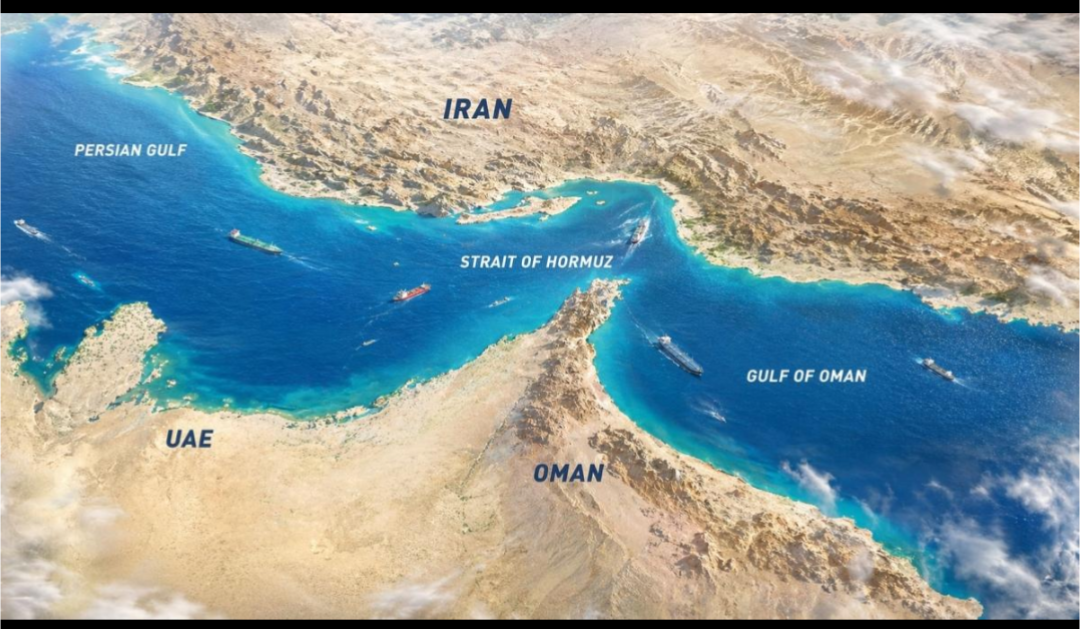
Iran has announced the capture of a U.S. military underwater drone near the Strait of Hormuz, in an incident that has added a new dimension to the escalating confrontation between Tehran and Washington.
Iran’s Islamic Revolutionary Guard Corps says its naval forces seized the unmanned underwater vehicle in a carefully executed operation near the entrance to the strategic waterway.
Iranian state media identified the vessel as a Dive-LD, an autonomous underwater vehicle manufactured by California-based defence company Anduril Industries.
The IRGC presented the seizure as a major intelligence and operational success, claiming that its forces were able to detect and take control of the sophisticated American underwater system.
The development is particularly significant because the Dive-LD is designed for missions including underwater surveillance, seabed mapping, mine detection and other intelligence, surveillance and reconnaissance operations.
The incident has also provided Tehran with an opportunity to demonstrate what it considers its ability to monitor and challenge sophisticated American military systems operating around the Strait of Hormuz, one of the world’s most strategically important waterways.
Washington, however, has rejected any suggestion that Iran has captured a major American submarine or obtained sensitive U.S. military secrets.
U.S. officials acknowledged that the underwater vehicle had been lost but said it had malfunctioned roughly a day before Iranian forces seized it.
American officials also said the system did not contain sensitive classified equipment or critical intelligence.
The manufacturer, Anduril Industries, has similarly sought to play down the significance of the loss, describing the Dive-LD as an attritable autonomous system designed to operate in dangerous environments where the possibility of losing the vehicle is anticipated.
This means that while Iran has physically obtained an American military underwater vehicle, Washington does not regard the incident as the loss of a manned U.S. Navy submarine or a strategically important intelligence platform.
The episode nevertheless raises concerns about the possibility of Iran examining the vehicle’s sensors, propulsion system, communications architecture and autonomous technology.
Iran has previously exploited captured American unmanned systems for propaganda and technical analysis, most notably after Iranian forces brought down and recovered a U.S. RQ-170 Sentinel stealth drone in 2011.
The latest incident comes amid a much broader confrontation in and around the Strait of Hormuz, where Washington and Tehran are engaged in an increasingly dangerous military standoff.
The U.S. Central Command has reported attacks by Iranian forces against American naval assets and has announced retaliatory operations against Iranian maritime and military targets.
CENTCOM says American forces have destroyed several Iranian oil tankers after the Islamic Revolutionary Guard Corps attempted to attack a U.S. Navy warship with ballistic missiles.
The American command says the warship successfully evaded the attacks and that no U.S. personnel were injured.
CENTCOM has also reported strikes against Iranian air-defence systems, radar installations, maritime capabilities, mine-laying assets and communications facilities.
The developments have increased international concern over the security of the Strait of Hormuz, through which a substantial portion of the world’s oil supplies passes.
For Tehran, the capture of the underwater drone is an opportunity to portray Iranian forces as capable of challenging America’s sophisticated military technology.
For Washington, the message is considerably different: the United States has lost an unmanned vehicle, but not a manned submarine or a major classified intelligence asset.
What remains unclear is the full circumstances surrounding the seizure and whether Iranian forces intercepted the vehicle while it was operating normally or after it had become disabled.
The incident therefore represents a symbolic victory for Tehran and a potentially useful intelligence opportunity, but available evidence does not support descriptions of the event as the capture of an American manned submarine.
As tensions continue to rise around the Strait of Hormuz, the fate of one underwater drone may prove less important than what the incident reveals about the increasingly sophisticated contest for control, surveillance and military advantage in one of the world’s most critical maritime corridors.
By Innocent Onoh
