
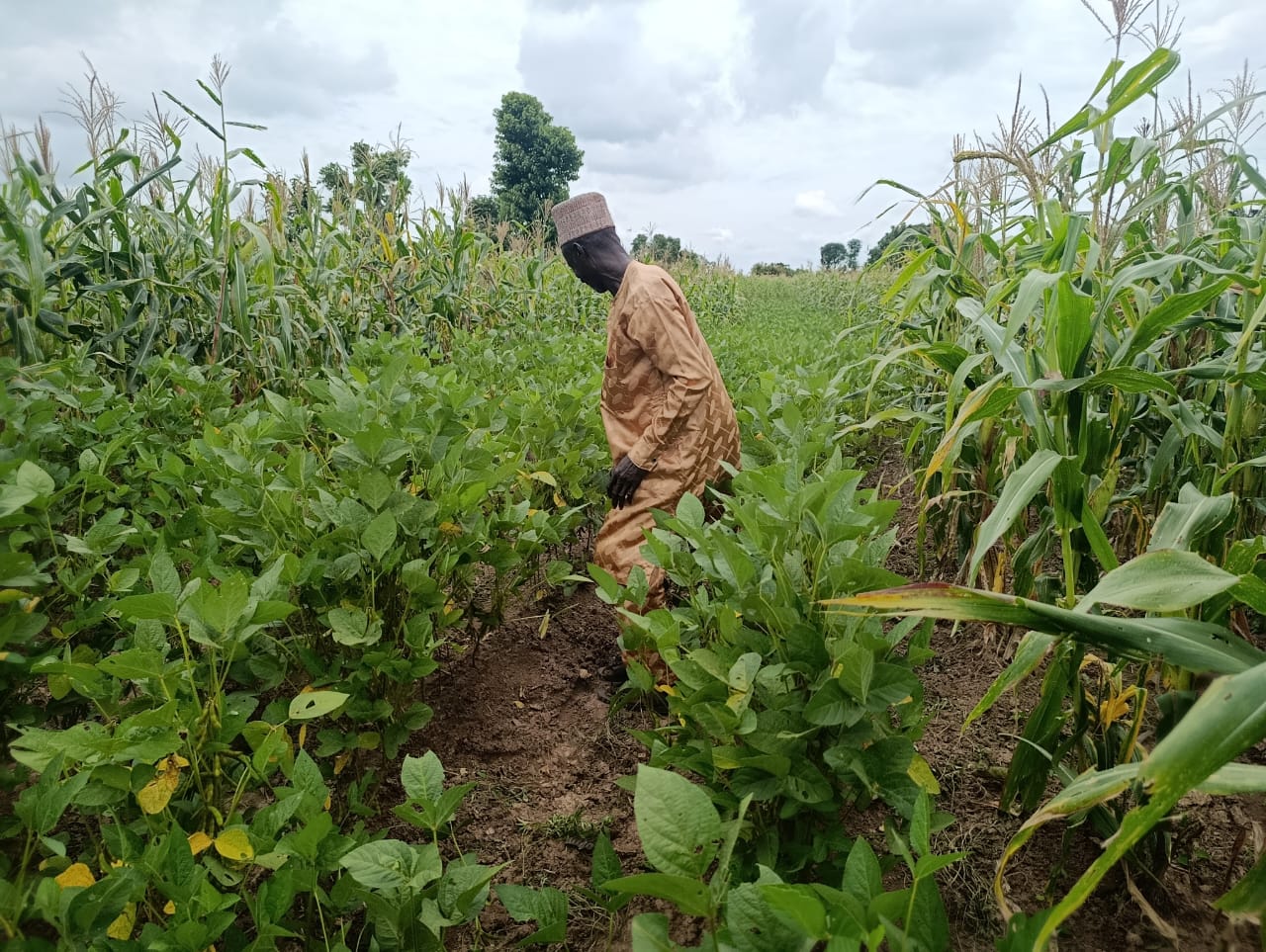

For more than 18,000 smallholder farmers in Nasarawa State, better harvests could mean more food on the table, higher household income and a stronger chance of escaping the cycle of rural poverty.
That opportunity is being driven by an agricultural support programme funded by the Japanese Government and implemented by the Sasakawa Africa Association, which is helping farmers in Obi and Doma Local Government Areas adopt improved and climate-resilient farming practices.
The programme has reached farmers organised into more than 60 cooperatives, providing them with training, practical demonstrations and capacity-building on modern crop production.
As part of the initiative, more than 60 demonstration farm sites have been established across Obi and Doma for the cultivation of improved varieties of maize, soybeans and orange-fleshed sweet potatoes during the 2026 planting season.
Country Director of the Sasakawa Africa Association, Dr. Godwin Atser, disclosed this during an assessment visit to some of the farm sites.
Represented during the inspection by the association’s Technical Coordinator, Climate Resilience and Agri-Food Systems, Mr. Nathaniel Otene, Atser said the programme was helping farmers move beyond traditional farming methods that often limit productivity.
He said the initiative was designed to improve the quality and yield of crops, strengthen their marketability and ultimately raise the incomes and livelihoods of smallholder farmers.
Atser stressed that achieving food security would depend largely on giving rural farmers access to modern technologies, knowledge and agricultural practices that can withstand the growing effects of climate change.
He said the programme was also promoting improved nutrition and stronger agricultural value chains, while equipping farmers with practical tools to adapt to changing weather conditions and increase production.
For the farmers themselves, however, access to better seeds, extension services and mechanisation remains critical.
Leaders of the farmers’ groups, Mallam Bashir Alana and Mrs. Felicia Alaku, appealed to governments at all levels to strengthen agricultural extension services and provide greater access to mechanised farming.
They also called for subsidised improved seeds and other farm inputs, saying such support would enable smallholder farmers to expand production, improve their earnings and contribute more effectively to food security.
Permanent Secretary, Nasarawa State Ministry of Agriculture and Food Security, Hajiya Salamatu Oseze, described the initiative as a major boost to agricultural production in the state.
She pledged the state government’s continued support for agricultural organisations and development partners working to strengthen farmers’ capacity and promote sustainable food production.
For the farmers of Obi and Doma, the real test will be whether the lessons learned and improved inputs provided can translate into bigger harvests, better incomes and more secure livelihoods when the crops are eventually taken from the farms to the market.
