

Nigeria’s industrial revival is set for a fresh push, with the Federal Government announcing that it has mobilised more than 380 million dollars in strategic financing for industrial projects while considering a 350-billion-naira MSME Development Fund to ease access to finance for businesses.
The measures are part of efforts to expand Nigeria’s productive capacity, strengthen local manufacturing and create more jobs for Nigerians.
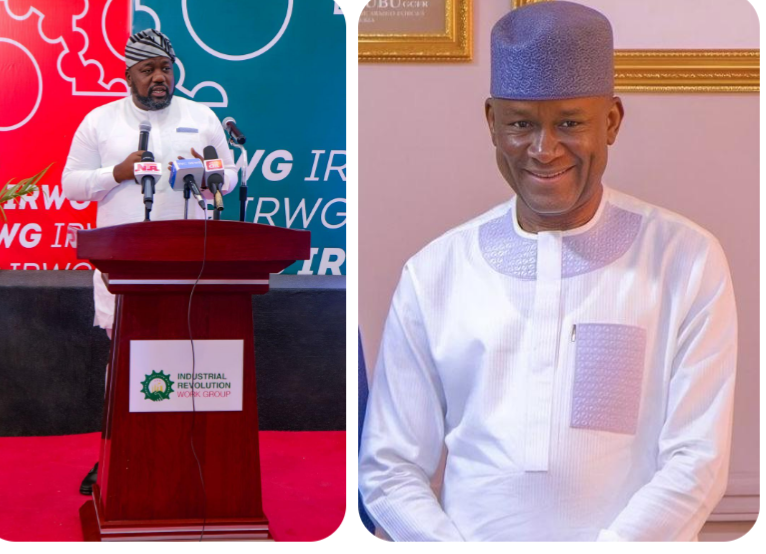
Minister of State for Industry, Senator John Owan Enoh, disclosed this at a technical session of the Industrial Revolution Work Group, IRWG, in Lagos.
Reviewing the progress of the IRWG since its establishment in February 2025, Enoh said 400 young Nigerians had been trained in mechatronics across four states, while Nigerian products had secured certification for continental markets through the African Quality Marks initiative.
He also disclosed that quick-win financing channels had been activated through the Bank of Industry, BOI, to support industrial businesses.
But the minister said Nigeria must move beyond celebrating the size of its economy and concentrate on expanding what the country actually produces.
“We must move from measuring the economy to building its productive capacity,” Enoh said.
He noted that Nigeria’s 372.8-trillion-naira rebased economy would have little meaning for ordinary Nigerians unless it translates into higher manufacturing output, better-paying jobs and greater value addition.
“The real measure of our progress is what we are able to produce, the jobs we create and the value we add,” he said.
Enoh called for the coming decade to be treated as an “execution decade”, with government policies judged by measurable results rather than intentions.
He pointed to the experiences of South Korea, China, India, Vietnam, Bangladesh and Morocco, arguing that sustained industrial policies, infrastructure investment, access to finance and skills development helped those countries build competitive manufacturing sectors.
For manufacturers, however, the challenge remains immediate: keeping factories running in an environment of high energy costs, expensive credit and weak consumer purchasing power.
Director-General of the Manufacturers Association of Nigeria, MAN, Segun Ajayi-Kadir, said the manufacturing sector must urgently move beyond merely surviving economic pressures to achieving sustained growth.
“The issue before us is not just resilience. We must move from resilience to sustained growth that is faster than the growth of the wider economy,” Ajayi-Kadir said.
He described the current recovery in industry and manufacturing as selective and fragile, warning that the sector’s contribution to Gross Domestic Product remains under pressure.
Ajayi-Kadir urged the Industrial Revolution Work Group to pursue broad-based measures capable of accelerating manufacturing growth, particularly through lower energy costs, cheaper credit, stronger domestic demand, backward integration and increased exports.
The session brought together manufacturers, industrialists, organised private sector representatives and other stakeholders to examine practical measures for strengthening Nigeria’s industrial base.
For millions of Nigerians seeking jobs and small businesses struggling to survive, the success of the government’s industrial strategy will ultimately be measured not by the billions announced on paper, but by whether more factories stay open, more businesses gain access to affordable finance and more Nigerians find productive work.
By Ebere Obike
