
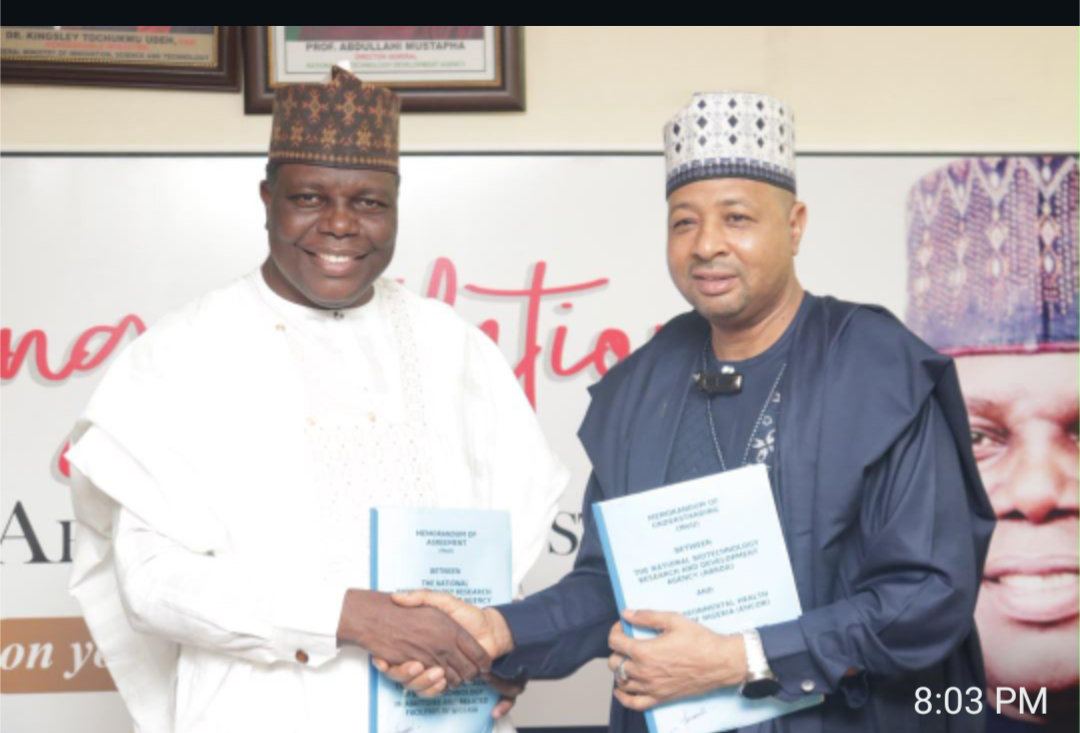



The Federal Government is set to promote the deployment of modern biotechnology for improved waste management, environmental sanitation and sustainable energy generation in abattoirs and related facilities across Nigeria.
The initiative follows the signing of a Memorandum of Understanding (MoU) between the Environmental Health Council of Nigeria (EHCON) and the National Biotechnology Research and Development Agency (NBRDA) to strengthen collaboration in applying biotechnology to environmental health protection and public health.
Speaking at the signing ceremony held at the NBRDA headquarters, the Registrar of EHCON, Dr. Yakubu Baba, emphasised the importance of the partnership in addressing environmental challenges associated with waste management.
Baba said the collaboration would help transform waste management challenges into economic opportunities, wealth creation and employment.
He highlighted the technological and research capabilities of the two agencies, expressing confidence that the partnership would deliver tangible benefits to Nigerians in line with the Federal Government’s Renewed Hope Agenda.
In his remarks, the Director-General of NBRDA, Professor Abdullahi Mustapha, commended the partnership, noting that the application of biotechnology to environmental sanitation, waste-to-wealth initiatives and sustainable energy generation would contribute to a healthier society.
Mustapha disclosed that the agency had developed technology with potential applications in abattoirs and related facilities. He expressed the agency’s readiness to support its deployment and ensure the effective implementation of the agreed initiatives.
According to a statement issued by EHCON’s Head of Information and Public Relations, Hauwa Bala, the event also featured the signing of a Memorandum of Agreement (MoA) for the development, training and deployment of biogas technology in abattoirs and related facilities across Nigeria.
The initiative is expected to support more sustainable waste management practices, encourage the conversion of organic waste into useful energy and strengthen environmental health protection in the country’s meat-processing facilities.
UKATA News
