

All You Need to Know About the First Niger Bridge
The First Niger Bridge is once again at the centre of national attention as the Federal Government moves to temporarily shut the historic structure for emergency rehabilitation.
The bridge, which links Onitsha in Anambra State with Asaba in Delta State, will be closed to traffic from September 7 to 21, 2026, to allow engineers to carry out repair works aimed at preventing further deterioration and ensuring the safety of motorists.
For decades, the bridge was the major gateway linking the South-East with the South-West and South-South regions. Before the construction of the Second Niger Bridge, it was virtually the only major road crossing over the River Niger serving millions of travellers and moving enormous volumes of goods across the country.
But how did this iconic bridge come into existence, how much traffic does it carry, who maintains it and why has it remained so important to Nigeria?
How the First Niger Bridge Came to Be
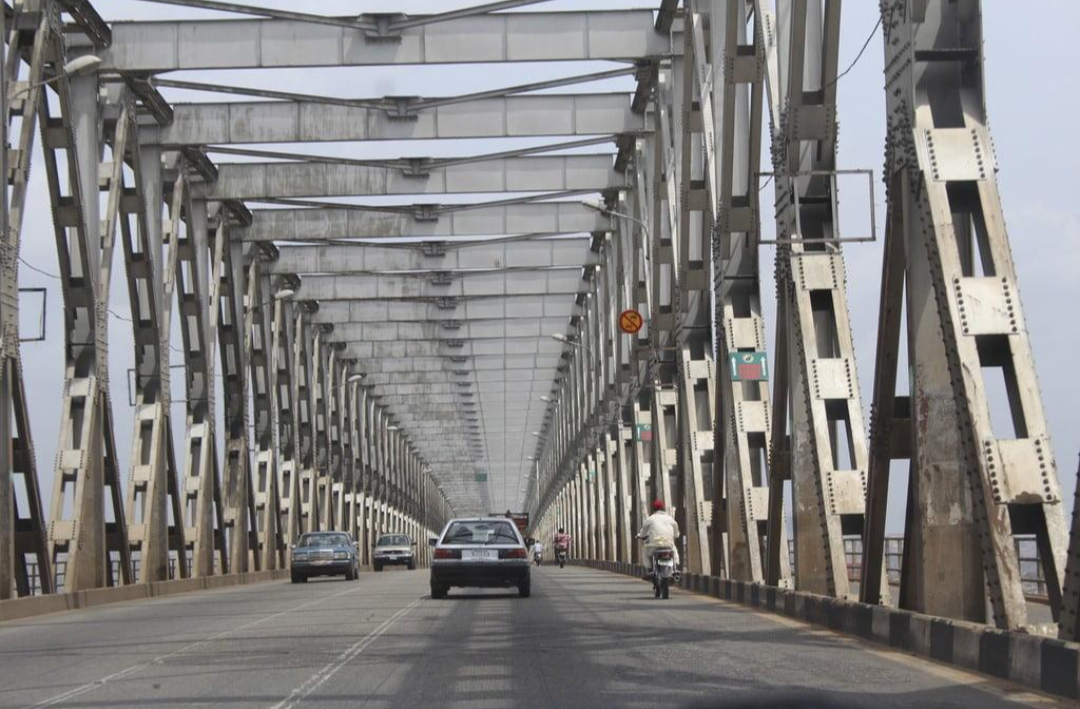
The First Niger Bridge, also known as the River Niger Bridge or Onitsha Bridge, is the first major bridge constructed across the River Niger in Nigeria.
It connects Onitsha in Anambra State to Asaba in Delta State, providing a critical road link between the eastern and western parts of the country.
The bridge was conceived at a time when Nigeria was developing its major transportation infrastructure and needed a permanent road crossing over the Niger to strengthen economic and social connections between different parts of the country.
Feasibility studies and design considerations for a bridge between Onitsha and Asaba were undertaken in the 1950s by Netherlands Engineering Consultants of The Hague, Holland, popularly known as NEDECO.
Construction Began in 1964
Construction of the bridge was undertaken between 1964 and 1965 by French construction giant, Dumez.
The project reportedly cost about £6.75 million at the time, a huge infrastructure investment for the newly independent country.
The structure comprised eight spans of 420 feet each, with an 11-metre carriageway supported by a centre truss and pedestrian walkways on both sides.
Construction was completed in December 1965.
Tafawa Balewa’s Last Public Function
The bridge was commissioned by Nigeria’s first Prime Minister, the late Alhaji Sir Abubakar Tafawa Balewa, in December 1965.
The commissioning would later acquire a historic significance.
It was the last public function attended by Tafawa Balewa before he was assassinated on January 15, 1966, during the military coup that plunged Nigeria into a new political era.
How the Civil War Damaged the Bridge
The First Niger Bridge also became caught up in the Nigerian Civil War of 1967 to 1970.
As federal troops advanced towards the then-Biafran territory, retreating Biafran soldiers destroyed a section of the bridge in an attempt to slow the movement of federal forces.
The damage effectively disrupted one of the country’s most important transport links and demonstrated the strategic importance of the bridge.
The Bridge’s Rehabilitation History
Following the war, efforts were made to restore the bridge and return the important transport corridor to full operation.
During the administration of former President Goodluck Jonathan, two spans at the Onitsha end of the bridge that had been damaged during the Civil War were rehabilitated and replaced with a 14-foot-wide Bailey bridge.
The intervention was reportedly valued at about £1.5 million.
Over the years, the bridge has undergone various maintenance interventions as its ageing infrastructure continued to face pressure from increasing traffic and exposure to the elements.
The First Niger Bridge is a Federal Government asset and is maintained by the Federal Ministry of Works.
Because of its strategic importance, maintenance of the bridge is considered a national infrastructure responsibility, particularly because any prolonged closure can have consequences for movement, trade and the wider economy.
How Much Traffic Does the Bridge Carry?
The First Niger Bridge has historically ranked among Nigeria’s busiest federal road corridors.
Available traffic assessments have put normal daily vehicular movement on the bridge at about 30,000 vehicles.
Traffic is generally distributed in both directions, with thousands of vehicles crossing from the eastern side towards Asaba and onward to the western and northern parts of the country, while others move in the opposite direction.
The volume includes private cars, commercial buses, articulated trucks and other heavy-duty vehicles.
Why Christmas and New Year Put the Bridge Under Pressure
The importance of the bridge becomes particularly obvious during the festive season.
Every Christmas and New Year, millions of Nigerians travel to the South-East and South-South to celebrate with their families.
The resulting surge in vehicular movement puts enormous pressure on the Onitsha-Asaba corridor.
At peak periods, traffic congestion around the bridge and its approaches has historically stretched for many hours, with motorists sometimes spending most of a day trapped in gridlock.
This is one reason why maintaining the bridge before the peak festive travel period is considered critical.
The Second Niger Bridge Changes the Traffic Pattern
For decades, motorists had little alternative when travelling between Onitsha and Asaba.
That changed with the opening of the Second Niger Bridge to public traffic in 2023.
The new bridge was constructed to provide an additional crossing over the River Niger, reduce pressure on the old bridge and improve the movement of people and goods.
Its availability has provided motorists with an alternative route, particularly during periods of heavy traffic or maintenance on the First Niger Bridge.
Why the Federal Government Ordered the Latest Repairs
The latest rehabilitation became necessary following deterioration of sections of the bridge and the vandalisation of some of its components.
Among the affected components are parts of the expansion joints, stanchions and steel-truss nuts and bolts.
The Federal Government considers the intervention necessary to preserve the structural integrity of the bridge and prevent minor defects from developing into more serious problems.
What the 2026 Rehabilitation Will Cover
The rehabilitation works are being undertaken by Sinohydro-Korean Engineering and Construction Company, SKECC.
The work includes the removal of damaged asphalt and laying of a new asphalt wearing course.
Engineers will also repair affected bridge components, while solar-powered streetlights and closed-circuit television cameras will be installed as part of the intervention.
The Federal Ministry of Works has therefore ordered the bridge closed from September 7 to 21, 2026, to provide a safer working environment and allow the repairs to be carried out.
Where Will Motorists Go During the Closure?
Motorists who would ordinarily use the First Niger Bridge have been advised to use the Second Niger Bridge during the closure.
Traffic signs and barriers will be deployed, while traffic-control personnel will be positioned at strategic locations to guide motorists and manage the expected diversion.
Motorists travelling through the Onitsha-Asaba axis are also expected to plan their journeys ahead of time, particularly during peak periods.
More Than a Bridge: Its Importance to Nigeria
For more than six decades, the First Niger Bridge has been far more than a concrete and steel structure across Nigeria’s longest major river.
It has been an economic artery, a national transport link and a symbol of connection between communities and regions.
Millions of Nigerians have crossed the bridge for business, education, work, religious activities, family visits and other journeys.
Even with the emergence of the Second Niger Bridge, the old bridge remains an important part of Nigeria’s transportation history and infrastructure network.
Its current rehabilitation is therefore not merely about repairing an ageing structure.
It is about preserving a historic national asset, protecting lives and keeping one of the country’s most important economic corridors open and functional for generations to come.
By Innocent Onoh
