
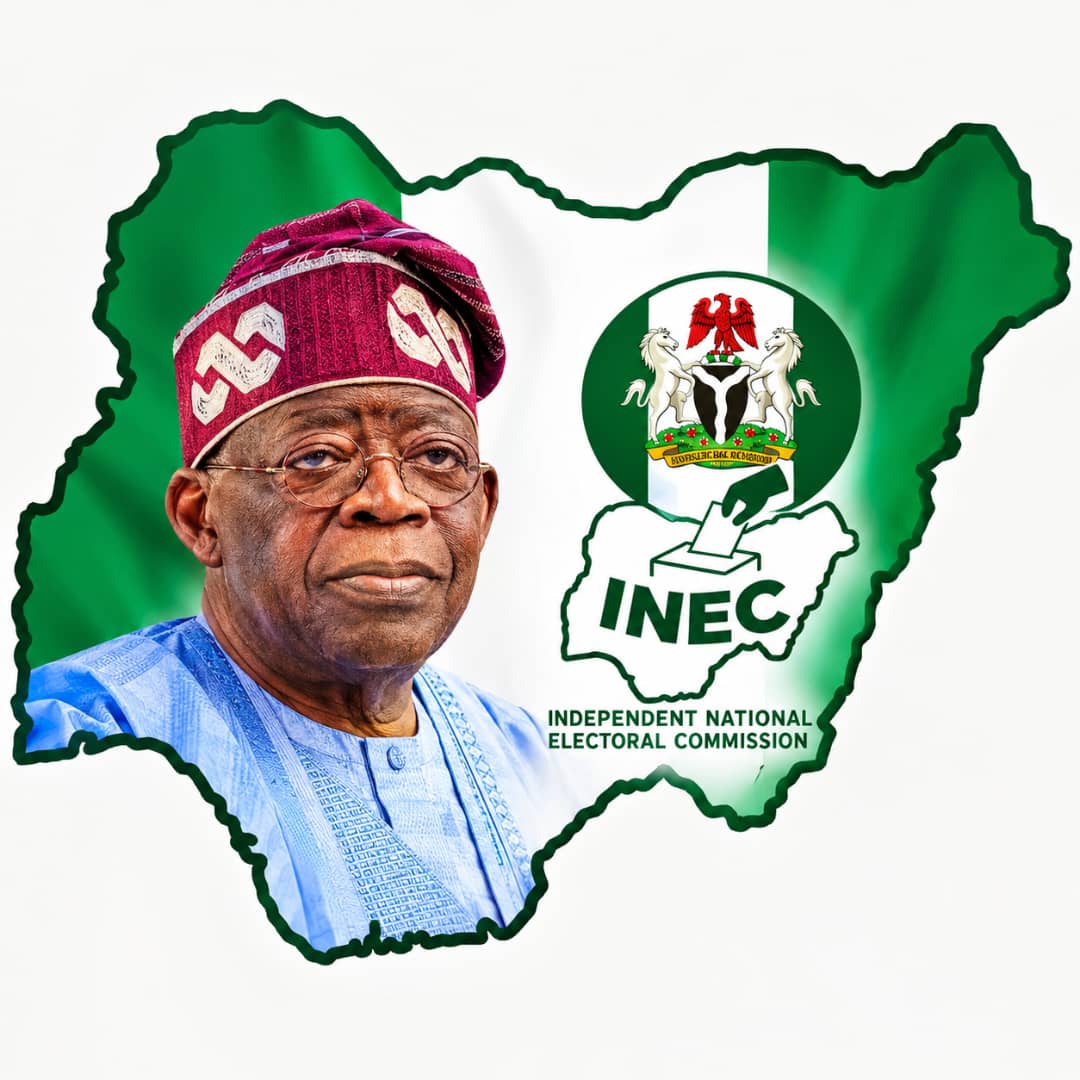



2027: As Election Draws Near, Nigerians Fear Another Season of Violence
Election seasons in Nigeria have increasingly become a nightmare for many citizens, largely because elections have moved away from being friendly contests to determine who governs the country and have, in many cases, become do-or-die battles in which politicians deploy every available weapon in their desperate bid to win by all means.
According to the timetable released by the Independent National Electoral Commission, INEC, the 2027 Presidential and National Assembly elections are scheduled for February 20 next year.
That leaves about five months and three weeks to the polls.
Sadly, as the election date draws nearer, so does the atmosphere of fear and apprehension among citizens, many of whom fear that the period could once again be marked by political crises, bloodshed, threats and intimidation.
Reports from different parts of the country suggest that some people are already considering relocating to places they perceive to be safer, while others are contemplating returning to their villages ahead of the elections.
In Lagos, for instance, there are reports that some residents, particularly people from the South-East, are considering returning to their home states. While some attribute the decision to fears of possible election-related violence, others say the worsening economic situation in Lagos is also influencing their decision.
But beyond the rumours and individual decisions to relocate, the political outlook itself is hardly reassuring.
Violence appears to be creeping into the political conversation once again, with politicians and their supporters beating the drums of war ahead of the 2027 elections.
Recently, the member representing Kiru/Bebeji Federal Constituency in the House of Representatives, Abdulmumin Jibrin, said the All Progressives Congress, APC, would demonstrate its political strength against opposition parties in the forthcoming elections.
Speaking to APC leaders and polling-unit representatives from Kiru and Bebeji Local Government Areas during a special meeting in Kofa, held as part of preparations for the 2027 elections, Jibrin said the APC would not surrender any elective seat to opposition parties in Kano State.
He said:
“I swear to God, in Kano, come 2027 general elections, we are not going to surrender a single seat for them. I repeat, APC will not surrender a single seat for opposition parties.
“They will know our worth and I am assuring that this coming election we will teach them the lesson of their lives.”
In another development, the Chairman of Kuje Area Council in the Federal Capital Territory, Samuel Danjuma Shekwolo, was also filmed addressing the FCT Youth Network in what critics described as a threatening political statement.
He said:
“I have said in my area council, it’s either you’re doing APC or leave the area council. I am not arguing with you. With confidence, I am saying it.
“It is either you are with us, or you are not here.”
Several other politicians and their supporters have also been captured issuing one threat or another, insisting that their preferred candidates must win.
Even some religious leaders have reportedly been drawn into the political contest, with some asking their followers not to vote for candidates from opposing religious backgrounds.
Such rhetoric is deeply disturbing in a country that has witnessed how political competition can quickly degenerate into violence.
For ordinary Nigerians who have experienced election-related violence in the past, such statements are not mere political rhetoric. They can trigger anxiety, deepen mistrust and create an atmosphere in which citizens begin to fear for their lives and property.
Opposition parties and their candidates are already interpreting some of these statements as signs of what could come during the campaigns and on election day.
A former Anambra State governor and presidential candidate of the NDC, Peter Obi, while speaking at the 2026 Goodluck Jonathan Foundation Democracy Dialogue in Bauchi, also decried the state of Nigeria’s democracy.
He said:
“So, if you look at that and look at what is happening today in Nigeria, where professors are now aiding illiterates to rig elections.”
He went further to criticise what he described as the involvement of professionals, lawmakers, religious leaders and other institutions in practices that undermine democracy.
According to him, Nigeria is facing a crisis where “professors now aid election rigging”, lawmakers have removed forgery as an offence in electoral matters, lawyers defend alleged electoral wrongdoing, religious leaders pray for politicians accused of criminality, and judges are accused of becoming partisan.
Whether one agrees with Obi or not, his comments reflect a growing concern among Nigerians about the credibility of the country’s democratic institutions.
The truth is that the structures required for a free, fair and violence-free election must inspire greater confidence.
Insecurity remains one of the biggest threats.
Although there have been reports of military successes against terrorists and other armed groups, many communities across the country remain vulnerable to attacks, killings, kidnappings and other forms of criminality.
Amnesty International recently reported that at least 10,217 people were killed in attacks by armed groups during President Bola Tinubu’s first two years in office, with Benue and Plateau among the worst affected states.
The reported deaths were attributed to terrorism, banditry, farmer-herder conflicts, Boko Haram attacks and activities of emerging armed groups such as Lakurawa and Mamuda.
If communities remain insecure, the conduct of credible elections becomes even more difficult. Voters cannot be expected to freely participate in an election in areas where they fear for their lives.
There is also the question of voter mobility.
The inability of some Nigerians to transfer their Permanent Voter Cards, PVCs, when they relocate could disenfranchise citizens who move away from areas affected by insecurity, economic hardship or political tension.
Those displaced from their communities by banditry or terrorism may also face serious difficulties exercising their constitutional right to vote.
Then there are allegations of political intimidation.
The reported removal of campaign posters belonging to opposition candidates in parts of Lagos, allegedly by supporters of rival parties, is another worrying development. If political parties cannot tolerate each other’s posters during the campaign season, Nigerians have every reason to worry about what could happen when the real contest begins.
The political atmosphere appears to be becoming more tense even before the campaigns fully gather momentum.
Interestingly, the atmosphere surrounding the 2023 general elections appeared, in some respects, more hopeful than what Nigerians are currently witnessing.
In 2022, there was considerable enthusiasm among citizens, particularly young people, and that translated into increased voter participation after years of voter apathy.
Today, however, fear appears to be competing with enthusiasm.
In Lagos, there are also rumours of a plan to restrict the voting rights of non-indigenes or make it difficult for them to vote unless they support the ruling party. These remain allegations and rumours that require responsible investigation rather than acceptance as established facts.
But the fact that such rumours are circulating at all should concern the authorities.
Nigerians must not be made to choose between their political rights and their safety.
The Constitution guarantees citizens the right to live and work in any part of the country and to participate in the political process. No Nigerian should be intimidated, threatened or prevented from voting because of where they come from or the political party they support.
This is where President Bola Tinubu and other political leaders have a critical responsibility.
The President must not only speak against political violence but must demonstrate through his actions that no political ambition is worth the blood of a Nigerian.
When President Tinubu accepted the APC nomination on May 24, 2026, he said his objective was to consolidate the reforms and progress of his first administration.
He said:
“In 2022, our task was to chart a new direction for our party and nation. Today, our task is to affirm that continuity is essential—to consolidate reform, secure progress, and strengthen the foundation of a modern Nigeria.”
More recently, while speaking at the signing of the 2027 election peace accord, the President reportedly said: “Election is not do-or-die.”
That is an important statement.
But Nigerians need more than words.
The President must ensure that the principle is reflected in the conduct of his party, his government and all state institutions involved in the electoral process.
The same responsibility applies to every presidential candidate and political party.
If their ambition is genuinely to change Nigeria, they must seek power through a transparent, peaceful and credible process. They must persuade Nigerians, not intimidate them.
The military and security agencies must remain professional and impartial. INEC must be allowed to operate independently and transparently.
Political parties must be free to campaign across the country without intimidation, while citizens must be allowed to vote for candidates of their choice without fear.
Nigeria cannot continue to treat elections as warfare.
An election should not determine who has the biggest arsenal, the loudest supporters or the most powerful political machinery. It should simply determine who has won the confidence of the people.
With barely months to the 2027 general elections, there is still time to change the narrative.
Let Nigeria be safe.
Let political parties compete freely.
Let opposition candidates campaign without fear.
Let INEC conduct a credible election.
Let security agencies remain neutral and professional.
And, above all, let every Nigerian return home from the polling unit alive.
That is the only path to free, fair and peaceful elections—and the only way to break Nigeria’s painful cycle of electoral violence.
By Innocent Onoh,- International journalist and public affairs analyst
