
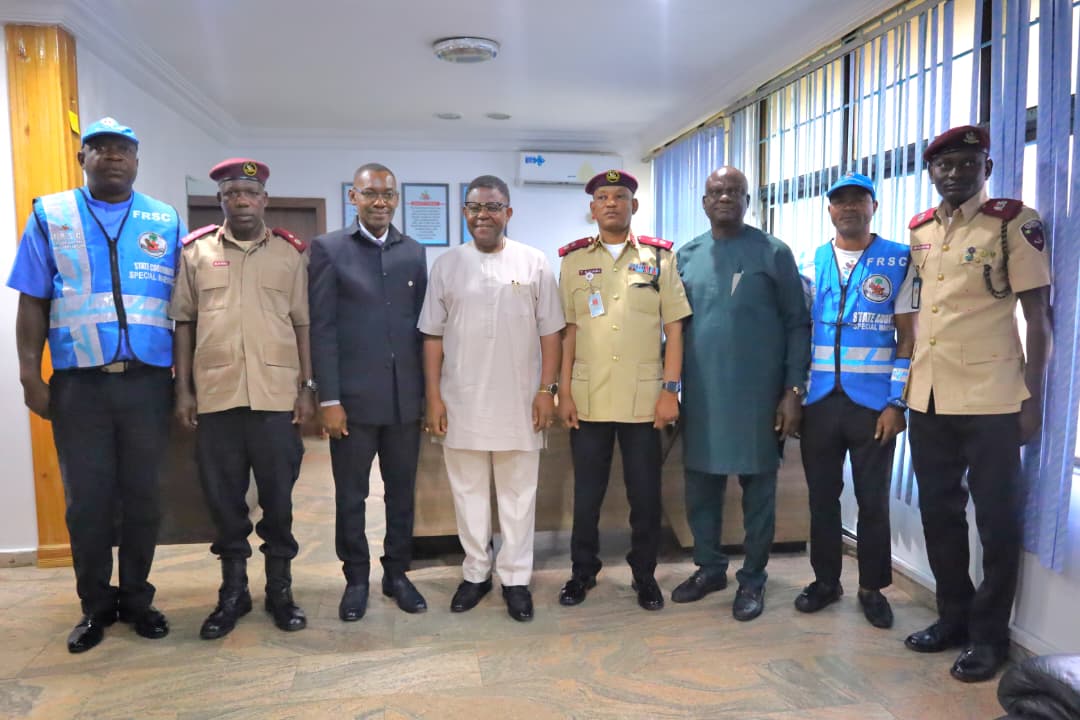

FCT Traffic Offenders Face Medical, Psychological Evaluation Under New FRSC Enforcement.
Motorists caught driving recklessly or committing other traffic offences in the Federal Capital Territory (FCT) will henceforth face medical and psychological evaluation before prosecution.
The FCT Sector Commander of the Federal Road Safety Corps (FRSC), Corps Commander Tijani Iliyasu, announced this at a news conference in Abuja.
Iliyasu said the FRSC would commence a Joint Task Force operation with the FCT Transportation Secretariat to enforce the initiative and curb traffic violations, particularly among commercial drivers, across the six area councils.
He said the enforcement had become necessary due to the flagrant disregard for traffic regulations by some motorists, a situation he noted was capable of damaging Nigeria’s image before the international community.
According to him, Regulation 176, Sub-regulation (5) of the amended National Road Traffic Regulations 2012 mandates that persons suspected of committing applicable offences undergo medical and psychological evaluation at an approved government hospital before prosecution, at their own expense.
The Corps Commander said the Joint Task Force would also allow other security agencies to participate in the enforcement, adding that the initiative followed several meetings with transport unions on efforts to sanitise roads across the FCT.
Iliyasu noted that the rapid expansion of road infrastructure in the nation’s capital had increased the scope of the Corps’ operations, making collaboration with other government agencies necessary to tackle traffic violations.
He stressed that the enforcement was not intended to harass or intimidate motorists but to promote responsible driving and protect lives and property.
Also speaking, the Mandate Secretary of the FCT Transportation Secretariat, Mr Chinedum Elechi, said the administration fully supports initiatives aimed at restoring sanity to roads in the territory.
Elechi said the exercise would target illegal parking, route violations, overloading, illegal motor parks, one-way driving, drunk driving and other traffic offences.
On malfunctioning traffic lights in some parts of the FCT, he said the contractor responsible for their maintenance had been directed to repair the faulty installations.
He added that adequate measures had been put in place to ensure the free flow of traffic around the Two Hundred Housing Interchange.
The representative of the FCT Security Command and Control Centre, Dr Peter Elumiji, said measures had also been taken to regulate the operations of tricycles and motorcycles across the six area councils in the interest of public safety.
Elumiji pledged the Control Centre’s support for the enforcement initiative, saying it would help safeguard lives and property on FCT roads.
The FRSC Sector Commander and the Transportation Secretariat Mandate Secretary expressed confidence that the new measures would help address poor transport practices and ensure that only mentally and physically fit motorists operate on roads in the FCT.
