
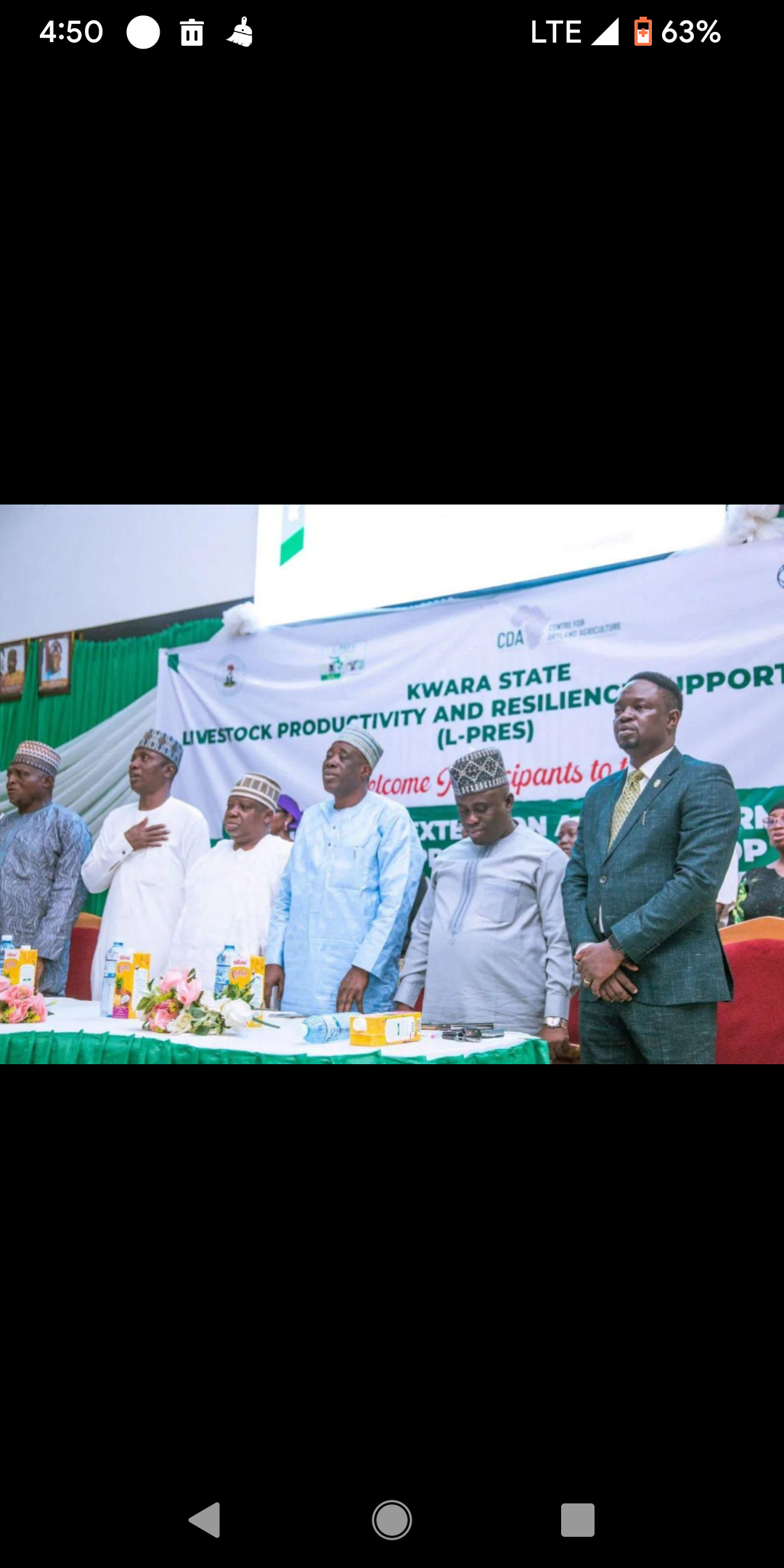

100 Livestock Farmers Get Feed Production Skills in Kwara as Presidential Committee Backs Initiative
Some special guests
For 100 livestock farmers in Kwara State, learning how to produce and preserve forage could mean more than better-fed animals — it could help protect their livelihoods and reduce one of the pressures that often fuels farmer-herder conflicts.
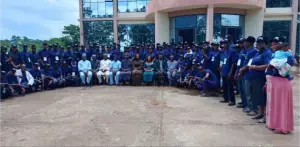
All participants and dignitaries
The farmers drawn from across the state are undergoing practical training on forage production, conservation and preservation under the Kwara State Livestock Productivity and Resilience Support Project, L-PRES.
A member of the Presidential Livestock Reforms Implementation Committee, Professor Demo Kalla, described the training as timely, saying reliable access to livestock feed is critical to improving productivity and preventing competition over scarce resources.
Kalla, who is also Director of the TETFUND Centre of Excellence on Food Security, Dairy Research and Development Centre at Abubakar Tafawa Balewa University, Bauchi, spoke during the capacity-building programme.
He said participants were being equipped with hands-on skills that could help them produce and preserve feed for their animals, while creating opportunities for improved incomes across the livestock value chain.
“For this particular cohort, people have been drawn across the state to share their experiences and learn skills hands-on, particularly for forage conservation,” he said.
Kalla warned that inadequate livestock feed could increase pressure on available grazing resources and worsen tensions between farmers and herders.
“We cannot have enough feed for our animals; definitely, there will be crisis,” he said.
He described the programme as a potential game changer for participants, particularly youths, women and other people whose livelihoods depend on livestock.
According to him, the success of the L-PRES initiative in Kwara could provide useful lessons for other states seeking to strengthen livestock production.
Kalla also welcomed the establishment of the Federal Ministry of Livestock Development, saying it would give the sector greater attention at the federal level.
Representing Kwara State Governor AbdulRahman AbdulRazaq, the Commissioner for Livestock Development, Mrs Oloruntoyosi Thomas, urged young people to turn the skills acquired from the training into economic opportunities.
The Governor said there was no longer an excuse for youth unemployment, given the opportunities being created through government interventions in the livestock sector.
He said L-PRES and other programmes, including the Special Agro-Industrial Processing Zones, SAPZ, were helping to build a livestock sector focused on productivity, resilience and commercialisation.
AbdulRazaq said 8,951 people had been profiled across selected livestock value chains, while about 100 stakeholder engagements had been held with communities and value-chain actors since L-PRES activities began in Kwara in October 2023.
He added that 238,718 animals — including cattle, sheep, goats and poultry — had been vaccinated against key livestock diseases, with more than 1,100 livestock farmers benefiting directly.
“As a government, our aim is to protect the animals that represent the livelihoods, savings and businesses of thousands of Kwara families,” the Governor said.
He also said the state had rehabilitated and equipped the veterinary laboratory in Ilorin and strengthened its vaccine cold-chain system with solar power, resulting in an increase in the number of animals screened by the laboratory from 157 to 246.
Meanwhile, the Director of Ranch and Pastoral Resources Development in the Federal Ministry of Livestock Development, Hakeem Ibilade, said Nigerians should not expect instant results from livestock development.
Ibilade said agriculture involves biological and administrative processes that require time before investments begin to produce results.
“Anything agriculture, be it livestock, crop or fisheries, has a waiting period,” he said.
He used livestock reproduction to illustrate the point, noting that even after a goat becomes pregnant, farmers must wait several months before delivery.
Ibilade assured that the Federal Ministry of Livestock Development would continue to build on the progress made so far to strengthen Nigeria’s livestock sector.
