
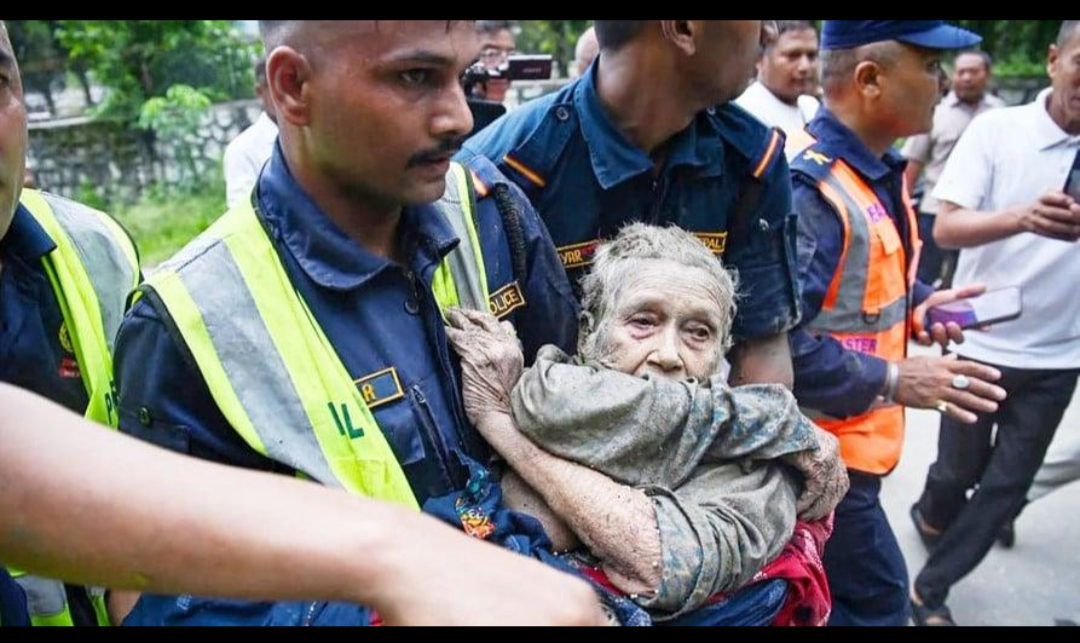

For families in Nepal, the nightmare did not end when the floodwaters receded.
Days after a catastrophic Himalayan flood swept through communities near the Nepal-Tibet border, thousands of families are still waiting for news of loved ones, while rescuers continue digging through tonnes of mud, rocks and debris in search of survivors.
Nepal is now seeking about $5 billion in international assistance to rebuild communities devastated by the disaster and strengthen protection against future climate-related catastrophes.
The August 26 disaster was triggered by the collapse of a Himalayan glacier, sending a devastating surge of water, mud and rocks through valleys and communities in Nepal and Tibet.
More than 1,300 people have been confirmed dead, while roughly 5,000 to 5,500 people remain missing, according to the latest reports and evolving official figures.
Among those still missing are hundreds of workers who were at hydropower projects when the flood struck. Families have gathered in Kathmandu and other affected areas demanding faster rescue operations and information about their relatives.
For some, the wait has become unbearable.
Families have been forced to search through photographs and lists of recovered bodies, while police have asked relatives of missing people to provide DNA samples and photographs to help identify victims.
The human tragedy has been compounded by the destruction of roads, bridges, homes and vital power infrastructure.
At least 11 hydropower projects were damaged, while Nepal’s authorities have reported extensive disruption to electricity, transport and communications.
The disaster has also left some communities cut off from conventional relief routes. Nepal’s army has therefore turned to drones to deliver food, medicine, fuel and other essential supplies to isolated communities, with the unmanned aircraft also being used to transport bodies and support search operations.
Nepal says the scale of the devastation has exposed the country’s vulnerability to a climate crisis it has contributed very little to creating.
The country accounts for less than 0.1 percent of global greenhouse-gas emissions, yet its mountainous terrain and rapidly warming Himalayan environment leave communities particularly exposed to floods, landslides and glacier-related disasters.
That is why Kathmandu is presenting its $5 billion request not simply as an appeal for charity, but as a question of climate justice.
Nepal is lobbying the World Bank, Asian Development Bank, foreign governments and the UN-backed Fund for Responding to Loss and Damage for financial support to rebuild communities and make them more resilient to future disasters.
Prime Minister Balendra Shah is expected to take Nepal’s case to the United Nations later this month, as the country seeks international backing for its recovery plans.
The appeal comes with a warning from Nepal that the international community cannot wait until vulnerable countries are devastated before providing meaningful climate finance.
For the families still searching for their loved ones, however, the debate over billions of dollars is deeply personal.
They want their relatives found.
They want their homes rebuilt.
And they want to know that the next disaster will not leave another generation waiting helplessly for help.
The tragedy in the Himalayas has therefore become more than a story about melting glaciers and climate statistics. It is a story about families, livelihoods, lost homes and a country asking whether the world will help those bearing the consequences of a crisis they did little to create.
