

UNICEF Targets 35,000 Katsina Girls With Skills to Earn, Build Businesses
For thousands of adolescent girls in Katsina State, the classroom could soon become only the beginning of their journey towards economic independence.
The United Nations Children’s Fund (UNICEF), in partnership with the Katsina State Universal Basic Education Board (SUBEB), has launched the Skills4Girls Programme, targeting 35,000 girls between the ages of 10 and 19 with employable and entrepreneurial skills that could help them earn a living and become self-reliant.
The programme, which is being piloted exclusively in Katsina State in Nigeria, is designed to give girls practical skills beyond formal education while helping them identify opportunities suited to their abilities and local environment.
The initiative was launched with a co-creation workshop involving adolescent girls from Katsina, Funtua, Kaita and Dutsi Local Government Areas.
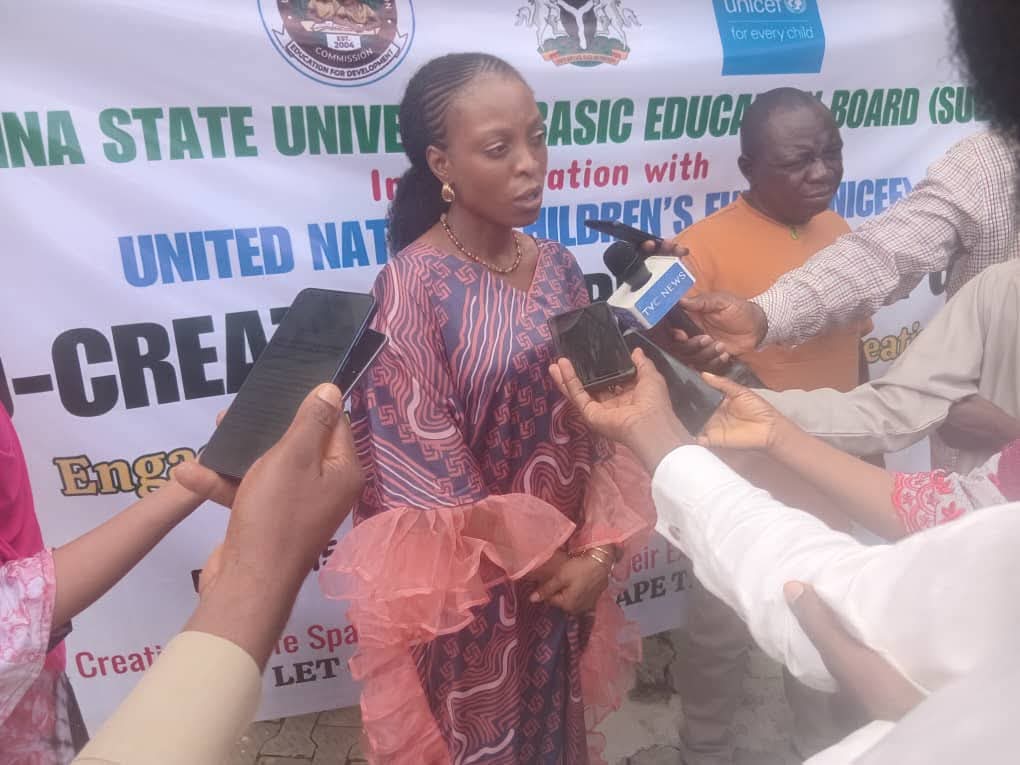
Speaking at the event, UNICEF Adolescents Development Specialist, Ngozi Izuora-Songu, said the programme was built around the idea of preparing girls not only to complete their education but also to become economically productive.
“The whole idea is to make sure that girls acquire skills that will help them earn a livelihood and contribute meaningfully to society,” she said.
According to her, the programme will focus on three key areas: employability, entrepreneurship, and the ability to create value and give back to society.
Izuora-Songu explained that UNICEF was deliberately seeking the views of the girls before determining the specific skills they would receive, rather than imposing a one-size-fits-all training programme.
She said an ongoing skills assessment would help identify the individual abilities and interests of participants, while the co-creation workshops would allow the girls to suggest the businesses and skills they believe would work best in their communities.
“We don’t want to work on assumptions,” she said, stressing that the programme would be designed around the actual needs, abilities and environment of the girls.
The Skills4Girls Programme will run from 2026 to 2029, with 35,000 adolescent girls expected to benefit across the four participating local government areas.
UNICEF said the programme would also promote inclusion by ensuring that girls living with disabilities are not left behind.
Beyond the girls, the initiative is expected to engage 7,500 boys and young men, as well as 5,000 parents, mentors, trainers and community leaders, bringing the total number of people targeted to 47,500.
Izuora-Songu noted that the new initiative builds on earlier UNICEF-supported interventions, including the Girls Education Project (GEP) and the REACH project, which focused partly on helping girls transition to and complete school.
Skills4Girls, she explained, takes the intervention a step further by connecting education with economic empowerment.
For the Katsina State Government, the programme also aligns with its efforts to prepare young people for a more self-reliant future.
The Chairman of Katsina State Universal Basic Education Board, Dr. Kabir Gafia, welcomed the initiative, saying its objectives were consistent with the state government’s “Building Your Future” agenda.
He assured UNICEF of the board’s support, noting that the state government had already been training young people and adolescents in different skills to improve their capacity for self-reliance.
Potential areas of training under the programme include the production of pomade, soap, detergents and deodorants, sewing, knitting, phone and electronics repairs, information and communication technology (ICT), among others.
For the girls who have been given a place in the programme, the opportunity could mean more than learning a new skill. It could provide a pathway from the classroom to a source of income, a small business and, ultimately, greater economic independence.
The initiative therefore places Katsina’s adolescent girls at the centre of a four-year effort to equip a new generation with practical skills capable of transforming both individual lives and their communities.
