



and service delivery.
In 2025, the organisation, working with ADH, trained health desks of selected newsrooms in data journalism, fact-checking, data visualisation and solutions journalism.
The programme resulted in the publication of a PHC Energy Report examining electricity supply challenges confronting primary healthcare facilities.
Orodata and ADH also organised a PHC data hackathon in 2025 to promote innovative uses of healthcare data, providing participants with datasets covering infrastructure, service delivery, welfare, inclusivity and telecommunications.
The new phase now shifts greater attention to following the money.
Orodata said the project would compare government funding records, budgets and tender documents with conditions found at the selected PHCs.
Specialised training has already been completed for community data collectors and investigative journalists who will participate in the field operations.
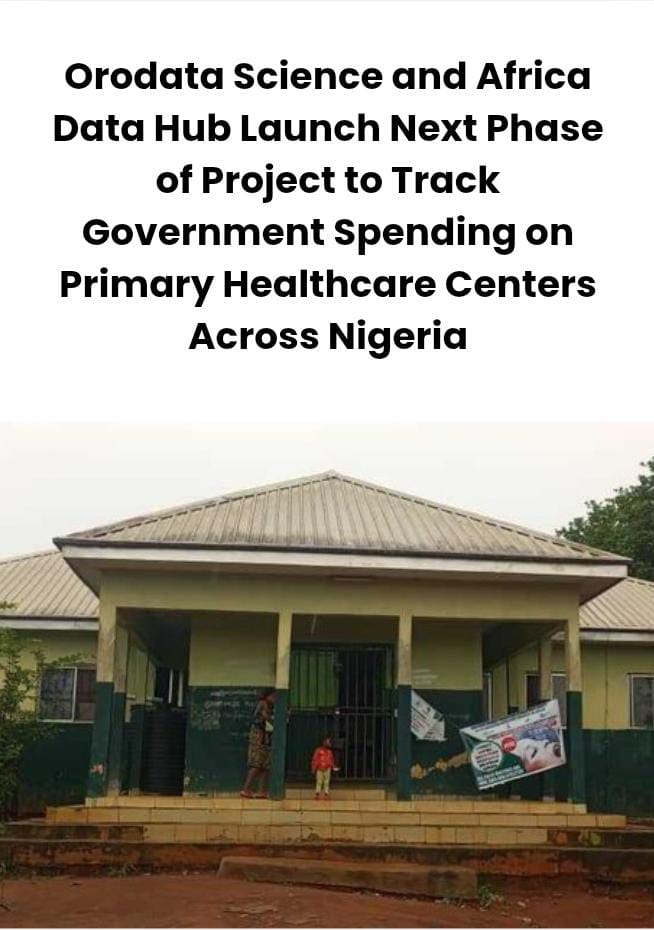
Between August and October 2026, frontline teams are expected to visit more than 300 PHCs across Nigeria.
During the field exercise, the teams will collect geo-referenced data, assess physical infrastructure, examine the availability and condition of medical equipment and verify the presence of health workers.
They will also engage directly with residents, patients, community leaders and other stakeholders to document their experiences in accessing healthcare and determine whether upgraded facilities are delivering the services promised.
The raw data will subsequently be cleaned and validated before being published on the Africa Data Hub portal and integrated into the CheckMyPHC platform.
Investigative journalists will use the findings to produce detailed reports backed by field observations, data analysis and interactive dashboards.
The findings are also expected to form the basis of a public town hall meeting scheduled for October, bringing together government officials, community leaders, health experts and citizens to examine the findings and discuss accountability and possible solutions.
Orodata Programme Manager, Mr Uche Oti, said the exercise was designed to establish what is happening beyond official figures and government documents.
“We are moving beyond figures on paper to look at the reality on the ground,” Oti said.
He said matching government budgets and tender documents with conditions at PHCs would provide citizens, journalists and policymakers with evidence to demand better healthcare delivery.
The initiative comes against the backdrop of the central role of PHCs in Nigeria’s healthcare system, particularly in rural and underserved communities.
For many Nigerians, the PHC is the first and sometimes only point of contact with the formal healthcare system. Yet, poorly equipped facilities, inadequate staffing, unreliable power supply, dilapidated infrastructure and shortages of essential medicines continue to undermine primary healthcare delivery.
With public resources continually being committed to the revitalisation and upgrading of such facilities, the new tracking exercise could provide an important independent check on whether government expenditure is producing tangible improvements.
Beyond determining whether facilities have been renovated or equipped, the exercise could also help answer a more fundamental accountability question: whether public investment in primary healthcare is actually improving the quality of care available to ordinary Nigerians.
Orodata Science is a civic technology organisation that uses data, technology, research and journalism to promote transparency, civic engagement and public accountability across Africa.
Its PHC work is implemented in partnership with the Africa Data Hub, a network supporting data-driven journalism through access to verified data, tools, training and mentoring.
