
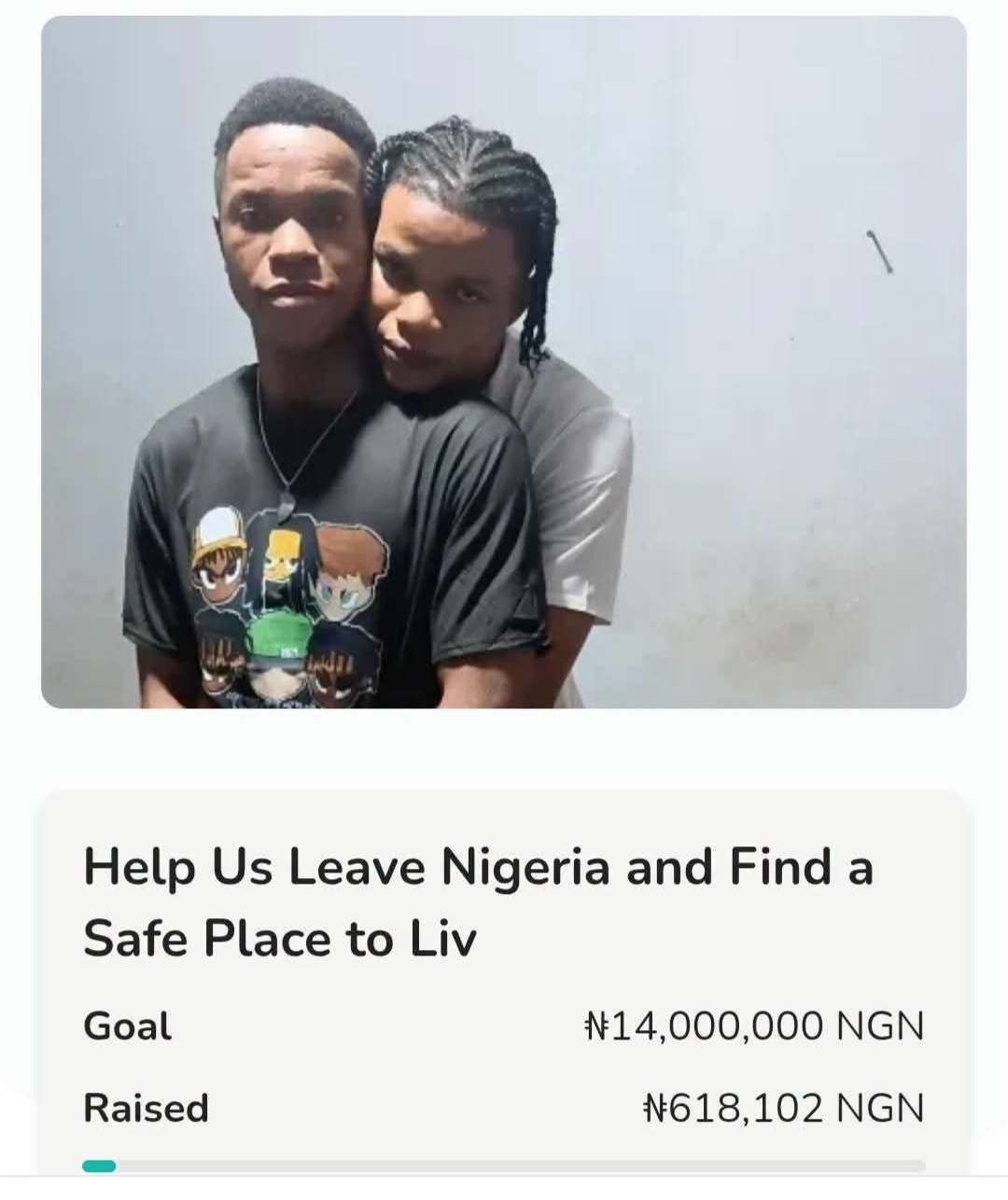



‘Help Us Escape’: Nigerian Gay Couple Seeks ₦14m to Leave Country, Claims Threats
A Nigerian couple claiming to be in a same-sex relationship has taken their desperate appeal to social media, asking Nigerians to help raise ₦14 million to enable them leave the country.
Identified in the circulating post as Uchendu and his boyfriend, the couple allege that threats from family members, neighbours and colleagues have made them fear for their safety.
Their appeal has since triggered a fierce debate online, with Nigerians sharply divided between those offering sympathy and financial support and others condemning the couple’s decision and lifestyle.
According to the appeal, the couple have so far received about ₦600,000 in donations but still need more than ₦13 million to reach their target.
For the couple, the issue is presented as one of safety and the desire to relocate to a country where, they say, they can live openly without fear.
For many critics, however, the appeal has opened another familiar argument over Nigeria’s cultural, religious and legal position on same-sex relationships.
Nigeria’s Same-Sex Marriage (Prohibition) Act, 2013 prohibits same-sex marriage and civil unions and prescribes criminal penalties for certain same-sex relationships and related activities.
The law has remained a major part of the debate surrounding LGBTQ+ issues in Nigeria, where questions of personal freedom, cultural values, religion and protection from violence continue to generate strong emotions.
The couple’s appeal reads in part:
“Please Help Us” — A Gay Couple Seeks Public Support to Leave Nigeria, Claims Family and Neighbours Are Threatening Their Lives
“A Nigerian couple who say they have been living openly as a gay couple have cried out for help, claiming their families, neighbours and colleagues are threatening their lives.
The couple, identified as Uchendu and his boyfriend, are seeking financial support to leave Nigeria and relocate abroad.
Their appeal has sparked mixed reactions online, with some Nigerians offering support and others criticising them over their decision to seek help to leave the country.”
The authenticity of the claims and the circumstances surrounding the alleged threats could not independently be established from the social media post alone.
But one thing is clear: the appeal has reignited a highly sensitive Nigerian conversation—where should the line be drawn between personal beliefs, the law, individual freedom and the right to live without fear of violence?
