



FG Plans Major Rebuild of Apapa, Tin Can, Four Other Ports
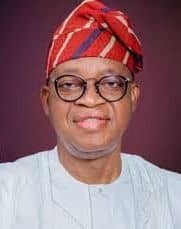
Oyetola
…Oyetola says upgrade targets faster cargo movement, lower logistics costs
For importers waiting for their goods, exporters trying to meet delivery deadlines and manufacturers depending on raw materials from abroad, what happens inside Nigeria’s seaports can have a direct impact on the cost of doing business.
The Federal Government is therefore planning a major reconstruction and modernisation of six key seaports across the country, in what the Minister of Marine and Blue Economy, Dr Adegboyega Oyetola, described as a long-term effort to strengthen Nigeria’s maritime gateway.
The ports covered by the programme are Apapa and Tin Can Island ports in Lagos, Onne and Rivers ports, as well as Calabar and Warri ports.
Oyetola disclosed this at the 2026 Transport Industry Summit organised by the Transport Correspondents Association of Nigeria, TCAN, in Lagos. He was represented at the event by the Director, Inland Transport Services, Nigerian Ports Economic Regulatory Agency, NPERA, Mr Paul Garnuwa.
According to the minister, the programme, approved by President Bola Ahmed Tinubu, is expected to address some of the infrastructure and operational challenges that have affected cargo movement through the ports over the years.
The modernisation will include reconstruction of quay walls, deepening of port channels to accommodate larger vessels, replacement of obsolete cargo-handling equipment and further digitalisation of terminal and gate operations.
For businesses, the expected benefit goes beyond the ports themselves. Faster cargo handling could mean less time waiting for goods, while more predictable port operations could help manufacturers, transporters, distributors and retailers plan their businesses and manage costs more effectively.
Oyetola said port efficiency was central to the performance of the wider transportation system because cargo leaving the ports eventually moves through roads, rail, inland waterways, warehouses and distribution networks.
He noted that delays at the ports could affect manufacturers waiting for raw materials, exporters waiting to ship their products, transport operators moving cargo and ultimately consumers who may bear increased logistics costs.
The minister said the modernisation programme was expected to improve vessel turnaround time, increase cargo-handling capacity and create a more predictable environment for international trade.
He also pointed to improvements recorded in Nigeria’s port performance, citing the 2025 Container Port Performance Index produced by the World Bank and S&P Global Market Intelligence.
According to him, Tin Can Island Port ranked 10th, while the Lagos Port Complex, Apapa, ranked 12th among the world’s 20 most improved container ports between 2020 and 2025.
The index primarily measures port performance through the amount of time vessels spend in port.
While describing the development as encouraging, Oyetola said maintaining the progress would require sustained investment in infrastructure, technology and port operations.
He also highlighted the removal in August 2026 of the United States Coast Guard’s Conditions of Entry on vessels arriving from Nigeria, ending 12 years of additional security-related requirements imposed on Nigerian ports.
The minister attributed the development to efforts to strengthen compliance with the International Ship and Port Facility Security Code, improve access controls and address identified security gaps.
He said the removal of the restrictions would strengthen confidence in Nigeria’s port-security arrangements and eliminate additional procedures that had affected vessels travelling from Nigerian ports to the United States.
Beyond the existing ports, Oyetola said the Federal Government was working with state governments and private-sector investors to advance deep seaport projects in Akwa Ibom, Bayelsa, Cross River, Ogun, Ondo and Rivers states.
He said the projects were expected to expand Nigeria’s port capacity, create new maritime and logistics corridors, reduce pressure on existing gateways and bring economic activities closer to coastal communities.
The minister stressed that government alone could not deliver the scale of investment required in the maritime sector, noting that stronger partnerships with state governments, private investors, financial institutions and development partners would be necessary.
Another major component of the reform agenda, according to Oyetola, is the Nigeria Ports Economic Regulatory Agency, NPERA, Act 2026, which provides a statutory framework for economic regulation of the ports.
He said NPERA would regulate tariffs and charges, service standards, competition and the protection of port users, while providing clearer rules for terminal operators, shipping lines and logistics service providers.
The minister added that the new regulatory framework would provide port users with a more structured mechanism for resolving commercial and regulatory disputes.
However, Oyetola acknowledged that rebuilding ports alone would not automatically translate into lower logistics costs.
He identified security, technology, regulation and coordination among the different modes of transportation as equally important to improving the movement of goods.
Digitalisation, he said, would remain central to the government’s reform agenda, with emphasis on electronic documentation, cargo visibility, accurate information and data-sharing among operators across the supply chain.
The broader objective, according to the minister, is to reduce unnecessary physical processes, improve predictability and give businesses better information to plan the movement of their goods.
As Nigeria seeks to strengthen its position as a maritime and trading hub, Oyetola called on the private sector, financial institutions, development partners, state governments and industry associations to support the ongoing reforms.
He also urged transport journalists to continue providing informed reporting and constructive scrutiny of government policies and projects, given the technical nature of the sector and its direct connection to the cost of doing business.
“Our immediate priority is to ensure that the investments and institutional changes now underway translate into practical improvements: faster cargo movement, improved vessel turnaround, greater capacity, stronger security, transparent regulation and lower logistics costs,” Oyetola said.
He added that measurable outcomes would remain central to assessing the impact of the ministry’s reforms on Nigeria’s economic growth.
