



US, Iran Hold Fresh Talks at UN as Trump Threatens ‘Annihilation’
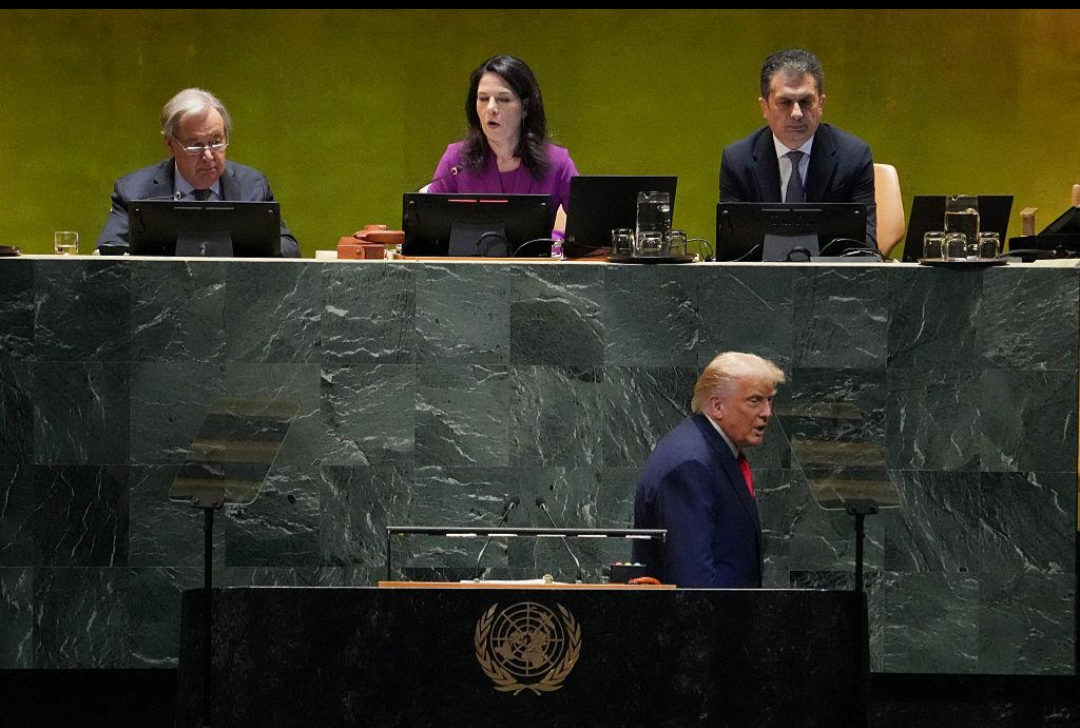
Trump at UNGA
The United States and Iran have resumed diplomatic contacts on the sidelines of the United Nations General Assembly in New York, with Qatar facilitating discussions aimed at finding a possible path towards ending the nearly seven-month-old conflict.
The renewed diplomatic effort came shortly after US President Donald Trump, in his address to the UN General Assembly, warned that Washington faced a choice between reaching a deal with Tehran and, in his words, “annihilate” Iran.
The contacts, facilitated by Qatar, are the first significant US-Iran discussions in months. Iranian Foreign Minister Abbas Araghchi and US special envoy Steve Witkoff communicated through mediators, while both sides remained publicly divided over the terms for ending the conflict.
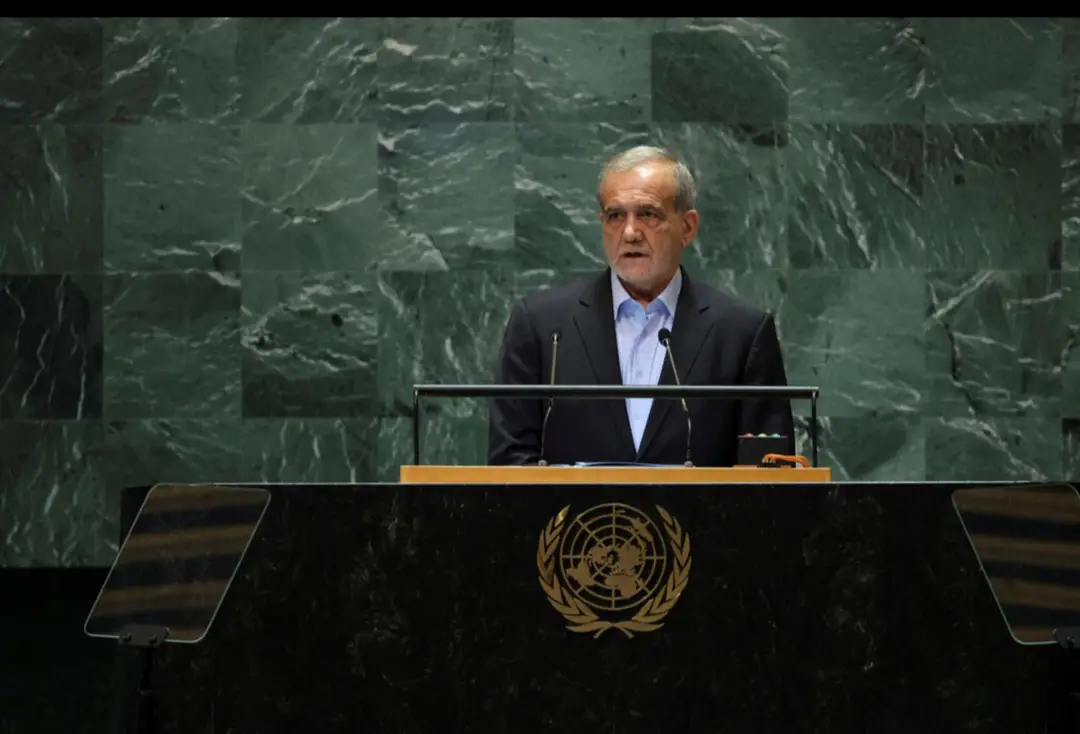
Pezeshkian
Iranian President Masoud Pezeshkian, addressing the General Assembly on Wednesday, rejected what he described as Washington’s use of intimidation and pressure, insisting that Iran would not surrender to US demands.
Pezeshkian, however, left the door open to diplomacy, saying Tehran was prepared for dialogue and negotiations without what he described as the language of force.
The Iranian president also defended his country’s right to pursue a peaceful nuclear programme and accused the United States of applying a “bullying mentality” in its dealings with Tehran. Iran maintains that its nuclear activities are peaceful, while the United States and Israel have expressed concerns over the possibility of Iran developing nuclear weapons.
Hormuz Becomes Key to Negotiations
A major issue in the diplomatic discussions is the Strait of Hormuz, one of the world’s most important energy shipping routes.
Iran has indicated that it could reopen the waterway under conditions that include an easing of US military pressure and the lifting of the blockade on Iranian ports. Tehran has also demanded an end to attacks, the release of frozen Iranian assets and an end to what it describes as the economic war against the country.
The disruption around the Strait of Hormuz has already affected global shipping and energy markets. Reuters reports that the waterway, through which a significant share of global oil and gas shipments normally passes, has become a major concern for countries seeking to restore the movement of commercial vessels.
The wider conflict has also affected cargo movement and increased shipping and insurance costs across the Gulf region, with businesses facing longer routes and delays.
Regional Conflict Widens
Beyond the direct confrontation between Washington and Tehran, the war has heightened tensions across the Middle East.
Iran-aligned armed groups, including Yemen’s Houthis and Hezbollah in Lebanon, have been involved in the wider regional confrontation, while Iraqi armed groups have also carried out attacks on US and allied interests.
The security situation around the Red Sea has added another layer of uncertainty for global shipping, particularly because the region contains critical maritime routes linking the Middle East with international markets.
Reports have also linked Houthi attacks to the broader regional conflict, raising concerns over the security of energy infrastructure and commercial shipping.
Sanctions and Economic Pressure
Washington has continued to apply economic pressure on Tehran, with new sanctions affecting parts of Iran’s aviation sector and other areas of the economy.
Iran, meanwhile, faces growing pressure from restrictions on its ability to export oil and access international financial resources.
Tehran has demanded the release of frozen assets as part of its conditions for ending the conflict, while Washington has continued to insist that Iran must address US concerns before sanctions and military pressure can be eased.
Russia and China
The conflict has also drawn the attention of major global powers.
Russia has maintained relations with Tehran and has been reported as providing forms of non-military support, including intelligence cooperation, while China remains an important buyer of Iranian oil.
Both countries have strategic interests in the region, although neither has entered the conflict as a direct combatant.
Israel-Iran Tensions
Israel remains a central actor in the wider confrontation because of its longstanding dispute with Iran over Tehran’s nuclear programme and Iran’s support for armed groups operating in the region.
Israel has repeatedly argued that a nuclear-capable Iran would pose a serious security threat, while Tehran insists that its nuclear programme is intended for peaceful purposes.
Iran has also supported groups including Hezbollah in Lebanon, Hamas in Gaza and the Houthis in Yemen, although the nature and extent of Iranian support vary among the different organisations.
The conflict has therefore developed beyond a direct US-Iran confrontation, affecting energy markets, international shipping and security calculations across the Middle East.
For now, the diplomatic track in New York remains open, but Washington and Tehran remain far apart on the central issues required to end the war. Both sides have nevertheless continued to communicate through mediators, keeping alive the possibility of further negotiations.
Innocent
