
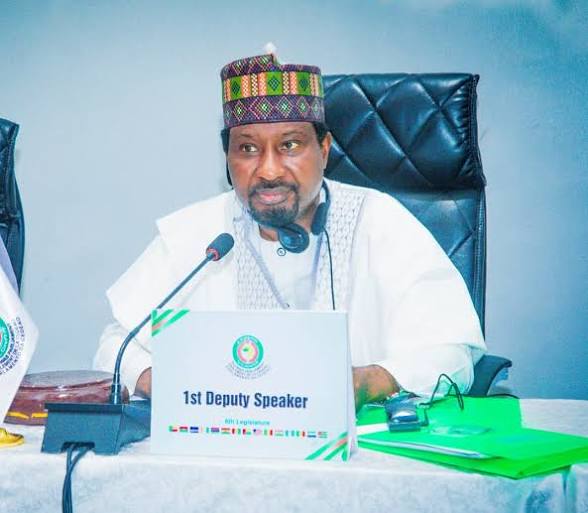



Barau: Farmer-Herder Conflicts Are Displacing Millions, ECOWAS Must Act Before Crisis Escalates
For a farmer who loses access to his farmland or a herder whose cattle can no longer find safe grazing routes, farmer-herder conflict is more than a political or security issue—it can mean the loss of a livelihood, displacement of families and, in many cases, years of uncertainty.
That human cost has come under renewed scrutiny in Accra, Ghana, where the ECOWAS Parliament is holding its Second Extraordinary Session and Parliamentary Seminar, with climate change, population displacement and growing insecurity among the issues under discussion. �
Ghana News Agency +1
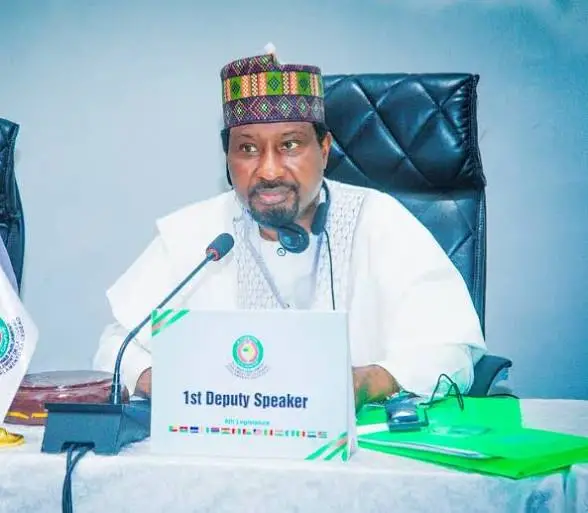
Nigeria’s experience with farmer-herder conflicts and internal displacement has been presented as a lesson for West Africa, with Deputy President of the Nigerian Senate and First Deputy Speaker of the ECOWAS Parliament, Senator Barau Jibrin, calling for stronger regional action to prevent conflicts before they develop into prolonged humanitarian crises.
In a presentation titled “Strategies for Addressing Internal Displacement and Farmer-Herder Conflicts in Nigeria,” delivered on his behalf by Senator Sadiq Umar, Barau identified pressure on land and water resources as some of the factors contributing to conflicts involving farming and pastoral communities.
He noted that agriculture and livestock production remain important sources of livelihood for millions of Nigerians, but competition over increasingly pressured land and water resources has contributed to conflicts, displacement, banditry and other security challenges.
Barau outlined some of the measures adopted by Nigeria, including the establishment of the Ministry of Humanitarian Affairs and Poverty Reduction, which has responsibilities covering emergency relief operations and responses to internally displaced persons.
He said Nigeria’s approach was increasingly moving beyond short-term humanitarian assistance towards government-led development solutions, while the country’s engagement with the Kampala Convention has also strengthened its framework for protecting and assisting internally displaced persons.
But for the senator, humanitarian intervention alone cannot solve the problem.
He argued that internal displacement should not be left solely to humanitarian agencies, stressing the need for coordinated action involving government ministries, departments and agencies, traditional institutions and other stakeholders.
He also called for greater attention to early warning systems, conflict prevention and climate adaptation, particularly as environmental pressures increasingly affect livelihoods and competition for land and water.
On the livestock sector, Barau said cattle production should not be viewed only through the lens of security, but also as an important economic activity that requires investment and proper regulation.
He advocated investment in ranching, livestock feeding and breeding, arguing that such measures could reduce some of the pressures associated with uncontrolled livestock movement and competition for grazing resources.
For displaced families, however, the central question remains how quickly they can return to productive lives.
Barau therefore urged parliamentarians across the region to develop appropriate legislation to protect displaced persons and improve the management of land and livestock. He also called for stronger parliamentary oversight of government programmes and spending related to displacement, security, agriculture, livestock and reconstruction.
According to him, Nigeria’s experience demonstrates that farmer-herder conflicts and internal displacement are interconnected challenges that cannot be addressed through isolated interventions.
He stressed that effective implementation is as important as legislation, noting that farmers and herders must be able to pursue lawful and productive livelihoods without constant fear of conflict.
Barau urged ECOWAS countries to focus more on preventing crises than responding after communities have already been devastated.
“For Africa, the challenge extends beyond responding to crises after they occur; it requires building resilient institutions, economies and communities capable of preventing conflicts and protracted displacement,” he said.
He added that parliamentarians have a responsibility to support appropriate legislation, strengthen oversight, promote inclusive dialogue and ensure that public resources are channelled towards sustainable solutions.
The wider ECOWAS seminar has similarly emphasised the need to move from statistics and declarations to practical responses that protect people’s lives, livelihoods and communities from the combined pressures of climate change, environmental degradation and insecurity.
**For millions of farmers, herders and displaced Nigerians, the success of these interventions will ultimately be measured not in parliamentary speeches, but in whether families can return home, cultivate their land, move their livestock safely and earn a living without fear.
