
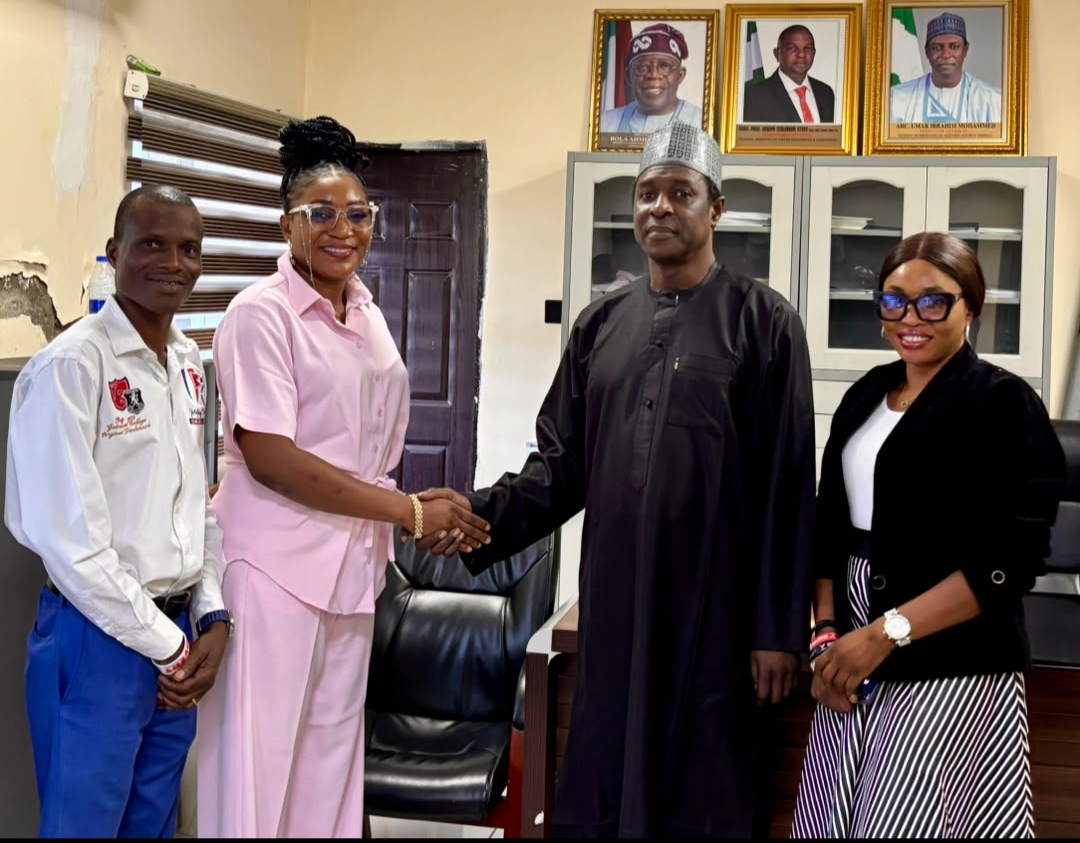



NIHSA, Environmental Journalists Partner to Get Flood Warnings to Vulnerable Communities
 For communities living along rivers, flood-prone roads and low-lying areas, a timely warning can make the difference between saving lives and losing homes, livelihoods and property.
It is against this backdrop that the Nigeria Hydrological Services Agency, NIHSA, and environmental journalists have agreed to strengthen collaboration on water management, flood forecasting and early warning information.
The partnership is expected to improve public understanding of Nigeria’s water resources, flooding risks, water contamination and other hydrological challenges that directly affect communities across the country.
Director-General of NIHSA, Mr Umar Muhammed, made the commitment when the Executive Council of the Environmental Media Correspondents Association of Nigeria, EMCAN, led by its Chairman, Joycelyn Adah, paid a courtesy visit to the agency’s management in Abuja.
Muhammed stressed that the media remained a critical link between technical agencies and the public, particularly vulnerable communities that need accurate information before floods occur.
He said stronger media collaboration would help ensure that flood forecasts and early warnings are not confined to government offices or technical reports but reach the people who need them in time to act.
Beyond flooding, the NIHSA boss warned that poor environmental management and the contamination of water sources could create serious public health challenges.
According to him, effective water resources management is essential to preventing water scarcity, contamination and outbreaks of water-related diseases.
“If you do not have good environment and manage water resources, one day you wake up and you’d be shocked with what you see. Either you totally run out of water or you have no clean water,” he said.
Muhammed also warned that human activities were contributing significantly to the pollution of streams and other water bodies, stressing the need for greater public awareness and responsible environmental practices.
He said organisations such as EMCAN could help NIHSA bridge the communication gap between the agency and Nigerians by translating technical information into messages that ordinary people could understand and act upon.
“We will need an organisation like yours to interface with the public and disseminate quality information for public use,” he said.
EMCAN Seeks Support for COP31
The visit also provided an opportunity for EMCAN to brief the NIHSA management on its plans to cover the 31st Conference of the Parties, COP31, scheduled to take place in Türkiye.
In a statement presented by EMCAN Secretary, Samuel Adeyinka, the association formally sought NIHSA’s support for the participation of some of its members at the global climate conference.
Responding, Muhammed said NIHSA was also preparing to participate in COP31 and was exploring partnerships with international development organisations, government agencies and other stakeholders.
On the request for sponsorship, he explained that NIHSA operates within a statutory funding framework as a federal government agency.
He, however, said the agency would explore available opportunities through its existing partnerships that could potentially accommodate additional participation.
Agency Seeks Stronger Publicity
Special Assistant on Media to the NIHSA management, Yakub Aliyu, called for closer collaboration with environmental journalists, particularly in publicity and specialised media training.
He said greater visibility was needed to help Nigerians understand NIHSA’s mandate and appreciate how hydrological information could help prevent disasters.
Aliyu noted that Nigeria faces a difficult water paradox—some communities battle severe flooding while others struggle with water scarcity.
Contamination of water sources, he added, presented another major challenge requiring sustained public education.
Technical Adviser to the Director-General, Stephen Jabo, also called for stronger media collaboration, particularly in reporting NIHSA’s Annual Flood Outlook and ensuring that its findings reach a wider audience.
Earlier, EMCAN Chairman, Joycelyn Adah, said the association was seeking to deepen its relationship with NIHSA and other environmental agencies under its new leadership.
Adah appealed to the agency to support the participation of two or three EMCAN members at COP31, explaining that the association had already begun efforts to raise funds but was also approaching relevant government agencies and environmental organisations for assistance.
She said journalists covering technical government agencies needed a proper understanding of their mandates, operations and specialised terminology to report their activities accurately.
“As environmental journalists, we have been following and reporting the activities of NIHSA, but we want to do more,” Adah said.
The EMCAN chairman described NIHSA’s work as extremely important to Nigeria, particularly at a time when flooding, water scarcity, environmental degradation and climate-related risks are increasingly affecting communities.
She said the association was interested in building stronger relationships with key environmental agencies, with NIHSA identified as one of its major partners.
Both organisations expressed optimism that the engagement would lead to a more sustained partnership focused on public enlightenment, professional development, early warning dissemination and improved reporting of Nigeria’s water and environmental challenges.
Ultimately, the success of the partnership may be measured not only by the number of stories published or meetings held, but by whether a farmer receives a flood warning early enough to move livestock, whether a family knows when its community is at risk, and whether Nigerians better understand how their everyday activities affect the water they depend on.
