



2027 Election: INEC Moves to Remove Barriers for Persons with Disabilities
For many Nigerians living with disabilities, getting to a polling unit, accessing voter information or casting a ballot can involve barriers that other voters may not face.
Ahead of the 2027 general election, the Independent National Electoral Commission, INEC, is seeking stronger collaboration with disability organisations to remove some of those barriers and make participation easier for eligible voters with disabilities.
The Commission made this commitment during a national strategic engagement with the Joint National Association of Persons with Disabilities, JONAPWD, Organisations of Persons with Disabilities and other stakeholders in Abuja.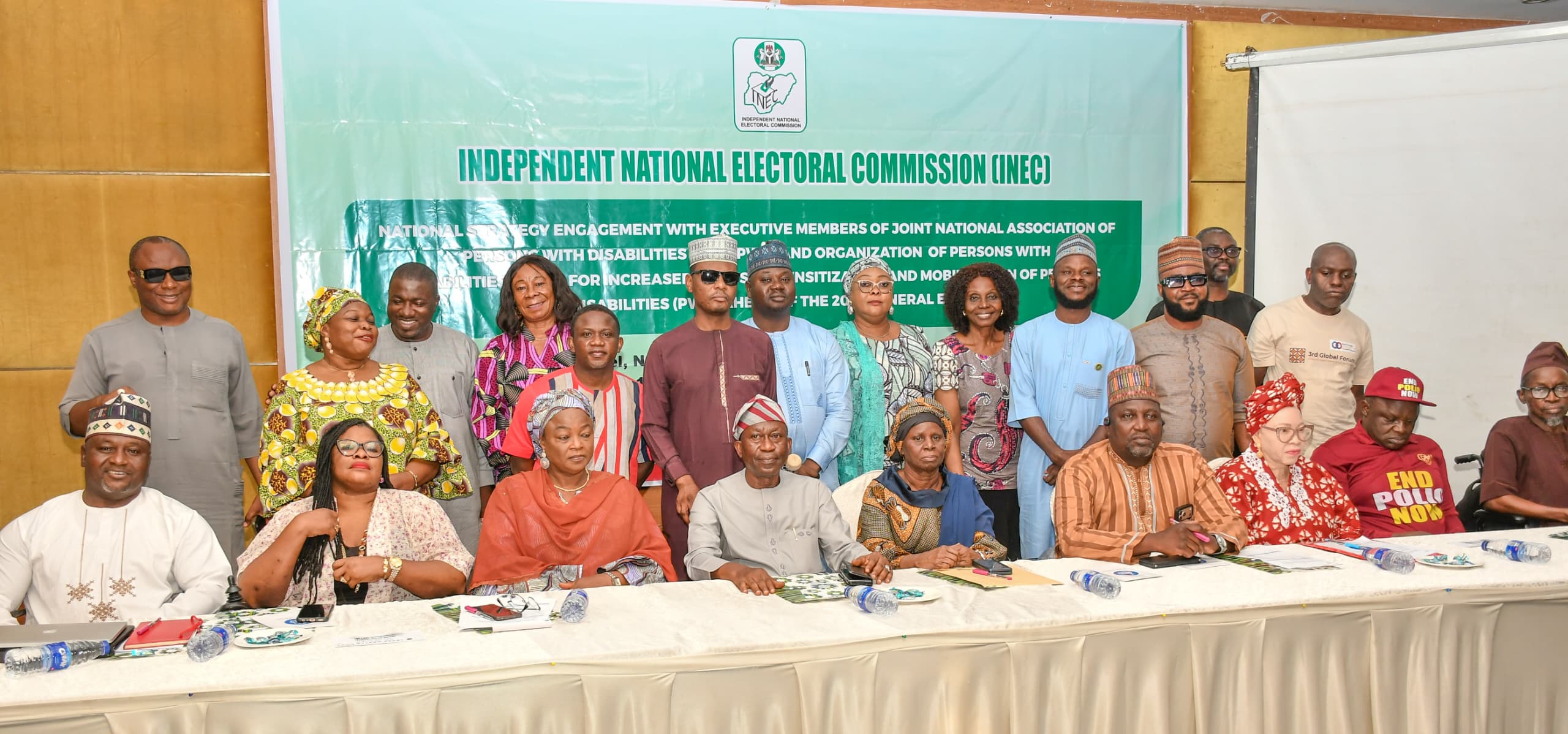
Representing INEC Chairman, Professor Joash Amupitan, Acting Chairman and National Commissioner, Professor Rhoda Gumus, said the Commission was committed to an electoral process that is inclusive, accessible and responsive to the needs of eligible citizens.
She said the engagement was designed to identify practical challenges affecting persons with disabilities, strengthen voter education and mobilisation, and ensure that disability organisations are actively involved before, during and after the election.
INEC’s Director of Gender and Inclusivity, Mrs Lakunuya Dorothy Bello, identified access to voter information, voter education, mobilisation and accessible electoral facilities among the challenges that still need attention. She said disability organisations were particularly important because of their grassroots networks and understanding of the different needs of persons with disabilities.
The Commission says some accessibility measures are already in place, including Braille ballot guides, magnifying glasses, the EC30 PWD form and sign-language interpretation during collation activities.
Deputy Director of Inclusivity, Mrs Habiba Jatto, said the goal goes beyond simply encouraging persons with disabilities to vote. She said they must be adequately informed, effectively reached and meaningfully engaged throughout the electoral process.
Available INEC data compiled before the introduction of the Automated Fingerprint Identification System recorded 137,487 persons with disabilities, including visually impaired, hearing-impaired, physically impaired persons, persons with albinism and people in other disability categories.
The Executive Secretary of the National Commission for Persons with Disabilities, Ayuba Burki, called for more assistive devices to support participation, while JONAPWD National President, Abdullahi Aliyu Usman, urged INEC to carry persons with disabilities along throughout the electoral process.
Founder and Chief Executive Officer of TAF Africa, Ambassador Jake Epelle, also called for greater accessibility at polling units and effective use of assistive devices.
For disability advocates, the issue is therefore not simply about whether persons with disabilities can vote, but whether they can approach the electoral process with the same access to information, facilities and assistance available to other eligible citizens.
The Abuja engagement is expected to produce practical recommendations that can be taken to the states and grassroots ahead of the 2027 election, with the aim of turning commitments on inclusion into measures that voters with disabilities can actually experience on Election Day.
