

PWDs Demand Digital Skills as NCC Training Opens New Doors in Lagos
For many persons living with disabilities, a smartphone is more than a device for making calls. It can be a classroom, office, marketplace and gateway to opportunities — if they have the skills and accessible tools to use it.
That was the message from Persons With Disabilities (PWDs) in Lagos State, who are calling for sustained digital skills training and greater access to inclusive technology to help them secure jobs, grow businesses and achieve greater economic independence.
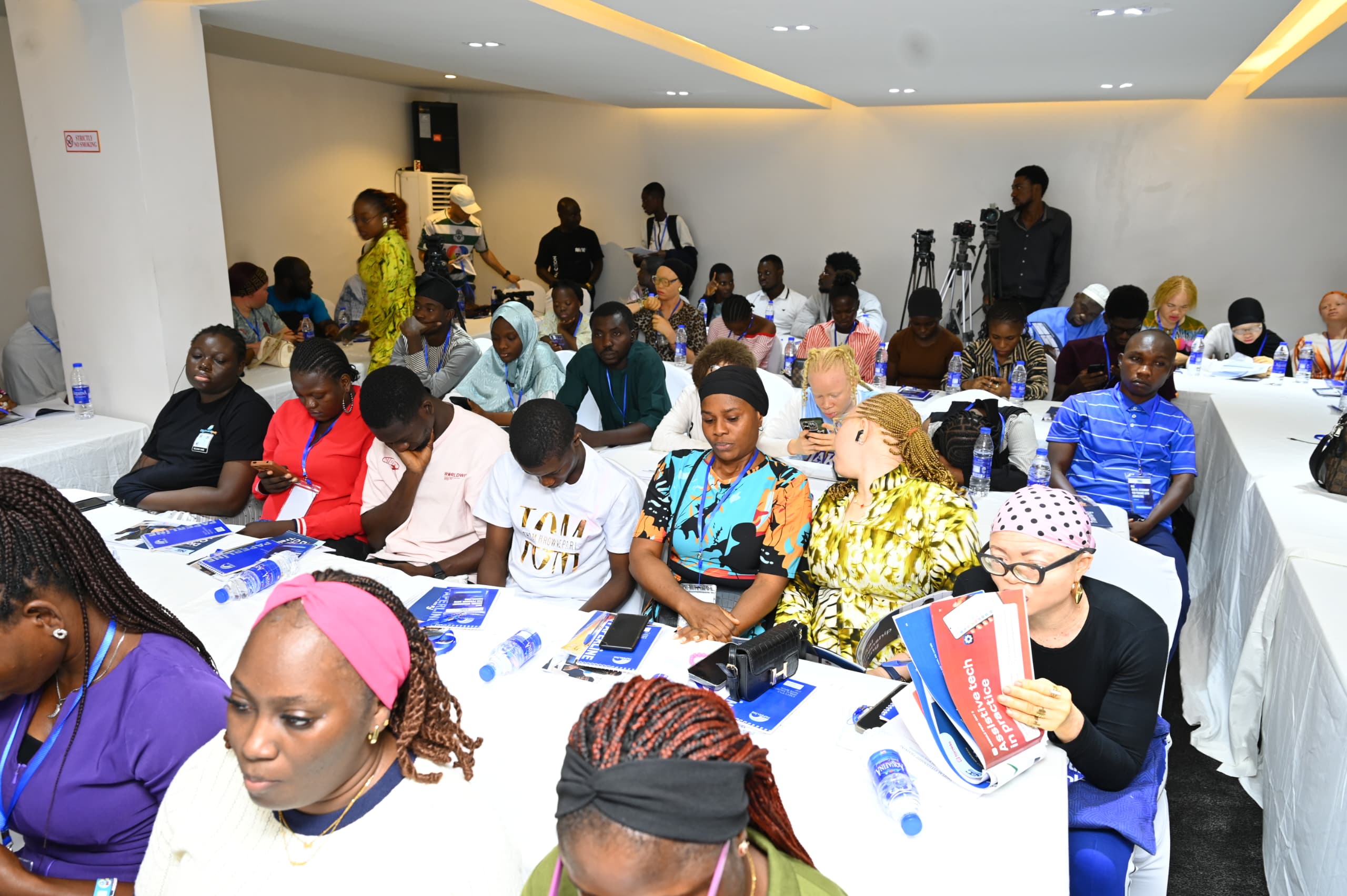
The call followed a two-day Digital Citizenship Training for PWDs organised by the Nigerian Communications Commission (NCC) in Lagos, where more than 100 participants received practical training on using digital tools for work, learning, entrepreneurship and everyday activities.
For some beneficiaries, the training exposed skills gaps they did not know they had, while also showing them that several opportunities were already within reach through their phones and computers.
One participant, Babatunde Fashola, said the programme transformed his understanding of email management and online learning.
Although he regularly received emails as part of his work, Fashola said he had never fully understood how to organise and manage his electronic correspondence effectively.
He also knew about online courses but was unaware that many quality learning opportunities were available free of charge.
The training, he said, had encouraged him to explore online learning platforms to acquire additional professional skills.
Another participant said the session on CV preparation changed the way she viewed job applications.
She explained that she previously used the same CV for different jobs and included extensive references and contact details.
The training taught her to tailor her CV to each opportunity and present her skills in a way that could make her more competitive in the digital job market.
For a beneficiary who operates a shoemaking business, the training also opened her eyes to opportunities beyond her existing trade.
She said she was particularly interested in acquiring additional skills in fabrication and related areas that could help her expand and diversify her business.
The experiences of the participants highlighted the growing importance of digital literacy in a society where employment, education, financial services and business opportunities are increasingly moving online.
Speaking at the programme, NCC Executive Vice Chairman, Dr Aminu Maida, represented by the Director, Digital Economy Department, Ms Helen Obi, said the commission was determined to ensure that PWDs were not left behind in Nigeria’s digital transformation.
Maida said digital inclusion was about more than simply providing internet access.
According to him, PWDs also need appropriate devices, affordable and reliable broadband, relevant digital skills, accessible digital platforms and secure online systems to participate meaningfully in the digital economy.
He noted that technology could remove barriers to education and employment while creating opportunities for entrepreneurship, remote work and access to public and financial services.
The training was organised under the theme, “Empowering Persons with Disabilities Through Digital Citizenship for an Inclusive Digital Economy,” and delivered by Fornido Development Company, the NCC’s consultant for the initiative.
Lead Facilitator, Binta Agbonika, said participants were introduced to practical tools that could improve their productivity and open up new economic opportunities.
The training covered digital foundations, smartphone accessibility features, cybersecurity, online safety, free learning platforms, LinkedIn, freelancing, email communication and CV preparation.
One of the discoveries during the programme was that some participants were unaware that their smartphones already contained accessibility features designed to make the devices easier to use.
“A lot of them didn’t even know that they had accessibility settings on their devices,” Agbonika said.
She explained that features such as voice typing and text-to-speech could make smartphones significantly more accessible and allow PWDs to carry out more digital tasks independently.
Cybersecurity was also given attention, with participants learning how to protect their accounts, personal information and online transactions from fraud.
Agbonika warned that PWDs who depend on others to carry out digital transactions or access online services could face additional risks if their personal information is not properly protected.
For some beneficiaries, the lessons immediately changed their online habits, including the use of stronger and different passwords for different accounts.
Participants also learnt how to use free online learning platforms such as ALX Africa, transfer documents from WhatsApp to email and manage electronic correspondence more efficiently.
The Director of Monitoring, Evaluation and Orientation, Lagos State Office for Disability Affairs (LASODA), Dr Theresa Adekola, who represented the General Manager, Mrs Adenike Oyetunde-Lawal, said digital and economic skills could play a major role in reducing dependence among PWDs.
“Developing their skills will enhance their economic skills. It will also give them independence because when they have economic skills, they will be able to earn their living,” she said.
The beneficiaries, however, said one-off training programmes would not be enough to bridge the digital divide.
They called for more sustained initiatives that combine digital training with access to smartphones and computers, employment opportunities, entrepreneurship support and accessible digital platforms.
For them, the ultimate goal is not simply to learn how to use technology, but to use it to earn, learn, build businesses and live more independently.
The NCC said the initiative formed part of its broader commitment to creating an inclusive digital economy where persons with disabilities can acquire relevant skills, access opportunities, operate businesses and use digital services safely and independently.
