



The Federal Government, the African Development Bank and other development partners are stepping up efforts to mobilise climate finance and strengthen weather forecasting and early warning systems to protect lives, infrastructure and economic investments.
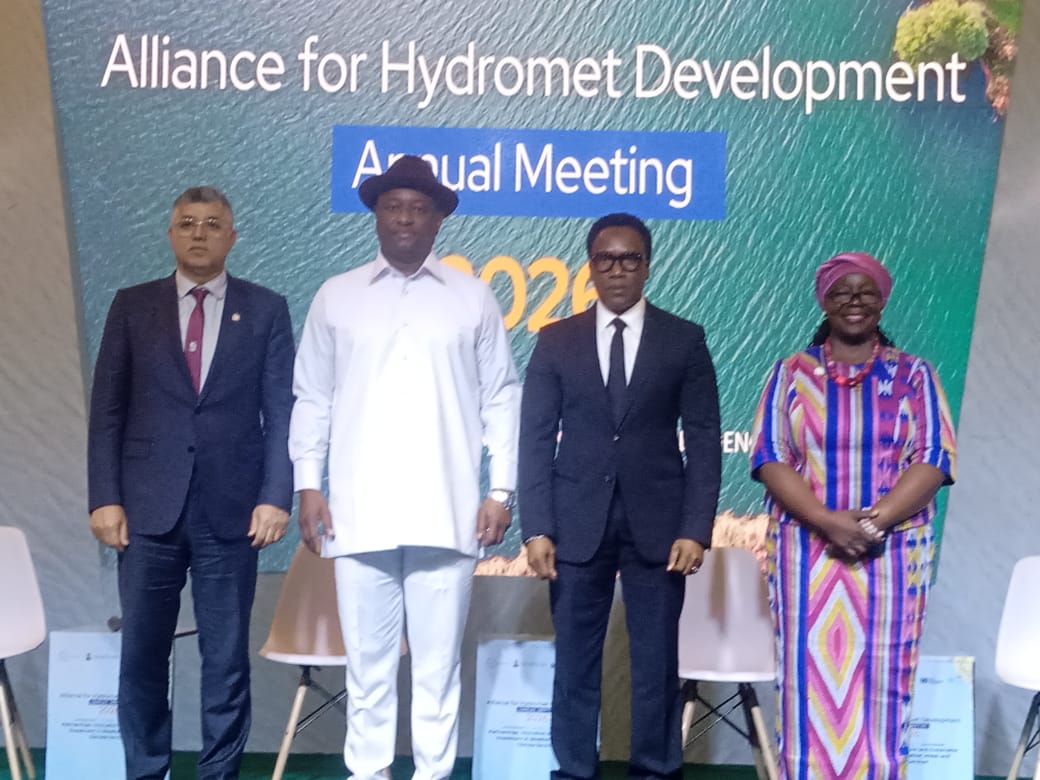
The Minister of Aviation and Aerospace Development, Mr Festus Keyamo, disclosed this in Lagos at the 2026 Annual Meeting of the Alliance for Hydromet Development, organised by the Nigerian Meteorological Agency (NiMet), with the theme: “Partnerships, Innovation and Sustainable Investment in Weather, Water and Climate Services.”
Mr Keyamo said Nigeria was pursuing a 500-million-dollar Climate Investment Platform alongside innovative financing options, including green bonds and carbon markets.
He also disclosed that the National Economic Council had approved 83.2 billion naira for anticipatory measures against flooding and other climate-related emergencies.
“Hydrometeorological observations, forecasts, climate actions, and frameworks need finance to become effective. Nigeria is taking steps to strengthen its access to climate finance. The Federal Government has developed mechanisms for mobilising domestic and international resources for climate-related investments, including the Nigerian Climate Investment Platform, which was established to help unlock substantial finance in this regard, targeting $500 million for climate-resilient infrastructure, adaptation, and other policy areas.
“The accreditation of the Nigerian Southern Investment Authority as a direct access entity to the Green Climate Fund also represents an important development in strengthening Nigeria’s capacity to access and deploy international climate finance. In addition, the Development Bank of Nigeria is working to strengthen its institutional capacity to assess climate finance opportunities, while the Federal Government continues to explore green bonds, carbon market mechanisms, and other innovative financing instruments.
“Specifically, the government has approved a national carbon market framework and the operationalisation of the Climate Change Fund. Similarly, in June 2026, the National Economic Council approved N83.2 billion for Anticipatory Action Task Force interventions aimed at mitigating the anticipated impact of flooding and other climate-related emergencies across the country.
“These developments are significant, as climate finance must ultimately translate into projects that address real development challenges. We must therefore strengthen the connection between climate science, climate action, national development planning, and investment preparation.”
The minister called for stronger collaboration among governments, financial institutions, climate scientists and the private sector to ensure that climate investments deliver practical results.
Lagos State Governor, Mr Babajide Sanwo-Olu, represented by his Special Adviser on Blue Economy, Mr Oluwadamola Emmanuel, also stressed the need for sustained investment in weather stations, radar systems, forecasting technology and skilled personnel.
He said reliable weather and climate services were essential for public safety, economic development and the protection of businesses and communities against climate-related disasters.
“Flooding, extreme weather and climate-related disasters continue to threaten lives, livelihoods, infrastructure, and economic development. Often, the difference between a manageable risk and a devastating disaster is access to timely information and our ability to act on it.
“This is why weather, water, and climate services must be treated not merely as environmental concerns, but as essential investments in economic development, public safety, and resilience. I commend the Federal Ministry of Aviation and Aerospace Development, the Nigerian Meteorological Agency, the World Meteorological Organization, and the Alliance for Hydromet Development for convening this important meeting.”
The Director-General of NiMet, Professor Charles Anosike, meanwhile, warned that Africa’s weather observation infrastructure remained grossly inadequate.
He said the continent accounted for about 30 per cent of the global weather observation gap, with only 12.5 per cent of the minimum weather station density recommended by the World Meteorological Organization.
The NiMet Director-General noted that the shortage undermined forecast accuracy and left many rural and remote communities without adequate weather information.
“We are encouraged by your commitment, the Alliance for Hydromet Development. We are truly encouraged by your commitment to strengthen the capacity of the national meteorological and hydrological services for sustained operation of observational systems and data exchange that meets the WMO standards for minimum monitoring, coverage and reporting treatments.
“We call on financial institutions, development banks, private capital, philanthropic organisations, and climate funds at national and regional levels to join forces and commit to investment in weather and climate services for shared prosperity.”
He therefore urged development banks, climate funds, financial institutions and private investors to support the establishment and maintenance of weather monitoring infrastructure, noting that government funding alone could not meet the cost.
The NiMet chief emphasised that accurate forecasts must reach vulnerable communities early enough and in formats they can understand to enable them to take protective action.
The three-day meeting brings together governments, meteorological agencies, development partners, researchers and private investors to explore ways of mobilising climate finance and building stronger, more resilient weather and early warning systems across Africa.
By Innocent Onoh
