



Abia Signs MOU for 200-Metre Railway Link Road in Umuahia to Ease Traffic

The movement of vehicles around some of the busiest parts of Umuahia, the Abia State capital, is expected to become easier as the Abia State Government moves to construct a 200-metre link road across the railway axis.
The state government has signed a Memorandum of Understanding (MOU) with the Nigeria Railway Corporation (NRC) for the construction of the road, which is designed to improve connectivity and ease traffic within the city.
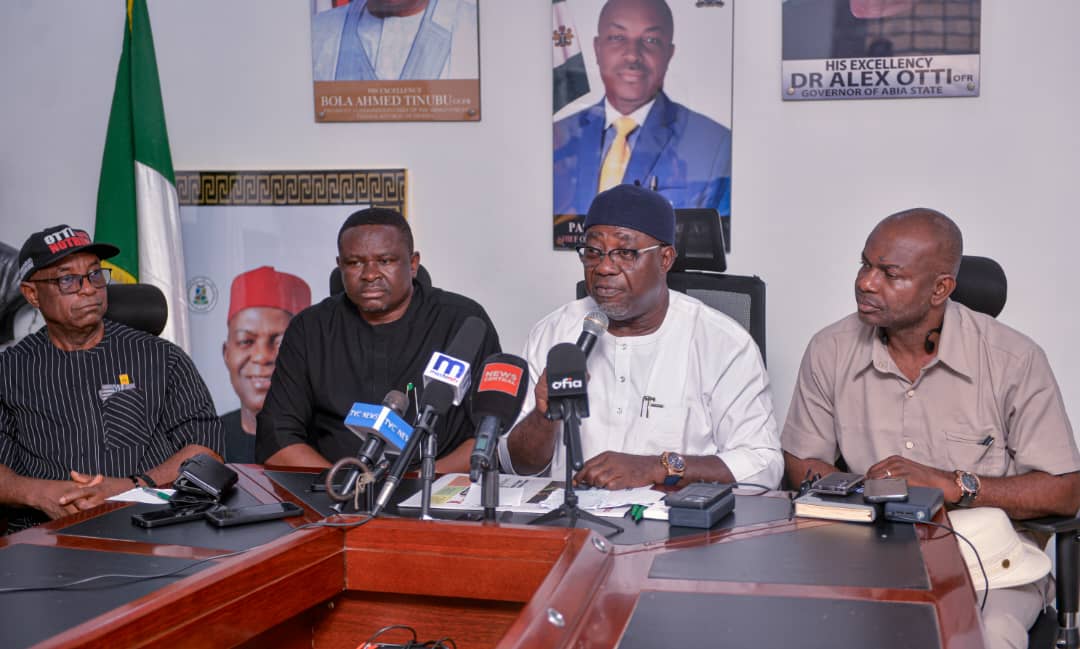
The Commissioner for Information, Prince Okey Kanu, disclosed this while briefing newsmen at Government House, Umuahia, on the outcome of the State Executive Council meeting presided over by Governor Alex Otti.
Kanu said construction would commence as soon as the design and scoping of the project are completed.
He explained that the state government had already begun renovating and equipping one of the existing structures within the railway station to facilitate the relocation of the police post currently occupying the area.
According to the Commissioner, the proposed link road will run from the Bende Road Junction by Umuwaya Road, around the Post Office Tower, through the railway crossing to the First Bank and Akanu Ibiam Road axis.
He said the project formed part of the administration’s broader urban renewal efforts aimed at improving movement and addressing infrastructure challenges in Umuahia.
Kanu also disclosed that the state government had intensified interventions in flood control as part of its urban renewal programme.
Three Million Mosquito Nets for Abia Residents
In the health sector, the Commissioner announced that the Abia State Government, in collaboration with the National Malaria Elimination Programme (NMEP), would soon commence the distribution of more than three million Insecticide-Treated Nets (ITNs) across the state’s 17 local government areas.
He said Abia had not conducted a mass distribution campaign for insecticide-treated nets since 2010.
Kanu explained that the latest exercise was aimed at strengthening the state’s efforts to prevent malaria and protect residents, particularly vulnerable groups, from the disease.
The distribution is expected to provide households across the state with improved access to a simple but important malaria-prevention tool.
