
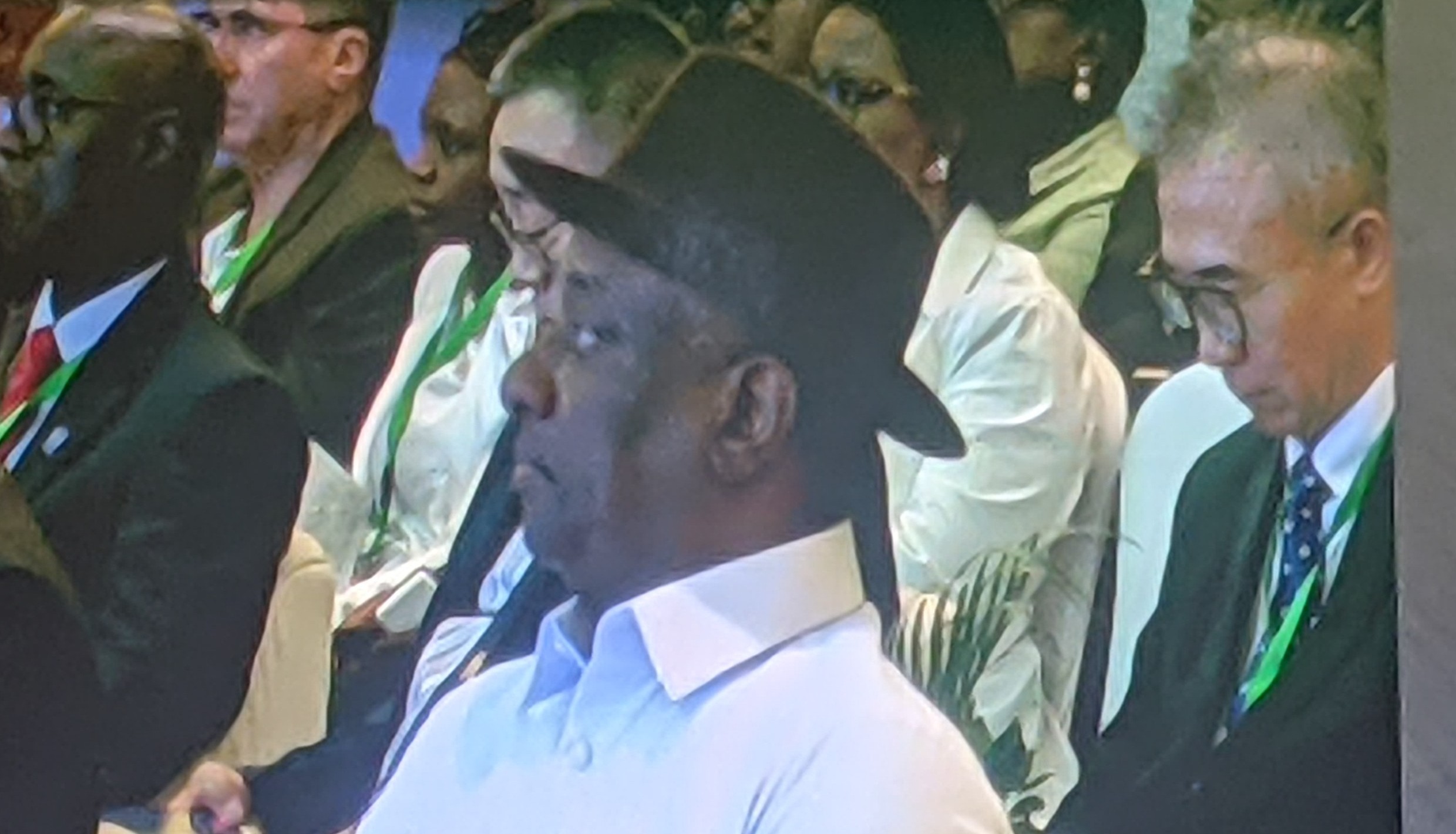




Keyamo at the event in Eko Hotel, Victoria Island
Nigeria is hosting the annual meeting of the Alliance for Hydromet Development in Africa for the first time, with the Federal Government calling for increased investment in weather forecasting, climate information and early warning systems to protect lives, infrastructure and economic development.
The Minister of Aviation and Aerospace Development, Mr Festus Keyamo, made the call in Lagos while declaring open the three-day 2026 Annual Meeting of the Alliance for Hydromet Development, which brings together governments, financial institutions, meteorological agencies and development partners to strengthen weather, water and climate services.
Keyamo described Nigeria’s hosting of the meeting as an opportunity to deepen international cooperation and mobilise resources to address gaps in weather observation infrastructure, forecasting capacity and climate finance across Africa.
“On behalf of the President of the Federal Republic of Nigeria, President Bola Ahmed Tinubu, and the government and people of Nigeria, I want to warmly welcome you to the 2026 Annual Meeting of the Alliance for Hydromet Development.
“The government and people of Nigeria are pleased and proud to be the first African hosts of this meeting, and I commend the Nigerian Meteorological Agency, NiMet, for making this possible,” he said.
The meeting, themed “Partnerships, Innovation and Sustainable Investment in Weather, Water and Climate Services,” focuses on strengthening collaboration and financing mechanisms to improve access to reliable weather and climate information, particularly in developing countries.
The minister noted that weather variability, climate change, water-related hazards and environmental degradation required coordinated responses involving governments, scientific institutions, development partners, financial institutions, the private sector and local communities.
He stressed that reliable weather information was essential to national development, particularly in climate-sensitive sectors such as aviation, agriculture, energy and disaster management.
According to him, aviation operations depend heavily on accurate meteorological information, making investments in weather services critical to flight safety and operational efficiency.
“Hydrometeorological development and aviation are closely linked, as safe and efficient flight operations depend heavily on accurate weather, water and climate data,” Keyamo said.
He added that weather information was not merely a technical service but an essential component of national infrastructure, noting that poor forecasting could expose lives, investments and economic activities to avoidable risks.
The minister said the Federal Government was committed to strengthening NiMet’s institutional, technical and operational capacity to improve service delivery across the aviation sector and other climate-sensitive areas of the economy.
He also highlighted improvements in staff welfare, digital transformation and institutional development under the agency’s current leadership, alongside the implementation of its 2026–2030 Strategic Plan.
Keyamo said the government was increasingly prioritising anticipatory action, which enables authorities to take preventive measures before disasters occur, rather than relying solely on emergency response and recovery.
He noted that the establishment of the Anticipatory Action Task Force on Floods in 2025 represented an important step towards improving national preparedness, with seasonal climate predictions produced by NiMet contributing to planning and risk reduction.
On climate finance, the minister disclosed that the Federal Government was pursuing a Nigerian Climate Investment Platform targeting 500 million dollars to support climate-resilient infrastructure, adaptation and other priority areas.
He said Nigeria was also exploring green bonds, carbon market mechanisms and other innovative financing instruments to mobilise domestic and international resources for climate-related investments.
Keyamo further disclosed that the National Economic Council approved 83.2 billion naira in June 2026 for Anticipatory Action Task Force interventions aimed at mitigating the anticipated impact of flooding and other climate-related emergencies across the country.
He added that the government had approved a national carbon market framework and was working towards operationalising the Climate Change Fund.
The minister emphasised that climate finance must translate into practical investments capable of addressing development challenges and strengthening communities’ resilience to climate-related risks.
“We must therefore strengthen the connection between climate science, climate action, national development planning, and investment preparation,” he said.
He called for greater private-sector participation in financing and delivering weather and climate services, identifying opportunities in aviation, satellite services, data analytics, insurance, agriculture, energy, telecommunications and technology.
“Governments cannot and should not carry the entire burden of financing and delivering every component of the weather, water, and climate information ecosystem,” Keyamo said.
He urged private investors to contribute not only capital but also innovation, technology, distribution networks and business expertise to improve the delivery of weather and climate information.
The minister maintained that investments in observation networks, forecasting systems, effective communication and early warning infrastructure were among the measures needed to protect development gains and reduce disaster risks.
He also cited the importance of the Alliance for Hydromet Development in coordinating financial and technical support to address observation gaps and shortages in skills and knowledge, particularly in developing and least-developed countries.
The Director-General of NiMet, Professor Charles Anosike, had earlier highlighted the need for greater investment in weather observation infrastructure across Africa, noting that gaps in monitoring systems continued to constrain forecasting capacity and access to reliable climate information.
The meeting is expected to strengthen partnerships among governments, meteorological and hydrological services, development banks, climate funds, researchers and private investors to expand access to weather, water and climate services and improve early warning systems across Africa.
By Innocent Onoh
