
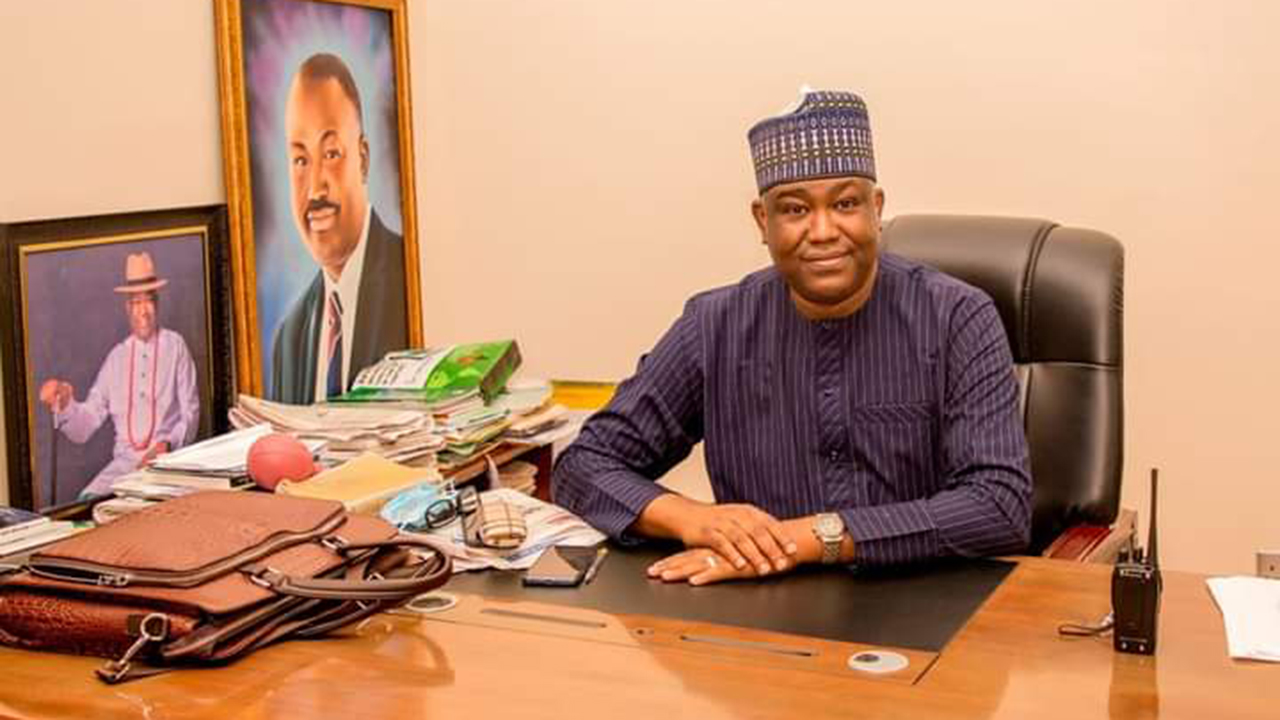

Presidential candidate of the Accord Party, Dr. Gbenga Olawepo-Hashim, has rejected his exclusion from the Independent National Electoral Commission’s (INEC) final list of presidential candidates for the 2027 election, insisting that the courts will determine his fate.
Hashim, reacting to his omission from the list published by INEC over the weekend, said no administrative action could extinguish his candidacy, stressing that he remains the duly nominated presidential candidate of the Accord Party.
In a statement issued in Abuja, he declared: “I am the candidate of the Accord Party. No one can exclude me from the 2027 presidential election. The court will do justice.”
Hashim argued that Nigeria’s constitutional democracy does not confer on INEC an overriding power of finality in disputes over the emergence or exclusion of candidates nominated by political parties.
According to him, the courts have the constitutional responsibility to determine such disputes and prevent administrative decisions from undermining legitimate political rights.
“Our democracy does not give INEC any right of finality over who stands as the candidate of a political party,” he said, adding that judicial intervention was necessary where disputes arise over the nomination or exclusion of candidates.
Hashim said similar situations had occurred in previous elections, including the last Osun governorship election, where, according to him, court interventions resulted in candidates initially excluded from INEC processes being restored to the ballot.
He disclosed that he had already approached the Federal High Court in Abuja, seeking, among other reliefs, an order compelling the Accord Party to recognise him as its presidential candidate and transmit his name to INEC. The case has been heard and reserved for judgment.
His legal challenge is based on his claim that he emerged as the sole winner of the Accord Party’s presidential primary conducted on May 30, 2026, after paying the prescribed nomination fee, with INEC officials monitoring the exercise.
Hashim maintained that the dispute could not be conclusively settled through an administrative publication by INEC.
“The publication by INEC is not the final determination of my candidacy. There is a subsisting legal dispute before the court, and I have confidence in the judicial process,” he said.
“I emerged from the presidential primary as the candidate. I have done what the law requires, and I believe the court will uphold the law.”
He also alleged that political forces opposed to his candidacy were uncomfortable with his emergence because of what he described as his ability to appeal to voters across ethnic, religious and regional lines.
According to Hashim, his campaign would focus on issues affecting ordinary Nigerians rather than politics driven by ethnicity, religion, sentiment or division.
“They may be comfortable competing against wounded candidates. They may be comfortable with a political environment where Nigerians are forced to choose between factions and personalities.
“But they are uncomfortable with a candidate who can speak to Nigerians across the country on the basis of ideas, competence and national interest,” he said.
Hashim expressed confidence that what he described as attempts to prevent his candidacy from appearing on the ballot would ultimately fail.
He said his legal battle was bigger than his personal political ambition, describing it as a test of internal democracy within political parties and Nigerians’ constitutional right to choose their preferred candidates.
“The real issue is whether a political party can conduct a presidential primary, produce a winner, and subsequently prevent that winner from participating in the election,” he said.
Hashim urged his supporters to remain calm and continue to pursue the matter through constitutional and legal channels.
“I am not asking anyone to break the law. I am asking that the law be allowed to work.
“We will not be intimidated, we will not be distracted and we will not surrender a legitimate democratic right because somebody has published a list.
“The court will speak, and when it does, we will abide by the judgment.”
