



Nasarawa Engagement: CSOs Demand Greater Protection for Women in Nigeria’s Mining Communities
For many women living in Nigeria’s mining communities, the search for a livelihood does not end when the mining pit opens.
Instead, mining can mean longer journeys to fetch water, reduced access to farmland, increased household responsibilities and, in some cases, exposure to harassment, exploitation and unsafe working conditions.
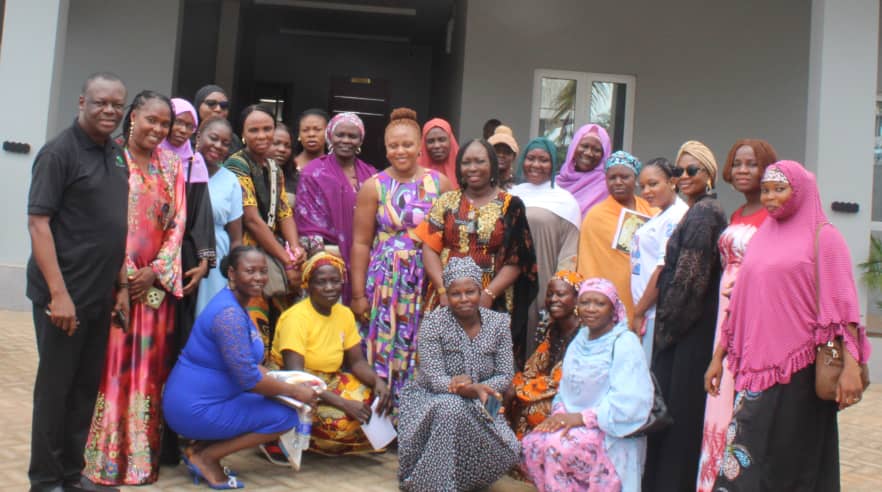
These challenges came under scrutiny at a Capacity Building Engagement on the Impacts of Mining on Women in Uke and Abuni Communities in Nasarawa State, where civil society organisations and community stakeholders examined how mining is affecting women, children, livelihoods and the environment.
The programme, organised with the involvement of the Child Health Organization, focused on responsible mining, women’s participation in community decision-making and the need for safer mining environments that support women’s economic empowerment.
Speaking during the engagement, women and children’s health advocate and Programme Director of the Child Health Organization, Dr. Vickie Uremma Onyekuru, called for stronger protection for women living and working in mining communities.
Onyekuru identified sexual harassment, sexual exploitation, gender-based violence, economic exploitation, intimate partner violence and unsafe working conditions among the major concerns requiring urgent attention.
She stressed that women’s economic contribution to mining communities should never come at the expense of their safety, dignity and fundamental rights.
“Women’s contribution to the economic life of mining communities must not come at the expense of their safety, dignity and fundamental rights.”
She also advocated stronger legal and institutional frameworks to protect women from abuses and exploitation associated with mining activities.
Mining involves the extraction of valuable minerals from the earth, including gold, barite, tin, lead, zinc, salt and limestone. For many communities, it provides employment, income and business opportunities.
But when mining is poorly managed, its environmental consequences can be severe.
Land degradation, open mining pits, soil erosion, loss of fertile topsoil, water pollution, deforestation, habitat destruction, dust and air pollution, noise, unsafe mining waste and the destruction of farmland can affect communities long after mining activities have taken place.
For women, these environmental problems can quickly become household and economic problems.
When water sources become polluted or inaccessible, women may have to travel farther to fetch water. When farmland is lost or degraded, household food production and income can suffer. And when traditional livelihoods such as farming and trading are disrupted, women may become more economically vulnerable.
In Awe, mineral activities include barite and salt-related mining. While these activities provide economic opportunities, stakeholders stressed the importance of responsible environmental management to prevent long-term damage to land, water sources and vegetation.
In Uke, in Karu Local Government Area, gold mining is an important economic activity. However, gold extraction and processing can raise concerns about water protection, mining waste, abandoned pits and the safety of processing practices.
For women in these communities, therefore, the question is not simply whether mining should continue.
The bigger question is how mining can provide livelihoods without destroying the land, water and other resources on which communities depend.
As Onyekuru’s presentation emphasised, the effects of mining can extend far beyond the mining site itself.
“When the environment is affected, women and children often feel the impact directly because they are at the centre of household care, water collection, food production and family welfare.”
Women often carry much of the responsibility for providing food, water and care for their families. When environmental conditions deteriorate, those responsibilities can become even more demanding.
Children and girls can also be affected through increased risks of accidents and injuries, school absenteeism, child labour and pressure to contribute economically.
Girls may particularly find themselves spending more time fetching water or caring for family members when household conditions become difficult.
But Onyekuru stressed that women should not be viewed only as victims of mining-related challenges.
“Women should not only be seen as victims. They can also be agents of change in their communities.”
Women can educate their families, mobilise women’s groups, participate in community meetings, advocate for safe water and responsible mining, support tree planting and land restoration, document environmental concerns and promote sustainable livelihoods.
The process, stakeholders noted, begins with identifying the problem, gathering credible information, engaging community leaders and relevant authorities, agreeing on practical solutions and monitoring progress.
Women, they stressed, should not merely be consulted about decisions affecting their communities.
They should have meaningful participation in shaping those decisions.
Among the institutions and groups that communities can engage are traditional and community leaders, women and youth groups, miners and mining associations, local government authorities, environmental and health agencies, NGOs and community-based organisations.
However, stakeholders cautioned that advocacy should be based on dialogue, credible evidence and appropriate reporting channels rather than violence, threats or unsafe confrontation.
Using Petitions to Seek Action
One practical advocacy tool highlighted by Onyekuru is a petition.
A petition is a formal written complaint or request submitted to an authority seeking attention, investigation or action on a specific issue.
For women in mining communities, she explained, a petition can be useful when a serious problem persists, previous discussions have failed to resolve it, several people are affected or government intervention is required.
“A petition gives the community an opportunity to formally document a problem, present the evidence and ask the appropriate authority to take action.”
A strong petition should clearly identify the problem, explain who is affected, provide facts and examples, state the action being requested and, where appropriate, include the signatures or representatives of affected community members.
Supporting evidence may include photographs of damaged land or water sources, dates and locations, accounts from affected residents, records of damaged farms or livelihoods, previous letters or complaints and records of community meetings.
Communities were, however, cautioned against exaggerating claims or making accusations that cannot be supported.
As the engagement emphasised, what has been observed should be clearly separated from what is assumed.
For many families, mining remains an important source of income. That makes simply telling people to stop mining unrealistic.
Instead, stakeholders advocated responsible mining alongside safer and more sustainable livelihood opportunities.
Women can be supported through farming, food processing, poultry, livestock, trading, tailoring, baking and other viable enterprises.
Skills development, savings groups, access to markets and appropriate financing can also help women build more resilient sources of income.
Protect the Land, Protect the People
The central message from the engagement is that Nigeria’s mineral wealth should not come at the expense of the people living in mining communities.
Women have a right to earn a legitimate livelihood. They also have a right to safety, dignity and meaningful participation in decisions affecting their communities, environment and families.
As Onyekuru’s presentation emphasised:“Protecting women in mining communities means looking beyond the mining pit. We must also look at their health, access to water, land, livelihoods, family welfare and personal safety.”
The objective, stakeholders stressed, is not simply to stop mining.
It is to promote responsible mining that protects people, health, land and water while preserving the livelihoods and opportunities of future generations.
