
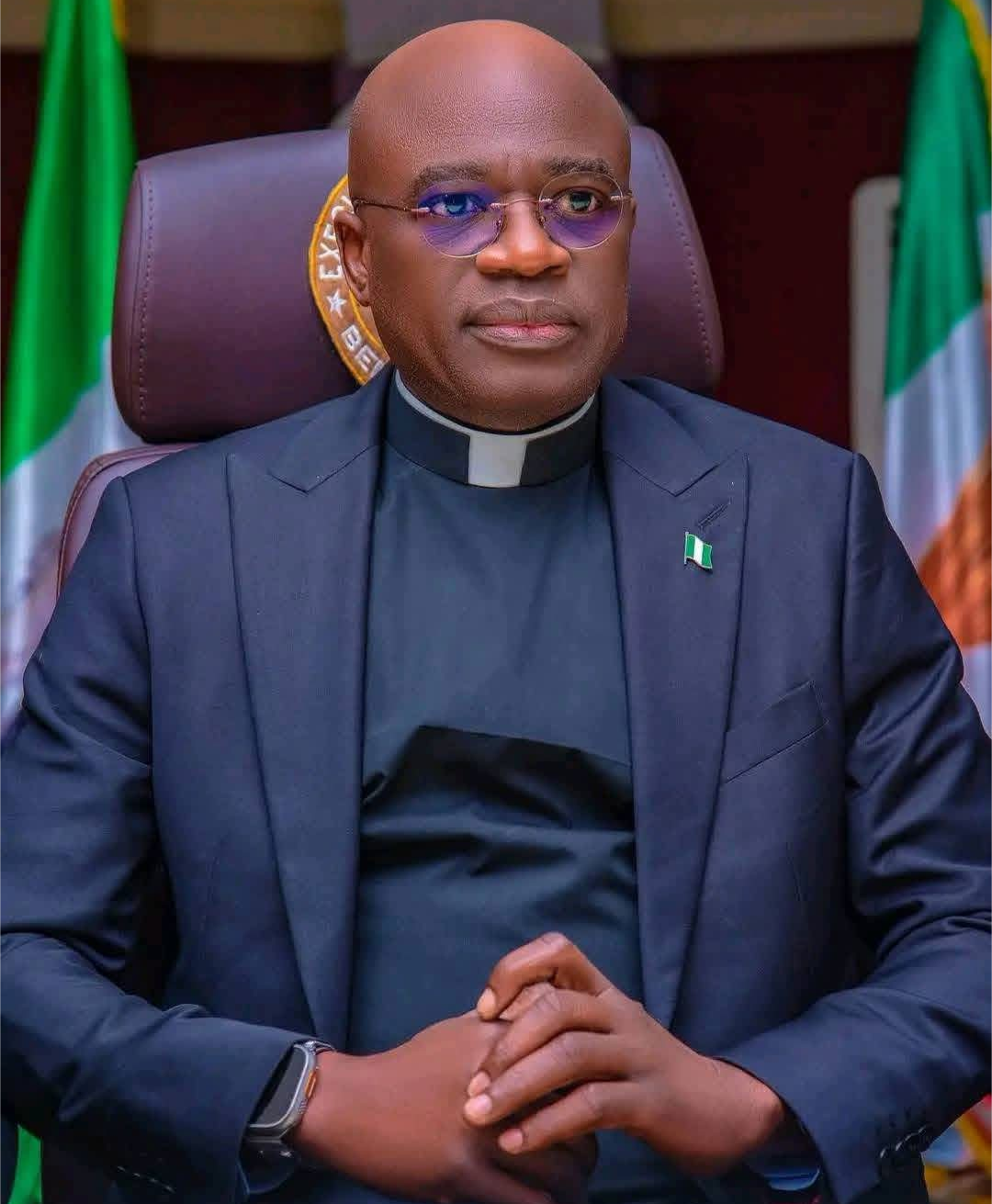



Catholic Priest: Church Was Right to Bar Clerics From Political Power
A Catholic priest, Rev. Fr. Kelvin Ugwu, has defended the Catholic Church’s restriction on ordained priests holding political offices, arguing that the rule is designed to protect the priesthood from the divisive nature of partisan politics.
Ugwu made the argument in a Facebook post titled “The Church Is Wise,” amid the growing controversy surrounding the alleged blocking of former Anambra State Governor and presidential candidate Peter Obi from entering Benue State.
Citing Canon 285 §3 of the Catholic Church’s Code of Canon Law, the priest noted that clerics are forbidden from assuming public offices that involve participation in the exercise of civil power.
According to him, the restriction is not a judgment on the ability of priests to govern but a recognition that politics can compromise the priest’s role as a spiritual father to all.
“Politics divides,” Ugwu wrote, stressing that a priest is expected to minister equally to people across political, social and economic divides.
He argued that once a priest becomes an active political actor, maintaining such neutrality becomes increasingly difficult because political office places individuals at the centre of competing interests, loyalties and ambitions.
Ugwu said the priesthood is “bigger than politics” and warned against sacrificing the universal fatherhood expected of a priest for political ambition.
He also pointed to the political controversy involving Benue State Governor Hyacinth Alia, a Catholic priest, as what he described as a practical illustration of the challenges the Church sought to prevent.
Ugwu questioned whether the confrontation involving Alia and Obi would have occurred if Obi belonged to the same political party as the governor.
He further argued that, as a Catholic and a priest, Alia ought to be able to relate to Obi from the position of spiritual fatherhood rather than through the lens of partisan politics.
The priest maintained that when political disagreements involving clerics become personal, the consequences could extend beyond the individuals involved and affect public perceptions of the Church.
He warned that the Church risks being associated with a political party, governor or faction when its ordained ministers become deeply involved in political power struggles.
Ugwu said the Church’s restrictions should therefore be understood not merely as limitations but as safeguards for the integrity and universality of the priesthood.
“Sometimes what we interpret as a restriction is actually protection,” he wrote, adding that political power is temporary while priesthood carries a lasting responsibility.
His comments come as controversy continues to trail the reported incident involving Obi in Benue State and the political fallout surrounding Governor Alia.
The priest concluded that a governor’s tenure and political alliances would eventually change, but a priest remains expected to be a father to God’s people.
