



The Nigerian Conservation Foundation (NCF) has called for stronger enforcement of wildlife protection laws to address illegal poisoning, poaching and electrocution of birds on unsafe power infrastructure, warning that these threats continue to endanger migratory and resident bird species in Nigeria.
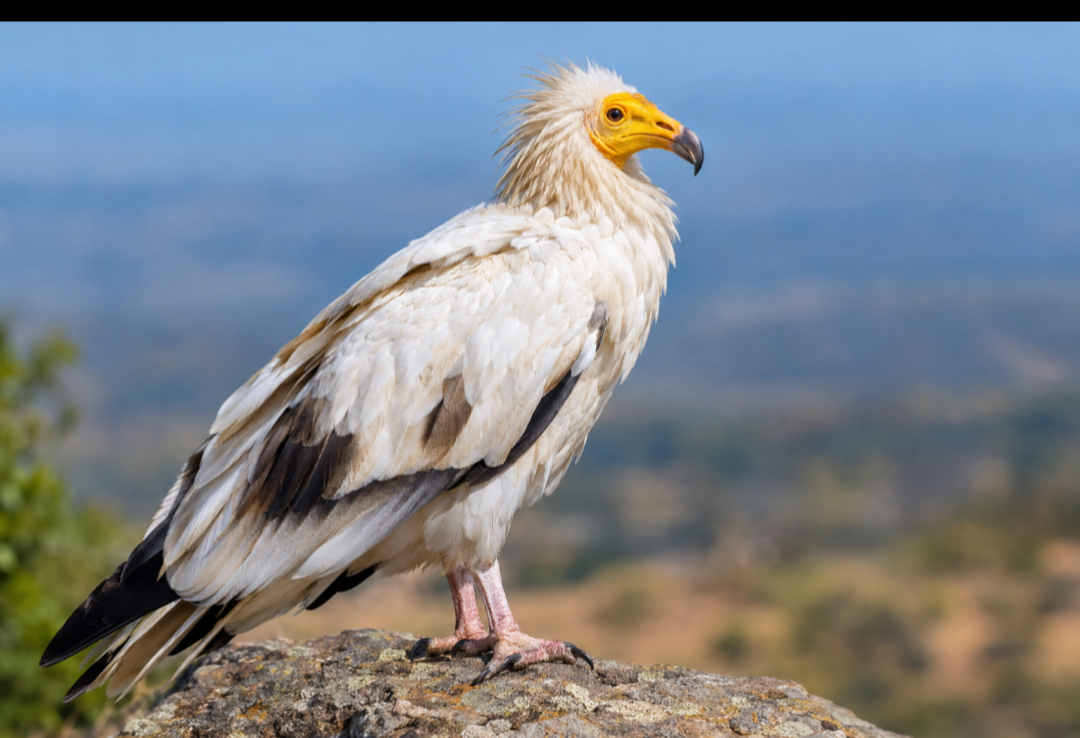
An adult Egyptian Vulture
The foundation made the call on Saturday, October 10, as Nigeria joined the rest of the world to commemorate World Migratory Bird Day 2026.
In a statement issued by its Head of Communications and Corporate Branding, Olusomi Oduguwa, the NCF announced its participation in LIFE EV Safe Return, an international conservation project aimed at improving the survival of the Egyptian Vulture (Neophron percnopterus), one of Europe’s most threatened birds of prey.
The project, co-funded by the European Union’s LIFE Programme, is coordinated by the Bulgarian Society for the Protection of Birds (BSPB), in partnership with 14 other organisations across Europe, the Middle East and Africa. The NCF is the implementing partner in Nigeria.
The initiative will strengthen the protection of Egyptian Vultures across their breeding grounds in the Balkans, migration routes and wintering areas in Africa, including Nigeria.
Every autumn, Egyptian Vultures leave the Balkan Peninsula and travel more than 5,000 kilometres to their wintering grounds in Africa. Along the way, they face several threats, including illegal poisoning from baits intended to kill predators, poaching and electrocution from unsafe electricity infrastructure.
In parts of West and Central Africa, vultures are also killed or captured for uses associated with certain beliefs and practices. The NCF identified these activities as major drivers of vulture decline in Nigeria, where all seven vulture species are now threatened.
The foundation noted that protecting the birds in their European breeding grounds would not be sufficient if they continued to face threats along their migration routes and in their African wintering habitats.
Once widespread across the Balkans, the Egyptian Vulture has disappeared as a breeding species from several countries. Today, only about 50 breeding pairs remain across Bulgaria, Greece, North Macedonia and Albania.
After more than three decades of decline, the population is beginning to stabilise, with numbers in Bulgaria showing signs of recovery through sustained conservation efforts. However, the small population remains vulnerable, and the loss of even a single bird along its migration route could undermine recovery efforts.
The LIFE EV Safe Return project, which will run until 2031, builds on the achievements of the Egyptian Vulture New LIFE project, which won the LIFE Citizens’ Prize at the 2026 LIFE Awards.
As the project’s implementing partner in Nigeria, the NCF will lead community engagement in key vulture habitats to address poisoning and belief-based exploitation. It will work with traditional rulers, traditional medicine practitioners, hunters, pastoralists and law enforcement agencies to promote the protection of the birds.
The foundation will also support efforts to strengthen national wildlife conservation policies, conduct environmental awareness programmes for schools, young people and local authorities, and collaborate with international partners on monitoring, data sharing and rapid response measures to identify areas where birds are at risk.
The project’s education programme aims to engage more than 4,000 pupils across five countries.
Speaking on the initiative, Dr Volen Arkumarev, Project Manager of LIFE EV Safe Return at BSPB, said early signs of recovery showed that conservation efforts were making a difference.
He stressed that protecting a bird that travels more than 5,000 kilometres between Europe and Africa requires coordinated action across its entire migration route.
“For the first time within our conservation programme, targeted action will be undertaken in Africa, including in Nigeria and Chad, two of the species’ key wintering countries,” he said.
The Director-General of NCF, Dr Joseph Onoja, said the project aligned with the foundation’s longstanding commitment to vulture conservation in Nigeria and its advocacy for stronger wildlife protection laws and effective enforcement against poisoning and illegal wildlife trade.
The Egyptian Vulture is recognisable by its distinctive white plumage and bright yellow face. Beyond its cultural significance, including its association with ancient Egyptian civilisation and folklore across its range, the bird plays an important ecological role.
Like other vultures, it helps remove animal carcasses from the environment, contributing to ecosystem health. Its decline therefore threatens not only biodiversity but also the natural processes that help maintain healthy ecosystems.
The NCF said the LIFE EV Safe Return project would contribute to the protection of other species along the migration route, including the critically endangered Hooded Vulture, as well as other migratory and resident birds.
World Migratory Bird Day is a global campaign celebrated in May and October to raise awareness of the need to conserve migratory birds and their habitats. The October 2026 observance falls on October 10, with this year’s theme highlighting the role of citizen science in migratory bird conservation.
The LIFE EV Safe Return project is coordinated by BSPB/BirdLife Bulgaria, with partners including Green Balkans, BirdLife Europe and Central Asia, BirdLife Africa, Sahara Conservation and the Nigerian Conservation Foundation, among other conservation organisations. Sofia Zoo and Prague Zoo are associated partners, while the project receives co-funding from the European Union’s LIFE Programme.
UKATA NEWS

1 comment
Great news