



Benin–Asaba Highway: After Passengers Spend Days on Road, Umahi Orders Immediate Repairs
For passengers travelling between Benin and Asaba, a journey that should take only a few hours has increasingly become a test of endurance, with some motorists and commuters reportedly spending days trapped in traffic along the corridor.
The human and economic cost of the deteriorating Benin–Asaba Expressway has continued to mount, as prolonged gridlock, flooding, damaged portions of the carriageway, dust and poorly managed construction activities disrupt the movement of people and goods between Edo and Delta States.
For traders, transport operators and small businesses located along the highway, every hour spent in traffic means lost income. For passengers, it means missed appointments, delayed business engagements and, in some cases, uncertainty over when they will reach their destinations.
It is against this backdrop of growing public frustration that the Minister of Works, David Umahi, has given the concessionaire of the highway, Benin-Asaba Expressway Concession Company (BAECC), a marching order to commence immediate corrective measures and comply fully with the terms of its agreement with the Federal Government.
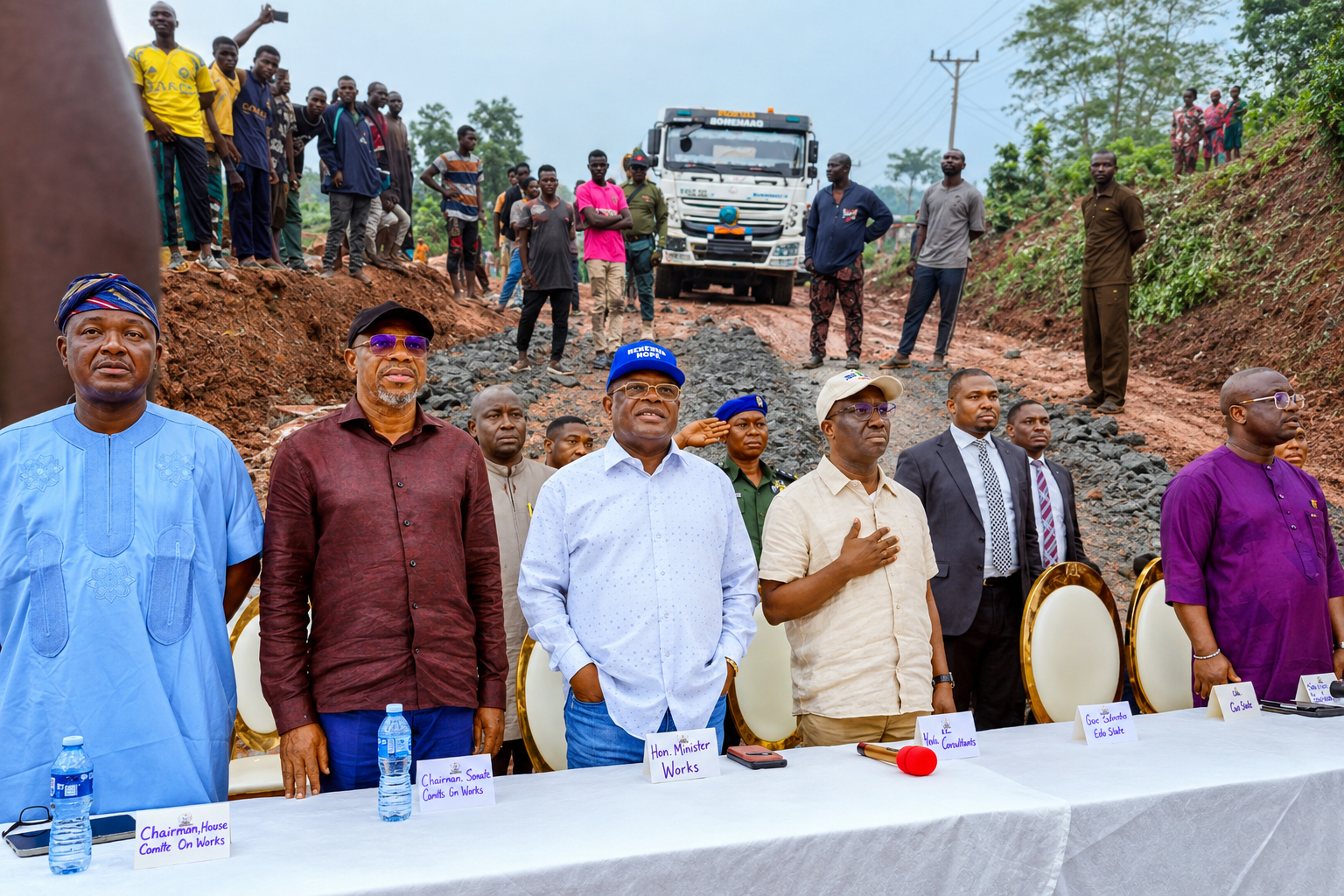
Umahi issued the directive during a stakeholders’ engagement convened to find practical solutions to the hardship being experienced by road users and host communities along the corridor at the Edo State Government House, Benin City.
The Minister directed the concessionaire to reinstate all damaged asphalt sections and recreate safe, properly marked passages for motorists within the carriageway.
He also ordered the immediate evacuation of accumulated water from the road and the removal of dust and other materials obstructing visibility and safe movement.
Umahi said Nigerians should not be subjected to unnecessary hardship simply because construction work was ongoing, stressing that construction activities must be properly managed to guarantee safe and reasonable passage for motorists at all times.
He also demonstrated the application of the DSIP and reinstatement of asphalt as practical interventions to restore damaged portions and improve the travelling experience along the corridor.
The Minister urged BAECC to show greater commitment to the project despite the challenges posed by the rainy season and the heavy volume of traffic.
Economic losses deepen
The poor condition of the highway has implications beyond traffic delays.
The corridor is an important route for the movement of passengers, agricultural produce, manufactured goods and other commodities between the South-South and South-East regions.
When vehicles are trapped in traffic for prolonged periods, the effect is felt across the supply chain.
Perishable goods risk being damaged, transport operators incur additional fuel and maintenance costs, while businesses along the route lose customers because motorists and passengers are forced to avoid stopping or are simply unable to reach their destinations on time.
The situation has also raised safety concerns, particularly around flooding, damaged pavement and inadequate traffic management.
The Independent Engineer for the project, Yolas Consultants Limited, identified deficiencies in pavement quality, drainage and traffic management in its technical briefing and called for immediate remedial action in line with approved specifications.
The firm also stressed the need for closer cooperation among all stakeholders and smooth operational guidelines to ensure that remedial works do not further compound the difficulties being experienced by road users.
Senate, House demand accountability
The Chairman of the Senate Committee on Works, Senator Allwell Onyesoh, commended Umahi for his proactive response and inspection-driven approach but expressed concern over the hardship being experienced by motorists and host communities.
He assured that the National Assembly would provide the necessary legislative backing and oversight to ensure that concessionaires comply with the terms of their agreements.
Onyesoh called for sanctions against defaulters and urged BAECC to place the welfare of road users above profit.
Similarly, the Chairman of the House Committee on Works, Akin Alabi, lamented the suffering of commuters and the economic losses being recorded daily along the corridor.
He said the House of Representatives would not hesitate to deploy its oversight powers to compel compliance, while stressing the need for transparency, timely intervention and the engagement of competent contractors capable of delivering durable roads.
Host communities count the cost
Concerns were also raised by host communities, who said the condition of the road has contributed to accidents, flooding and disruptions to local businesses.
The SSA-P on Community Engagement, South South Zone, BPE, ICRC and PPP-FMW called for improved communication with affected communities and operational guidelines that would minimise hardship while construction continues.
For communities living along the corridor, the issue is not simply about a bad road. The highway is part of their daily economic lifeline, connecting residents to markets, schools, workplaces, healthcare facilities and other essential services.
Responding to the concerns, BAECC assured the Minister of its commitment to addressing the identified deficiencies and implementing the necessary corrective measures.
Umahi, however, said the Federal Government’s objective was not merely to commission or construct roads, but to ensure that public infrastructure is delivered according to acceptable engineering standards.
He called for stronger professional oversight and accountability in the management of major road projects, warning that national assets must be protected from avoidable deterioration.
The Minister further insisted that only competent and qualified contractors and professionals should be engaged to reset, rehabilitate and complete critical sections of the Benin–Asaba Expressway in accordance with approved specifications and engineering standards.
He said the Federal Government remained committed to restoring major road corridors across the country and ensuring that Nigerians receive value for the substantial resources being invested in road infrastructure under the Renewed Hope Agenda of President Bola Tinubu.
‘No Nigerian should suffer unnecessarily’
Governor Monday Okpebholo of Edo State, in his closing remarks, urged the concessionaire to put the welfare of the people above profit.
He said no Nigerian should be made to suffer unnecessarily because of the failure to properly manage a major road project.
The governor praised President Tinubu and Minister Umahi for responding to the cries of Edo residents, passengers and other road users.
But for the thousands who use the Benin–Asaba corridor daily, the real test will not be the promises made at the stakeholders’ meeting.
It will be whether the potholes disappear, flooded sections become passable, traffic flows again and a journey that once took a few hours stops turning into a painful ordeal that can keep passengers on the road for days.
Benin–Asaba Highway: After Passengers Spend Days on Road, Umahi Orders Immediate RepairsFor passengers travelling between Benin and Asaba, a journey that should take only a few hours has increasingly become a test of endurance, with some motorists and commuters reportedly spending days trapped in traffic along the corridor.The human and economic cost of the deteriorating Benin–Asaba Expressway has continued to mount, as prolonged gridlock, flooding, damaged portions of the carriageway, dust and poorly managed construction activities disrupt the movement of people and goods between Edo and Delta States.For traders, transport operators and small businesses located along the highway, every hour spent in traffic means lost income. For passengers, it means missed appointments, delayed business engagements and, in some cases, uncertainty over when they will reach their destinations.It is against this backdrop of growing public frustration that the Minister of Works, David Umahi, has given the concessionaire of the highway, Benin-Asaba Expressway Concession Company (BAECC), a marching order to commence immediate corrective measures and comply fully with the terms of its agreement with the Federal Government.Umahi issued the directive during a stakeholders’ engagement convened to find practical solutions to the hardship being experienced by road users and host communities along the corridor at the Edo State Government House, Benin City.The Minister directed the concessionaire to reinstate all damaged asphalt sections and recreate safe, properly marked passages for motorists within the carriageway.He also ordered the immediate evacuation of accumulated water from the road and the removal of dust and other materials obstructing visibility and safe movement.Umahi said Nigerians should not be subjected to unnecessary hardship simply because construction work was ongoing, stressing that construction activities must be properly managed to guarantee safe and reasonable passage for motorists at all times.He also demonstrated the application of the DSIP and reinstatement of asphalt as practical interventions to restore damaged portions and improve the travelling experience along the corridor.The Minister urged BAECC to show greater commitment to the project despite the challenges posed by the rainy season and the heavy volume of traffic.Economic losses deepenThe poor condition of the highway has implications beyond traffic delays.The corridor is an important route for the movement of passengers, agricultural produce, manufactured goods and other commodities between the South-South and South-East regions. When vehicles are trapped in traffic for prolonged periods, the effect is felt across the supply chain.Perishable goods risk being damaged, transport operators incur additional fuel and maintenance costs, while businesses along the route lose customers because motorists and passengers are forced to avoid stopping or are simply unable to reach their destinations on time.The situation has also raised safety concerns, particularly around flooding, damaged pavement and inadequate traffic management.The Independent Engineer for the project, Yolas Consultants Limited, identified deficiencies in pavement quality, drainage and traffic management in its technical briefing and called for immediate remedial action in line with approved specifications.The firm also stressed the need for closer cooperation among all stakeholders and smooth operational guidelines to ensure that remedial works do not further compound the difficulties being experienced by road users.Senate, House demand accountabilityThe Chairman of the Senate Committee on Works, Senator Allwell Onyesoh, commended Umahi for his proactive response and inspection-driven approach but expressed concern over the hardship being experienced by motorists and host communities.He assured that the National Assembly would provide the necessary legislative backing and oversight to ensure that concessionaires comply with the terms of their agreements.Onyesoh called for sanctions against defaulters and urged BAECC to place the welfare of road users above profit.Similarly, the Chairman of the House Committee on Works, Akin Alabi, lamented the suffering of commuters and the economic losses being recorded daily along the corridor.He said the House of Representatives would not hesitate to deploy its oversight powers to compel compliance, while stressing the need for transparency, timely intervention and the engagement of competent contractors capable of delivering durable roads.Host communities count the costConcerns were also raised by host communities, who said the condition of the road has contributed to accidents, flooding and disruptions to local businesses.The SSA-P on Community Engagement, South South Zone, BPE, ICRC and PPP-FMW called for improved communication with affected communities and operational guidelines that would minimise hardship while construction continues.For communities living along the corridor, the issue is not simply about a bad road. The highway is part of their daily economic lifeline, connecting residents to markets, schools, workplaces, healthcare facilities and other essential services.Responding to the concerns, BAECC assured the Minister of its commitment to addressing the identified deficiencies and implementing the necessary corrective measures.Umahi, however, said the Federal Government’s objective was not merely to commission or construct roads, but to ensure that public infrastructure is delivered according to acceptable engineering standards.He called for stronger professional oversight and accountability in the management of major road projects, warning that national assets must be protected from avoidable deterioration.The Minister further insisted that only competent and qualified contractors and professionals should be engaged to reset, rehabilitate and complete critical sections of the Benin–Asaba Expressway in accordance with approved specifications and engineering standards.He said the Federal Government remained committed to restoring major road corridors across the country and ensuring that Nigerians receive value for the substantial resources being invested in road infrastructure under the Renewed Hope Agenda of President Bola Tinubu.‘No Nigerian should suffer unnecessarily’Governor Monday Okpebholo of Edo State, in his closing remarks, urged the concessionaire to put the welfare of the people above profit.He said no Nigerian should be made to suffer unnecessarily because of the failure to properly manage a major road project.The governor praised President Tinubu and Minister Umahi for responding to the cries of Edo residents, passengers and other road users.But for the thousands who use the Benin–Asaba corridor daily, the real test will not be the promises made at the stakeholders’ meeting.It will be whether the potholes disappear, flooded sections become passable, traffic flows again and a journey that once took a few hours stops turning into a painful ordeal that can keep passengers on the road for days.
Innocent Onoh
