
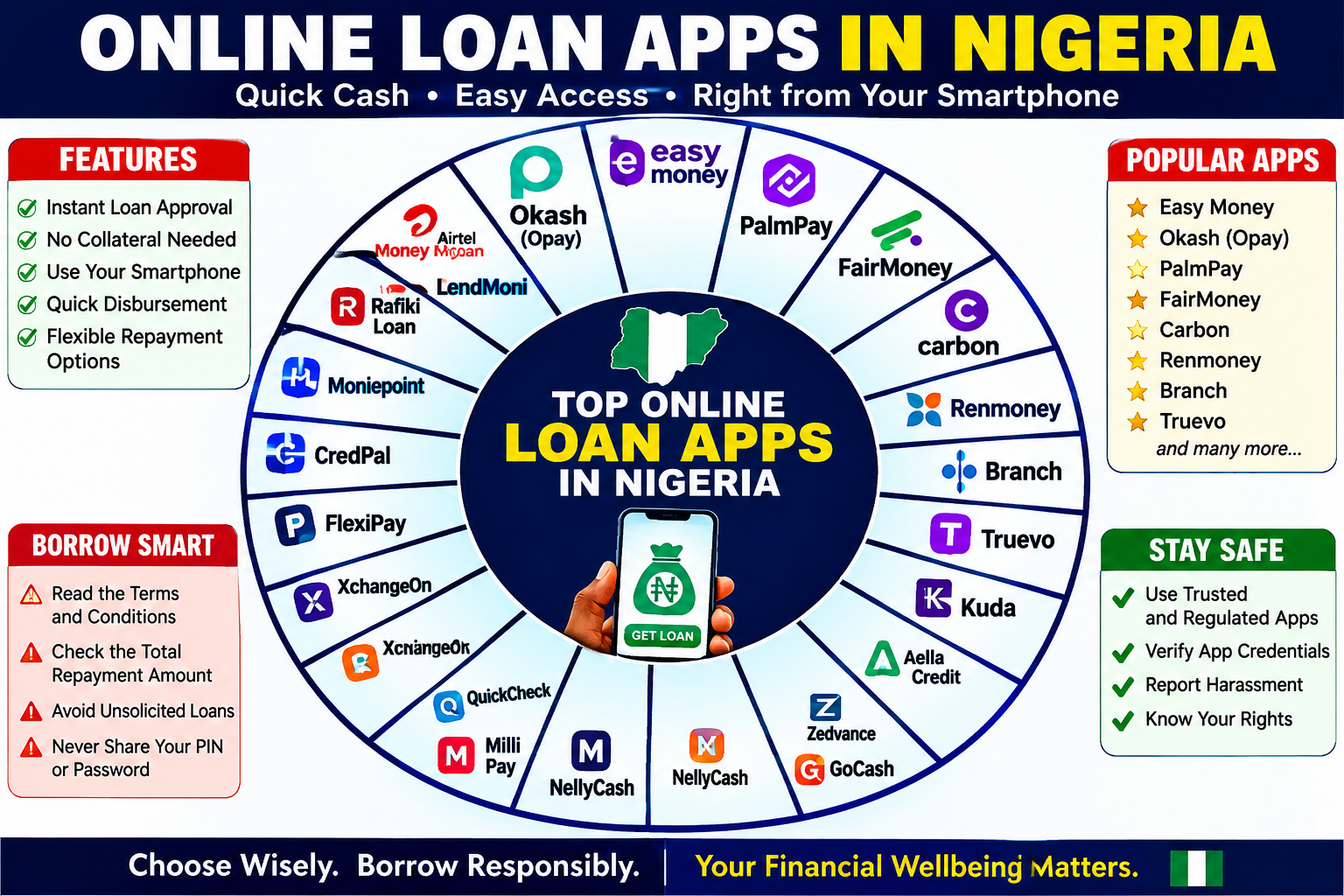



Online Loan Apps: How Easy Credit Is Turning Into Nightmare for Nigerians
Have you ever borrowed money from an online lending app and later regretted it?
Or have you received a loan you never requested, only to discover that you were expected to repay it with interest?
For some Nigerians, the experience has gone beyond financial difficulty. They say aggressive calls, mounting charges, threats and alleged harassment by debt-recovery agents have pushed them into depression, emotional distress and, in some reported cases, thoughts of suicide.
For others, however, online lending platforms remain a lifeline in difficult economic times, providing quick access to cash when traditional banks may demand collateral, documentation or lengthy processing.
The growing debate is therefore not simply about whether Nigerians should borrow from online lending platforms, but about how these loans are granted, the charges imposed and the methods used to recover debts.
The issue has become particularly troubling as more Nigerians turn to digital lenders to survive an increasingly difficult economy.
Recently, reports emerged of a female tailor who allegedly jumped into the Lagos Lagoon and drowned after taking a loan to support her business. Reports said she had allegedly been under pressure over repayment and persistent calls from debt-recovery agents.
While the circumstances surrounding the incident require independent verification, it has renewed concerns about the possible consequences of aggressive digital debt collection.
And hers is not the only story.
A young graduate in Owerri, Imo State, said he was pushed into severe emotional distress after failing to repay a business loan.
“I nearly died of depression after they bombarded me with calls when I couldn’t repay the loan I took for business,” he lamented.
According to him, his situation became unbearable until a Good Samaritan helped him repay the debt.
“If not for that person that came to my rescue and helped me pay, I don’t know what could have become of me. They made life miserable for me. These people will call you like a hundred times in one day,” he alleged.
Easy money, difficult repayment:
Online lending apps have transformed access to credit in Nigeria.
With a smartphone, applicants can often request and receive loans within minutes, sometimes without physical collateral or the paperwork traditionally associated with bank loans.
Many digital lenders use information supplied by applicants, including identification and financial data, to assess their eligibility. Some platforms also use automated systems and algorithms to make lending decisions rapidly.
But the convenience comes with concerns.
Borrowers complain about high interest rates, short repayment periods, additional charges for default and aggressive recovery methods.
In some cases, loans may be repayable within seven to 30 days.
For instance, a borrower may receive ₦20,000 and be required to repay significantly more within a short period, depending on the lender’s terms.
Critics say such arrangements can trap financially vulnerable borrowers in a cycle of borrowing and repayment.
‘They credited my account without my consent’
For Glory, a housewife in Isolo, Lagos, the problem began after she mistakenly clicked on a link sent to her.
“There was a time one of them sent me a link. It was a code and I mistakenly clicked it. As I clicked on that code, before I could say Jack, I got a credit alert,” she narrated.
According to her, the alert was followed by a message explaining how the money was expected to be repaid.
“I sent them a message that I didn’t need this loan. They should take their money back. I called and they told me they would work on it. I kept calling until they took away the money from my account with high interest.”
Her experience raises another concern frequently expressed by Nigerians: unsolicited loans and unsolicited calls offering credit.
Many users say they are often contacted by lending platforms despite never knowingly requesting a loan.
‘Online loan is a terrible thing’
A civil servant in Port Harcourt, Rivers State, Peter, described his experience as “very ugly.”
“Online loan is a terrible thing,” he said angrily.
According to him, some platforms lure borrowers with large loan offers but eventually disburse far less.
“They will first of all lure you to come and borrow ₦500,000. At the end, they will be crediting you with ₦3,000, ₦4,000, highest ₦10,000, and interest on that ₦10,000 will be about ₦5,500.”
Another civil servant in Egan, Igando, Lagos, who also fell victim to digital lending, said he was initially attracted by an advertisement promising an interest-free loan.
“I was lured into collecting their loan when I saw one advertising an interest-free loan. I applied and, lo and behold, they didn’t collect interest after all. With that sweet experience, I applied for another one, but it turned out that the second one charged interest.”
He said his subsequent attempt to obtain another interest-free loan resulted in two loans being approved through a different page.
“I tried contacting them to say that I didn’t need their loan. All they told me was that I could opt out after repaying the one they had approved. It was a bitter experience for me.”
The situation became worse when he missed a repayment deadline.
“When I logged in to pay the next day, I saw that they had added additional money as a charge for default.”
He said he paid the principal but declined to pay the additional charge because he believed such immediate accumulation of charges was questionable.
“I wrote to them via email and Whatsapp to explain why I wouldn’t pay any additional charge, but they didn’t pay attention, saying that next time I should read the terms clearly.”
According to him, the persistent calls eventually became unbearable.
“These people kept harassing me with barrages of calls from different agents over ₦1,000. In anger, I refused to pay. You can’t imagine that they kept accumulating more charges until it reached over ₦9,000.
“I had to find a way to pay so I could have some peace. Otherwise, they were calling by the minute every day, interrupting my daily activities.
“I don’t advise even my enemy to get a loan online, but things are so hard. That’s why we will keep falling victim.”
‘The interest is killing me’
An Abuja resident who spoke with our correspondent in Gwagwalada also described online lending as a painful experience.
“My experience with an online loan is a bad one. Once you collect that loan, the interest is much,” he said.
“For instance, if you collect like ₦50,000, they always put like ₦5,000 to ₦10,000 or more within weeks. The interest is killing me.”
He also questioned how some lending companies obtained his phone number in the first place.
“Many of these loan companies from nowhere will just call your number, asking you to get a loan from them.”
‘Where do they get our numbers from?’
Henry, a resident of Ojuelegba, Lagos, said unsolicited calls from online lenders had become a regular occurrence.
“You begin to wonder where they get your number from. As you are even trying to block one, another one is calling you. They will keep calling back to back,” he lamented.
Henry also alleged that some lenders could access money in a borrower’s account.
“If you dare not return the money, they will go to any of your accounts that have money and remove it,” he alleged.
“So I don’t think it is advisable for someone to continue to patronise all these loan apps.”
Fear as a recovery strategy?
For Ahmed, a resident of Igando, Lagos, the psychological impact of persistent calls became overwhelming after he could not meet a repayment deadline.
He said he became emotionally distressed, lost significant weight and struggled to carry out his normal daily activities.
He said an older friend, a financial literacy coach, eventually helped him understand what he described as the psychology behind aggressive debt recovery.
According to Ahmed, his friend told him that some lenders rely heavily on fear and embarrassment to pressure borrowers into repayment.
He recalled his friend’s words:
“They don’t just want to collect money. They want to collect your confidence. They want to collect your mind. They want to collect your peace.”
The financial literacy coach, according to Ahmed, described some aggressive recovery methods as resembling those of “debt collectors” and “street thugs”, alleging that some agents call repeatedly, threaten borrowers, contact their friends or relatives and attempt to shame them into paying.
His advice to borrowers facing financial difficulty was to communicate calmly with lenders, acknowledge the debt, propose a realistic repayment plan and request restructuring or a waiver of penalties.
However, his suggestion that borrowers should “pay principal first” should not be interpreted as a universal legal rule. Borrowers are advised to establish what they legally owe under the applicable loan agreement and seek appropriate regulatory or legal guidance before withholding any charges.
Dr Muda Yusuf: Regulators must act
The concerns have also attracted criticism from financial expert and former Director-General of the Lagos Chamber of Commerce and Industry, Dr Muda Yusuf.
Yusuf blamed what he described as abuses by some online lending providers on weak regulation and called for stricter standards for digital lenders.
He said operators should not be allowed to exploit Nigerians without accountability.
“My advice or suggestion would be that both the Securities and Exchange Commission and the Federal Competition and Consumer Protection Commission should step up and deal with all these loan apps.”
Yusuf said there should be clear standards covering how digital lenders grant loans and recover debts.
“There must be a standard operating procedure. There must be very clear guidelines as to how they will lend money and how they will recover whatever outstanding debt.
“And there must also be some guidelines to the kind of interest rates they are charging. They cannot just be left to operate the way they want.”
He stressed the need for lenders to operate within established rules and comply with regulatory requirements.
FCCPC: ‘Consumers are entitled to credit’
An official of the Federal Competition and Consumer Protection Commission, Mr Ondaje Ijigwe, said the commission had received numerous complaints against some digital lending applications.
He said the commission had developed a comprehensive blueprint intended to address some of the challenges associated with digital lending.
According to Ijigwe, the framework is designed to identify digital lending operators and their locations and ensure that they can be held accountable for alleged harassment, intermediary issues and hidden charges.
He described consumer lending regulation as an important development designed to ensure that Nigerians can access credit safely, transparently and respectfully.
He noted that Nigerian consumers had faced difficult economic conditions and were entitled to access credit facilities.
But, he said, the emergence of digital lending also created situations where consumers could be enticed to borrow and subsequently face experiences involving alleged defamation and harassment.
Our correspondent tests an online loan
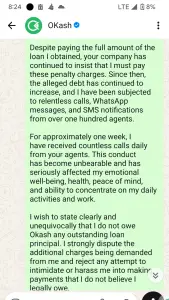
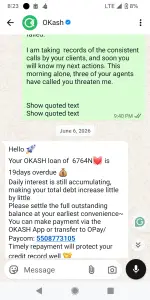
To further understand the experience of borrowers, our correspondent took a loan from Okash, a digital lending platform associated with Opay, as part of the reporting for this story.
The reporter deliberately failed to repay on the agreed deadline and subsequently paid the principal the following day.
According to the reporter’s experience, additional charges had accumulated after the deadline despite the repayment of the principal.
The reporter declined to pay the additional charges and contacted the platform to explain his position.
He said he received repeated calls urging him to make payment, with the callers warning that failure to do so could affect his credit score.
The issue later became more consequential when, about three months afterward, the reporter applied for a loan from a commercial bank.
The bank declined the application and requested a letter of non-indebtedness from Opay.
When the reporter approached Opay, he was reportedly directed to first clear the outstanding balance on Okash.
He eventually paid the accumulated charge and obtained the letter.
The reporter subsequently sought an explanation from Okash over why additional charges had accrued after the original repayment deadline.
The response, according to him, was that the charges were in line with the platform’s terms and conditions and that borrowers should read the terms carefully before accepting loans.
The experience illustrates one of the central issues surrounding digital lending: the importance of understanding the actual cost of a loan before clicking “accept.”
Why Nigerians keep borrowing
Despite the complaints, online lending platforms continue to attract customers.
The reason is not difficult to understand.
For a trader who needs emergency capital, a student facing an urgent bill, a salary earner waiting for payday or a family dealing with an unexpected expense, the promise of instant cash can be difficult to resist.
Traditional financial institutions may require documentation, credit history, collateral and time.
Digital lenders often promise something much simpler: apply with your phone and receive money quickly.
But that convenience can come at a high price.
For financially distressed Nigerians, the short repayment windows and additional charges can turn what initially looked like a solution into another problem.
And once repayment becomes difficult, borrowers say the situation can deteriorate rapidly.
The bigger question
The debate over online lending is therefore not simply about whether Nigerians should borrow.
It is about whether vulnerable consumers should be able to access credit without being exposed to unreasonable costs, hidden charges, privacy concerns or abusive debt-recovery practices.
There is also the question of responsibility.
Borrowers have a duty to understand the terms of any loan before accepting it. They should know the amount they will actually receive, the total amount repayable, the repayment date, applicable fees and consequences of default.
Lenders, on the other hand, are expected to operate within the law and treat consumers fairly.
Regulators have the responsibility to ensure that the rules are clear and effectively enforced.
Borrow before you click
Consumers are advised to verify that an online lending platform is legally authorised to operate before taking a loan.
They should carefully read the terms and conditions, determine the total repayment amount, understand the repayment period and check all applicable fees and penalties.
Borrowers should also be cautious about giving lenders unnecessary access to personal information.
PINs, passwords and other sensitive security credentials should never be disclosed.
The ease of obtaining a loan should not become an excuse to ignore the cost.
For millions of Nigerians battling rising living costs, online loans may continue to provide an important source of emergency credit.
But as the voices of borrowers, financial experts and regulators increasingly converge on the need for greater accountability, one question remains:
When does convenient digital credit stop being a lifeline and become a financial trap?
By Innocent Onoh
